A New Era in Natural Facial Rejuvenation
Facial volume is a cornerstone of a youthful appearance; loss of deep and superficial fat pads creates hollow cheeks, deepened nasolabial folds, and a sagging contour that cannot be fully corrected with skin‑tightening alone. Autologous fat transfer leverages the patient’s own adipose tissue, harvested via gentle liposuction, purified (often by centrifugation), and micro‑injected into precise facial compartments. The graft retains living adipocytes, stem cells, and growth factors that integrate with native tissue, stimulate collagen, and improve skin quality, offering a permanent, natural‑looking restoration rather than a temporary filler. At the Aesthetic Surgery Center in San Francisco, patients meet board‑certified surgeons who tailor a three‑step plan—assessment, meticulous fat handling, and layered micro‑droplet placement—while using local anesthesia and mild sedation for comfort. Post‑procedure care includes brief swelling, a compression garment, and guidance on avoiding facial pressure; most patients resume daily activities within a week and see final contour refinement by three to six months.
Buccal Fat Pad Reduction – Before and After
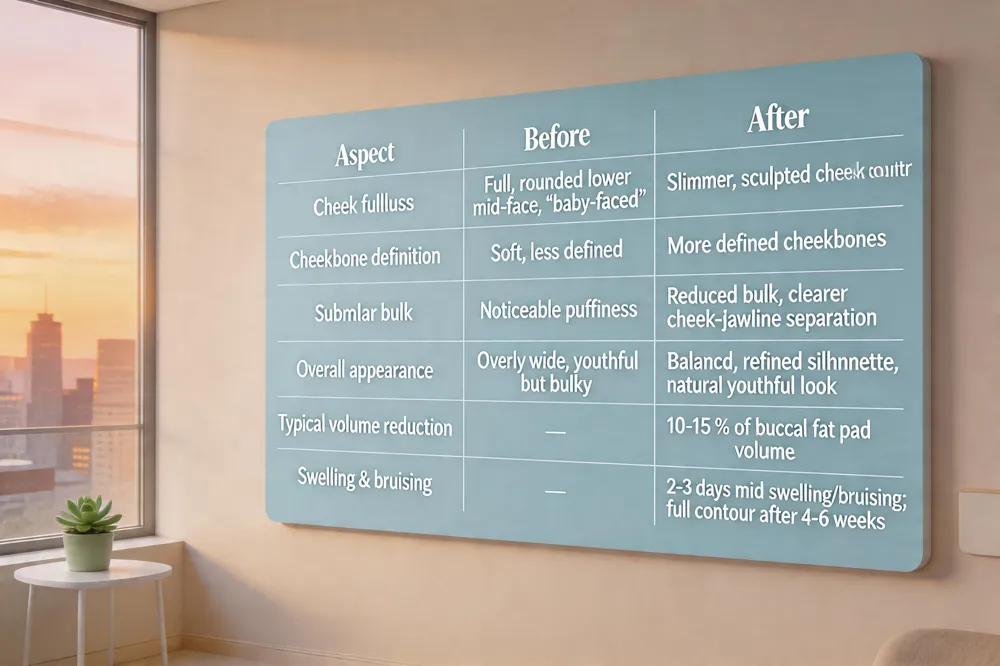
| Aspect | Before | After |
|---|---|---|
| Cheek fullness | Full, rounded lower mid‑face, “baby‑faced” appearance | Slimmer, sculpted cheek contour |
| Cheekbone definition | Soft, less defined | More defined cheekbones |
| Submalar bulk | Noticeable puffiness | Reduced bulk, clearer cheek‑jawline separation |
| Overall appearance | Overly wide, youthful but bulky | Balanced, refined silhouette, natural youthful look |
| Typical volume reduction | — | 10‑15 % of buccal fat pad volume |
| Swelling & bruising | — | 2‑3 days mild swelling/bruising; full contour after 4‑6 weeks |
 Visual transformation
Before the procedure the lower mid‑face often looks full and rounded, with a noticeable puffiness that can make the face appear "baby‑faced" or overly wide. After a buccal fat pad reduction the cheek contour becomes slimmer and more sculpted; the cheekbones are more defined and the submalar region loses bulk, creating a clearer separation between cheek and jawline. The change is subtle yet evident, preserving a natural, youthful appearance rather than an over‑edited look.
Visual transformation
Before the procedure the lower mid‑face often looks full and rounded, with a noticeable puffiness that can make the face appear "baby‑faced" or overly wide. After a buccal fat pad reduction the cheek contour becomes slimmer and more sculpted; the cheekbones are more defined and the submalar region loses bulk, creating a clearer separation between cheek and jawline. The change is subtle yet evident, preserving a natural, youthful appearance rather than an over‑edited look.
Subtle sculpting versus over‑editing The goal of buccal fat pad reduction is to achieve balanced facial harmony. By repositioning or gently excising a portion of the buccal fat pad, surgeons can trim excess volume without flattening the face. Over‑editing can lead to a hollow, gaunt look, while precise, conservative sculpting maintains softness and facial structure. In practice, most surgeons aim for a 10‑15 % reduction of the buccal pad volume, which yields a refined silhouette without compromising facial fullness.
Recovery timeline Recovery is brief. Patients typically experience mild swelling and bruising for 2‑3 days, with most returning to normal activities within a few days. Full resolution of swelling and the final contour become apparent after 4‑6 weeks. Gentle facial massage and avoidance of excessive facial expressions during the first week help optimize graft integration and reduce lingering edema.
What does a buccal fat pad reduction look like before and after? Before the procedure the cheeks appear full and rounded, with noticeable puffiness in the lower mid‑face that can make the face look “baby‑faced” or overly wide. After a buccal fat pad reduction the same view shows a slimmer, more sculpted contour, with the cheekbones becoming more defined and the submalar area less bulky. The change is subtle yet evident, preserving a natural, youthful appearance rather than an over‑edited look. Most patients notice a clearer separation between the cheek and jawline, giving the face a balanced, refined silhouette. The results are typically visible immediately and continue to look natural as swelling subsides.
Malar Fat Pad Removal – Who’s a Good Candidate?
| Candidate Criterion | Description |
|---|---|
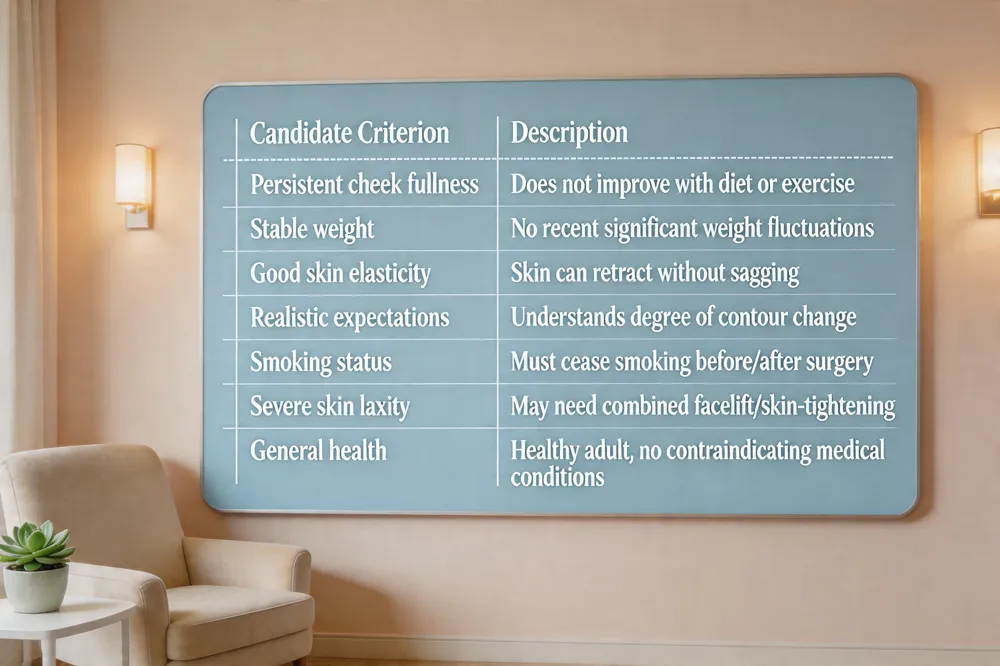
| Persistent cheek fullness | Does not improve with diet or exercise |
| Stable weight | No recent significant weight fluctuations |
| Good skin elasticity | Skin can retract without sagging |
| Realistic expectations | Understands degree of contour change |
| Smoking status | Must cease smoking before/after surgery to minimize bruising |
| Severe skin laxity | May need combined facelift or skin‑tightening |
| General health | Healthy adult, no contraindicating medical conditions |
 Malar fat pad removal targets the superficial fat compartments that sit directly over the cheekbones. These pads contribute to a youthful, full‑cheek appearance but can become overly prominent, giving a “baby‑face” or overly round contour that many patients wish to sculpt. The procedure involves a small intra‑oral incision, careful dissection of the targeted malar fat, and precise excision of excess tissue while preserving enough volume to avoid an unnatural hollow. It is performed under local anesthesia (often with mild sedation) on an outpatient basis, and recovery is typically rapid, with most patients returning to normal activities within a few days.
Ideal candidates are healthy adults with persistent cheek fullness that does not respond to diet, exercise, or non‑surgical treatments. They should have stable weight, good skin elasticity, and realistic expectations about the degree of contour change. Smoking cessation before and after the procedure is essential to minimize bruising and support optimal healing. Candidates with severe skin laxity may benefit more from a combined facelift or skin‑tightening approach. In summary, malar fat pad removal is a minimally invasive option for individuals seeking a sharper, more angular cheekbone definition while preserving a natural, youthful look.
Best Strategies for Restoring Lost Facial Volume
| Modality | Primary Benefits | Typical Longevity / Retention |
|---|---|---|
| Autologous fat grafting | Natural tissue integration, regenerative stem‑cell effects | 50‑70 % retention after 1‑2 years |
| Hyaluronic‑acid fillers | Immediate correction, fine‑tuning, minimally invasive | 6‑18 months |
| Radio‑frequency (RF) skin tightening | Collagen stimulation, skin tightening | 1‑2 years improvement |
| Ultrasound (e.g., EMFACE, Ultherapy) | Deep collagen remodeling, non‑invasive | 1‑2 years |
| Laser resurfacing | Texture improvement, collagen boost | 1‑2 years |
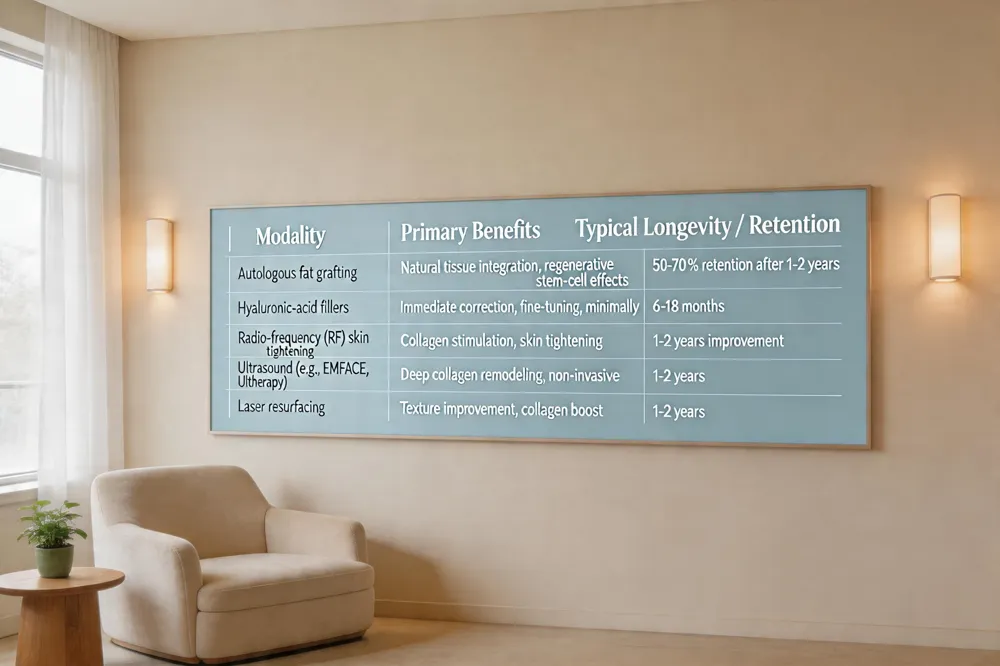 Facial volume loss can be corrected most effectively with a personalized, layered approach that combines autologous fat grafting, dermal fillers, and skin‑tightening technologies.
Autologous fat grafting versus fillers – Fat transfer uses the patient’s own harvested fat, which integrates into facial tissues, provides long‑lasting bulk, and delivers regenerative benefits from stem cells and growth factors. Retention rates of 50‑70 % are typical when the fat is harvested, purified, and reinjected in micro‑droplet deposits that preserve vascular supply. Synthetic hyaluronic‑acid fillers offer immediate correction for shallow depressions and can be fine‑tuned after a single visit, but they usually last only 6‑18 months and lack the collagen‑stimulating effect of autologous tissue.
Layered treatment planning – A thorough consultation maps deep and superficial fat compartments (e.g., deep medial cheek, sub‑orbicularis oculi) and determines where bulk restoration, precise contouring, or both are needed. Fat grafting restores foundational volume, while targeted filler placement smooths residual lines and accentuates the newly lifted contours.
Adjunctive skin‑tightening technologies – Radio‑frequency, ultrasound (e.g., EMFACE, Ultherapy) or laser resurfacing can be performed before or after grafting to stimulate collagen, improve skin elasticity, and support the lifted fat pads. These minimally invasive modalities enhance texture, reduce downtime, and help maintain the rejuvenated shape over years.
Together, this multimodal strategy delivers a natural, durable rejuvenation with minimal recovery, making it the best treatment for facial‑volume loss.
Managing Buccal Fat After Removal – Can It Be “Extended”?
| Re‑augmentation Option | How It Works | Approximate Duration |
|---|---|---|
| Autologous fat grafting | Harvest patient’s fat, purify, micro‑inject into cheek | Semi‑permanent; many grafts survive long‑term |
| Dermal fillers (HA) | Inject synthetic gel for temporary bulk | 6‑18 months, requires repeat treatments |
| Weight fluctuations | Increase remaining facial fat cells | Temporary, does not regenerate excised pad |
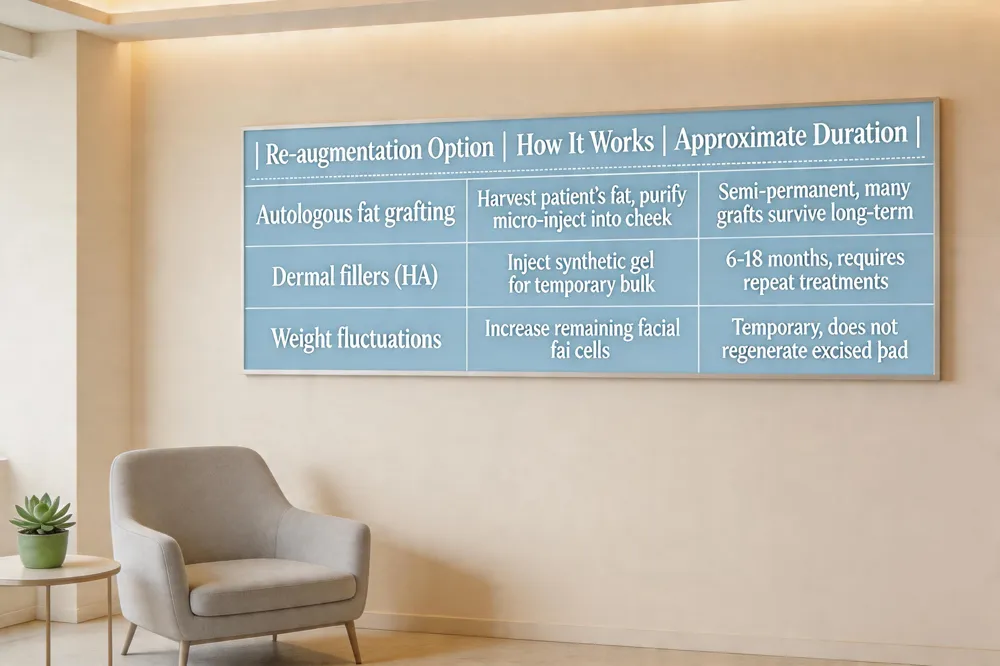 Buccal fat pads are deep facial fat compartments that provide cheek fullness and structural support. Once surgically removed, they do not regenerate; the body does not rebuild the original pads. Consequently, "extending" a removed buccal fat pad is not possible in a biological sense. However, volume loss can be addressed through two main re‑augmentation strategies.
Autologous fat grafting harvests the patient’s own fat from donor sites (abdomen, thighs, etc.), purifies it, and injects micro‑droplets into the cheek to recreate lost volume. This technique offers a permanent, natural‑looking result because the transferred adipocytes integrate with surrounding tissue and may even improve skin quality via stem cells and growth factors.
Dermal fillers (hyaluronic acid) provide a temporary bulk that can be precisely placed for contouring, but they dissolve over 6–18 months and require repeat treatments.
Weight fluctuations can enlarge remaining facial fat cells, yet they will not regenerate the excised buccal pads. Therefore, any post‑removal enhancement relies on grafts or fillers rather than true regeneration of the original tissue.
Correcting Uneven Contours From Separated Fat Pads
| Issue | Recommended Solution | Key Points |
|---|---|---|
| Gaps between deep fat compartments | Autologous fat grafting (deep medial cheek, sub‑orbicularis oculi) | Restores continuity, softens nasolabial folds |
| Excess buccal fat contributing to irregularity | Mini‑invasive buccal fat pad removal | Slims lower cheek while preserving other volume |
| Surface texture irregularities | RF skin tightening or laser resurfacing | Improves collagen, evens skin surface |
| Minor deficits | Small‑volume dermal fillers | Fine‑tuning of contour |
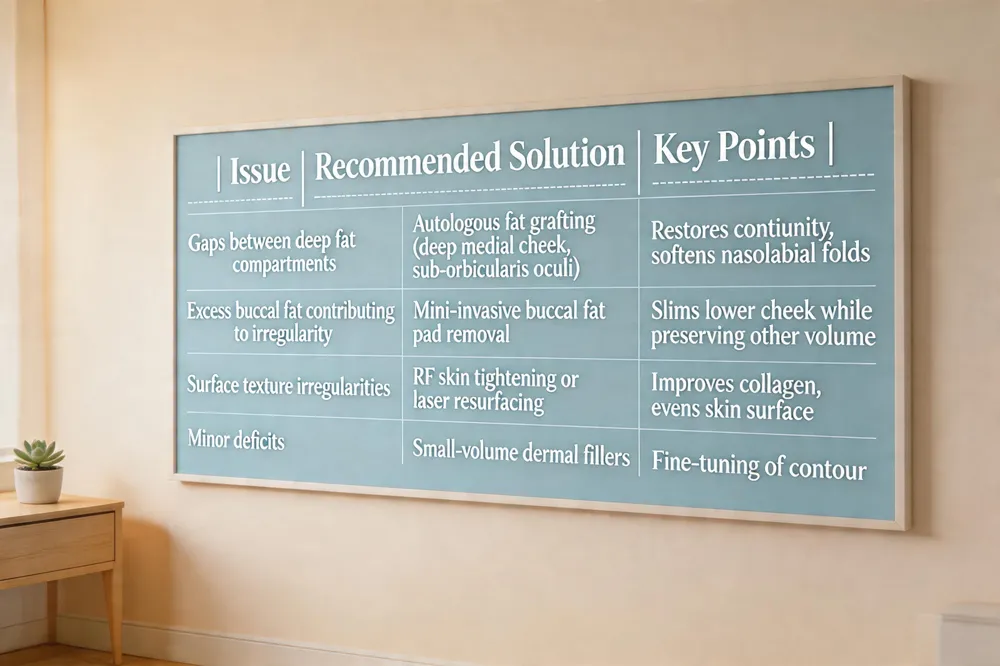 Uneven facial contours often arise when deep fat compartments atrophy or shift, leaving gaps between the medial cheek, sub‑orbicularis oculi, and other pads. The most reliable correction is autologous fat grafting: a surgeon harvests the patient’s own adipose tissue, purifies it (usually by low‑pressure suction and centrifugation), and injects micro‑droplets into the deficient compartments. Targeted placement in the deep medial cheek and sub‑orbicularis oculi pads restores continuity, softens nasolabial folds, and rebuilds a natural convex cheek projection. If excess buccal fat contributes to the irregularity, a minimally invasive buccal fat pad removal—performed through a tiny intra‑oral incision—slims the lower cheek while preserving volume elsewhere. The two procedures can be combined for a balanced mid‑face. For additional surface refinement, non‑surgical tools such as radio‑frequency skin tightening or laser resurfacing improve texture and stimulate collagen, further evening out the skin. Small‑volume dermal fillers may be used for fine‑tuning when the deficit is modest. A Board‑certified facial plastic surgeon in San Francisco can assess your anatomy and devise a personalized plan that blends these techniques for a harmonious, long‑lasting result.
Restoring Facial Volume Naturally – Non‑Surgical Options
| Pillar | Techniques / Products | Expected Outcome |
|---|---|---|
| Collagen‑stimulating topicals & procedures | Retinoid/peptide serums, HA moisturizers, RF, fractional laser, micro‑current facials | Gradual firming, modest volume increase |
| Lifestyle factors | Antioxidant‑rich diet, hydration, aerobic exercise, SPF 30+, smoking cessation, adequate sleep, facial massage | Supports skin health, slows volume loss |
| When surgery becomes necessary | Persistent deep mid‑face atrophy, severe skin laxity, pronounced nasolabial folds | Guides referral to autologous fat grafting or deep‑plane facelift |
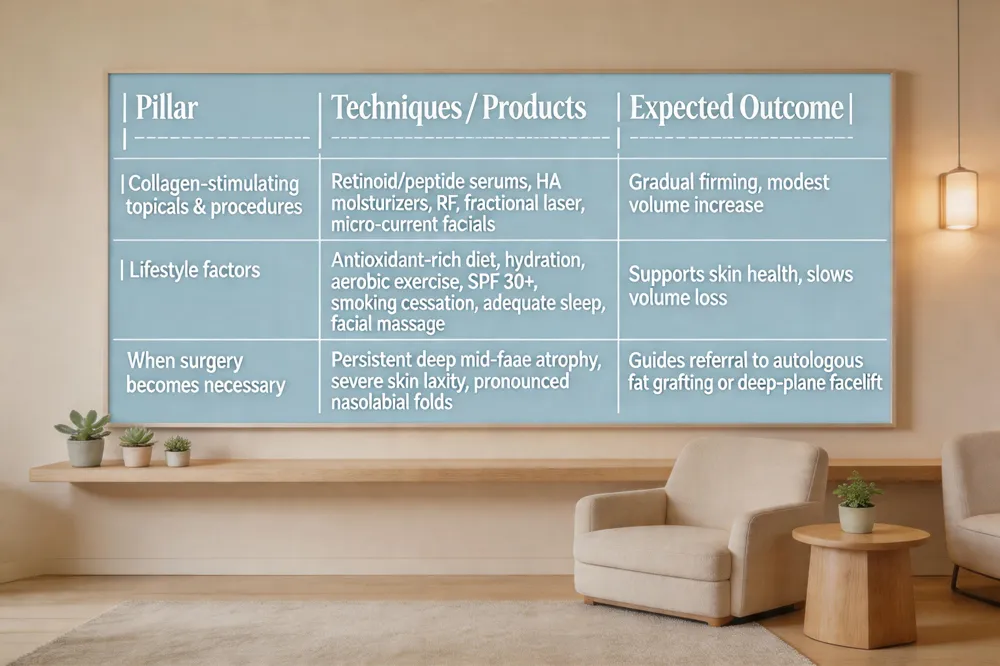 Restoring facial volume without surgery focuses on three pillars: collagen‑stimulating topicals and procedures, lifestyle habits that support skin health, and a clear understanding of when surgical intervention is truly needed.
Collagen‑stimulating topicals and procedures – Retinoid‑rich and peptide‑based serums boost dermal collagen synthesis, while hyaluronic‑acid moisturizers improve skin hydration and plumpness. In‑office treatments such as radio‑frequency (RF) tightening, fractional laser resurfacing, and micro‑current facials deliver controlled thermal or electrical stimulation that remodels collagen and elastin, creating a firmer, more voluminous appearance within weeks.
Lifestyle factors that support skin health – A diet rich in antioxidants (berries, leafy greens, omega‑3 fatty acids), adequate hydration, and regular aerobic exercise enhance circulation and cellular repair. Consistent sun protection (SPF 30+), smoking cessation, and adequate sleep reduce collagen breakdown. Gentle facial massage techniques, including the Neolifting buccal massage, promote lymphatic drainage and muscle tone, subtly lifting tissue over time.
When surgery becomes necessary – If deep mid‑facial fat compartments have atrophied, or if skin laxity is severe, non‑invasive methods may only provide modest improvement. Persistent hollow cheeks, pronounced nasolabial folds or significant volume loss after weight change often require autologous fat grafting or a deep‑plane facelift to restore structural support. A board‑certified facial plastic surgeon can assess these signs and recommend the appropriate surgical or minimally invasive option.
Your Personalized Path to Natural Contour
At the Aesthetic Surgery Center we begin every journey with a thorough facial analysis that maps each patient’s unique fat compartments, skin quality, and aesthetic goals. High‑resolution imaging and a detailed medical history allow our board‑certified surgeons to pinpoint deep‑plane volume loss, superficial laxity, and any asymmetry that may benefit from restoration. Based on this assessment, we design a bespoke plan that often blends autologous fat grafting, targeted dermal fillers, and energy‑based technologies such as radio‑frequency or focused ultrasound. Fat grafting supplies lasting, regenerative volume while fillers smooth fine lines and fine‑tune contour; energy devices tighten skin and stimulate collagen, enhancing overall harmony. After treatment, we schedule a structured follow‑up program that includes gentle lymphatic massage, skin‑care recommendations, and periodic touch‑up injections or non‑invasive sessions to preserve the rejuvenated look. This coordinated, patient‑centered approach ensures natural‑appearing results that endure for years while keeping recovery comfortable and downtime minimal.