Welcome to the Future of Facial Aesthetics
Artificial intelligence (AI) is reshaping facial plastic surgery by delivering precise, data‑driven insights that enhance every step of patient care. In pre‑operative assessment, AI platforms analyze 3‑D scans and millions of prior cases to pinpoint asymmetries, predict tissue response, and generate realistic outcome simulations that patients can explore before a incision is made. During planning, machine‑learning models suggest optimal incision lines, implant sizes, and filler volumes, reducing operative time and minimizing revision rates. Post‑operatively, AI monitors healing through serial photographs and wearable sensors, alerting clinicians to early signs of complications. At the San Francisco Aesthetic Surgery Center, this technology supports a philosophy of personalized, minimally invasive treatment: each plan is tailored to the individual’s anatomy, skin quality, lifestyle, and aesthetic goals, while preserving natural harmony and reducing downtime. Our mission is to combine board‑certified surgeon expertise with AI‑enhanced precision, ensuring patients receive safe, predictable, and satisfying results.
AI Transforming Facial Cosmetic Surgery
 Artificial intelligence is reshaping facial cosmetic surgery at every stage of care. AI‑driven pre‑operative assessment combines 3‑D imaging, electronic health records and demographic data to generate precise risk scores, helping surgeons identify patients who may benefit from less invasive techniques or require additional monitoring. Machine‑learning algorithms analyze millions of facial photographs, detecting subtle asymmetries, skin texture and aging patterns; they then produce realistic, patient‑specific outcome simulations that enhance shared decision‑making and set realistic expectations. In the operating room, deep‑learning models provide real‑time guidance by mapping critical structures, suggesting optimal incision lines and alerting surgeons to potential complications, while postoperative AI tools track wound healing through serial photographs and sensor data, prompting early interventions. Ethical considerations remain paramount: strict HIPAA‑compliant data handling, transparent reporting and mitigation of biases, and adherence to FDA SaMD regulations are essential to maintain patient trust.
AI in plastic surgery – AI enhances consultation, planning, intra‑operative precision and postoperative monitoring, delivering personalized, minimally invasive results while addressing privacy, bias and regulatory challenges.
AI‑driven planning the future of personalized facial cosmetic surgery – By leveraging large outcome datasets and generative models, AI predicts individual results, recommends optimal techniques, and simulates realistic before‑and‑after images, fostering collaborative, patient‑centered care.
Free Online Simulators & Patient Education
 Modern patients often explore visual tools before meeting a surgeon. FaceTouchUp’s web‑based simulator lets you upload a clear photo and instantly preview changes such as rhinoplasty, chin augmentation, or lip filler. EntityMed’s AI facial simulator offers free “nose job,” “lip plumping,” and “jawline reshaping” simulations without an account, while the Pody Plastic Surgery Simulator app for iOS provides one complimentary preview of lip filler, rhinoplasty, Botox, and body procedures. These platforms generate quick before‑and‑after images that can be shared with a board‑certified surgeon for discussion.
Free plastic surgery simulator online If you want a free online plastic‑surgery simulator, try FaceTouchUp’s web‑based tool, which lets you upload a clear photo and instantly preview changes for rhinoplasty, chin augmentation, lip filler and more. The platform is used by both patients and surgeons, so the visualizations are clinically informed rather than just fun filters. Another option is the AI‑driven facial simulator from EntityMed, which offers free “nose job,” “lip plumping,” and “jawline reshaping” simulations without requiring an account. Both services allow you to download or share the results, making it easy to bring a visual reference to your consultation with a board‑certified surgeon at our San Francisco Aesthetic Surgery Center. Remember that these tools are for education only; the final outcome will depend on your anatomy, skin quality and the surgeon’s expertise.
AI plastic surgery simulator free There are several free AI‑powered plastic‑surgery simulators that let you upload a selfie and preview cosmetic changes instantly. The Pody Plastic Surgery Simulator app for iOS offers one free simulation of lip filler, rhinoplasty, Botox, and body procedures, with extra credits available if a technical issue occurs. Online platforms such as the EntityMed AI facial simulator and FaceTouchUp also provide free, no‑account tools for visualizing nose jobs, lip augmentation, jawline reshaping, and skin‑tightening results. These simulators generate before‑and‑after images in seconds, allowing you to compare outcomes privately and share them with a surgeon or loved ones. While useful for education and planning, remember they are visual previews only and not a substitute for a professional medical consultation.
Limitations of free tools and importance of professional consultation: Free simulators use generic algorithms and may not account for individual skin quality, ethnic variation, or specific surgical techniques, which can lead to unrealistic expectations. A professional consultation is essential to translate the visual preview into a safe, realistic treatment plan that is customized to your anatomy, goals, and the surgeon’s expertise.
Body Contouring Trends: BBL Evolution
 The demand for buttock fat grafting remains strong in 2026, driven by patients seeking a natural, lifted silhouette after rapid weight loss or after GLP‑1‑mediated bariatric programs. Surgeons now prefer the term “fat grafting to the buttocks” over “Brazilian butt lift” (BBL) to highlight precision, safety, and the individualized nature of the procedure. This rebranding aligns with a broader shift toward minimally‑invasive, patient‑centered contouring that emphasizes long‑lasting results and reduced downtime. Advanced imaging and AI‑guided volume calculations have lowered complication rates, while strict adherence to anatomical safety zones protects neurovascular structures. The surge in GLP‑1‑driven weight loss has expanded the pool of candidates, prompting a rise in autologous fat‑ graft techniques that restore volume and improve skin quality.
Are BBLs out of style in 2026? No, Brazilian butt lifts are not out of style in 2026; they’re actually experiencing a quiet resurgence. Surgeons are simply moving away from the “BBL” label and referring to the procedure as “fat grafting to the buttocks,” which emphasizes the technique’s precision and safety. This rebranding reflects a broader trend toward minimally invasive, personalized body contouring rather than a shift away from the desired aesthetic. Patients continue to seek a natural‑looking, lifted silhouette, and the refined approach aligns with current preferences for subtle, long‑lasting results. In short, the procedure is still very much in demand—just under a more sophisticated name.
Non‑Surgical Facelift Alternatives
 Modern patients can achieve a lifted, youthful look without incisions by combining AI‑guided imaging with minimally invasive technologies.
Ultherapy and Thermage use focused ultrasound or radio‑frequency energy to heat deep tissue, stimulating collagen remodeling and tightening sagging skin on the jawline, chin, and neck. AI‑enhanced 3‑D scans help clinicians target treatment zones precisely, maximizing results while minimizing discomfort.
Advanced injectable volumizers such as Juvederm, Restylane (hyaluronic acid) and Radiesse (calcium‑hydroxylapatite) restore lost volume in cheeks, nasolabial folds, and the tear‑trough, creating a subtle lift that can last 12‑24 months. AI‑driven facial analysis predicts optimal filler placement and amount for each patient’s anatomy, reducing over‑correction.
Microneedling with RF and fractional laser resurfacing refine texture, improve skin elasticity, and further tighten tissue. AI algorithms assess skin type and healing capacity, tailoring energy settings for safe, effective treatment.
Patient selection and realistic expectations remain critical. Ideal candidates have mild‑to‑moderate skin laxity, good skin quality, and clear aesthetic goals. AI‑generated simulations allow patients to visualize outcomes, fostering informed consent and satisfaction. Together, these tools offer a comprehensive, non‑surgical facelift alternative with minimal downtime and natural‑looking results.
Future Trends for 2026: Regeneration & Prejuvenation
 In 2026 the aesthetic field will pivot toward preservation and regeneration rather than dramatic overhauls. Regenerative aesthetics—including platelet‑rich plasma (PRP), platelet‑rich fibrin (PRF), exosome boosters, and biostimulatory fillers—will become routine adjuncts to improve skin quality, collagen repair, and scar reduction. Prejuvenation will dominate the 20‑ to 30‑year‑old cohort, with low‑dose neuromodulators, micro‑fillers, and light‑therapy devices used as maintenance routines to delay visible aging. The surge in GLP‑1‑driven weight loss will drive a post‑weight‑loss contouring boom, emphasizing natural‑looking body lifts, thigh and arm refinements, and autologous fat transfer for volume restoration. Across all ages, minimally invasive, tissue‑preserving approaches—such as deep‑plane facelifts, subtle rhinoplasties, and AR‑guided procedural planning—will be favored for their rapid recovery and natural outcomes. These trends reflect a shift from dramatic transformations to subtle, anatomy‑preserving enhancements that look undetectable while meeting each patient’s individualized aesthetic goals.
Deep Plane Facelift Deep Dive
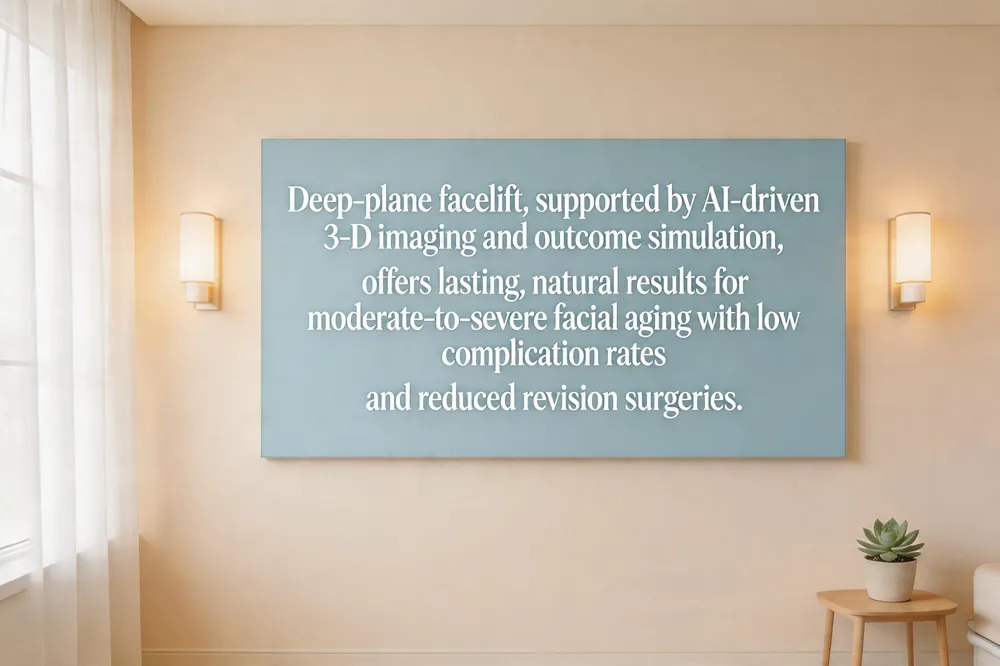 A deep‑plane facelift is an advanced facial‑rejuvenation surgery that releases and lifts the deeper facial layers beneath the SMAS, allowing the mid‑face, jawline, and neck to be repositioned as a single, natural‑looking unit. By targeting key retaining ligaments and the buccal fat pad, the procedure restores volume, tightens sagging jowls, and smooths deep lines, delivering results that can last a decade or more. Ideal candidates are men and women in their 50s‑70s with moderate‑to‑severe facial aging, including loss of cheek fullness, drooping mouth corners, and a weak jawline. The surgery is performed through modest incisions hidden in the hairline and behind the ear, with most patients returning to normal activities within 2–3 weeks and seeing final contour refinement by 3–6 months. Complication rates are low—hematoma in 1‑2 %, temporary facial‑nerve dysfunction in <1 %, and infection rare—thanks to precise anatomical mapping and AI‑assisted planning. At our San Francisco center, AI‑driven 3‑D imaging and outcome simulation personalize the plan to each patient’s anatomy, improve communication, and have been linked to a 10 % reduction in revision surgeries, resulting in higher satisfaction and natural‑looking, long‑lasting rejuvenation.
Media, Celebrity Influence & Ethical AI
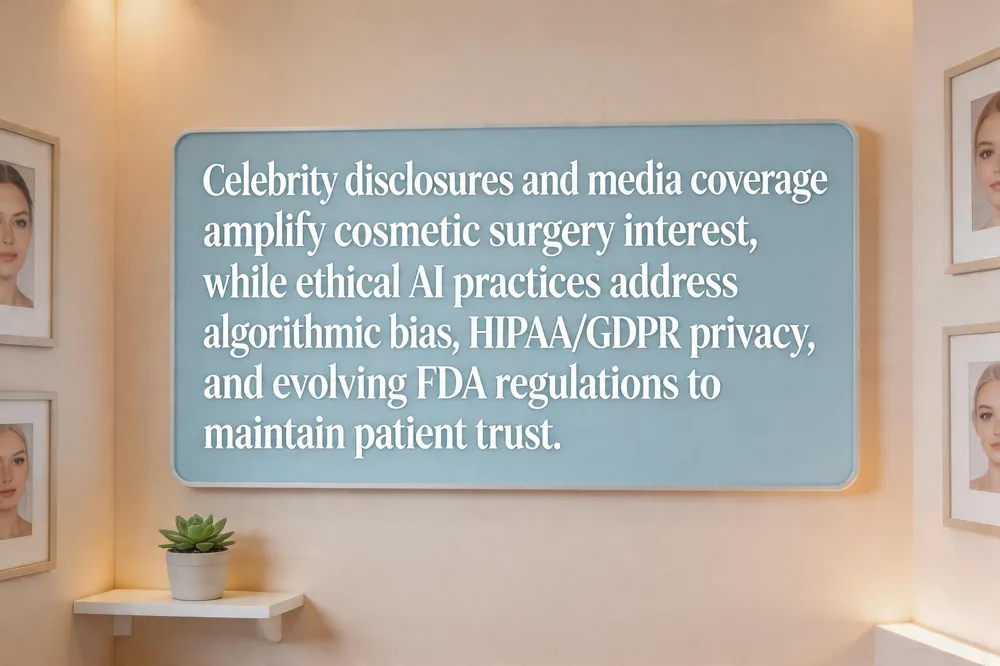 Allure magazine consistently spotlights the latest aesthetic trends, from regenerative‑medicine adjuncts like exosomes to minimally invasive facelifts and personalized filler regimes, blending surgeon insights with patient stories to guide informed decisions. Celebrity disclosures—Kylie Jenner’s detailed breast‑augmentation TikTok, Simone Biles’s blepharoplasty reveal augmentation, and Brooks Nader’s nose‑job and "Nefertiti" Botox—have normalized cosmetic surgery as a form of self‑care, amplifying public interest and expectations. At the same time, AI‑driven facial analysis and outcome simulations raise critical ethical issues: algorithmic bias from non‑representative training data, stringent data‑privacy requirements under HIPAA and GDPR, and evolving FDA SaMD regulations. Our practice embraces AI as a decision‑support tool—using high‑resolution 3D imaging, predictive analytics, and NLP‑based education—while maintaining surgeon oversight, transparent consent, and rigorous bias mitigation to ensure that technology enhances, rather than replaces, expert judgment and patient trust.
Final Thoughts on AI‑Driven Personalized Care
Artificial intelligence is rapidly becoming a trusted ally in facial aesthetic medicine, offering precise measurements, realistic 3‑D simulations, and data‑driven risk assessments that enhance safety, efficiency, and patient satisfaction. When used responsibly—with transparent consent, rigorous data security, and surgeon oversight—AI complements the surgeon’s artistic judgment without replacing the human connection that underpins successful outcomes. We invite you to experience an AI‑enhanced consultation at our San Francisco center, where cutting‑edge imaging, personalized treatment algorithms, and a collaborative, patient‑focused approach converge to create natural‑looking, lasting results. Schedule your personalized visit today and discover how technology and expertise together can help you achieve your aesthetic goals with confidence.