Introducing Virtual Consultations for Facial Surgery
Telemedicine—once a niche tool—has become a core component of aesthetic plastic surgery since the COVID‑19 pandemic. Today, most facial‑surgery practices offer video‑based pre‑operative visits that combine high‑resolution photographs, 3‑D imaging and real‑time discussion of aesthetic goals. Platforms such as Zoom for Healthcare, Doxy.me, and Microsoft Teams provide encrypted, HIPAA‑compliant video streams, while secure patient portals allow upload of standardized photos, medical histories and imaging studies. Compliance with state licensure, the Telehealth Enhancement Act and signed informed‑consent forms ensures legal safety for both surgeon and patient. For residents of the San Francisco Bay Area, virtual consultations eliminate long commutes through congested downtown traffic, reduce lost work hours, and grant access to board‑certified surgeons across the region. The ability to review digital simulations during the call also shortens the overall pre‑operative timeline, making high‑quality facial care more convenient and affordable. Patients also benefit from immediate electronic documentation that integrates directly into the clinic’s electronic health record.
How Virtual Consultations Work in Facial Surgery
 Virtual facial surgery consultations begin with a secure, HIPAA‑compliant video platform (e.g., Doxy.me, Zoom for Healthcare). The patient logs in, the surgeon greets, and a pre‑consult questionnaire is reviewed while a patient‑submitted portal of high‑resolution photographs is shared via an encrypted portal.
Video‑conference workflow and secure platforms – The surgeon confirms the patient’s identity, obtains electronic consent, and then conducts a live visual exam, discussing aesthetic goals and medical history. All video streams and file transfers are encrypted and stored per state licensure and Telehealth Enhancement Act guidelines.
High‑resolution photos, 3‑D imaging (Vectra, Crisalix) and AI tools – Patients upload standardized front, profile, and ¾‑turn images taken in good lighting. Surgeons may integrate 3‑D imaging (Vectra, Crisalix) and AI‑enhanced simulators such as FaceTouchUp. FaceTouchUp (the AI‑powered plastic‑surgery simulator) lets patients upload a photo and instantly visualize realistic results for rhinoplasty, facelift, chin augmentation, lip fillers, and more, supporting informed consent and expectation‑setting.
Patient preparation – Clear instructions advise patients to use a well‑lit space, a neutral background, and a tripod or steady hand. Ideal angles include a full frontal view, a side profile, a ¾ view, and close‑ups of areas of concern. High‑resolution smartphones (≥8 MP) and stable broadband (>5 Mbps) are recommended.
Frequently asked questions
- FaceTouchUp: An AI‑driven simulator that provides real‑time, lifelike visualizations of facial and body procedures, accessible via any device and integrated into the Aesthetic Surgery Center’s workflow.
- AI plastic surgery simulator free: Free versions exist, such as FaceTouchUp’s basic web tool, the Pody Plastic Surgery Simulator app (iOS/Android), and Kapwing’s AI Plastic Surgery Simulator with complimentary credits.
- Is there a free plastic surgery simulator?: Yes—FaceTouchUp offers a free web‑based option that allows patients to upload a photo and preview common facial enhancements, though advanced features require a paid license.
Benefits of Telemedicine for Surgical Care
 Telemedicine streamlines pre‑operative assessments and education by letting surgeons review high‑resolution photographs, 3‑D imaging, and patient‑provided videos before the first in‑person visit. Secure video platforms enable real‑time discussion of aesthetic goals, medical history, and postoperative expectations, reducing travel time, parking fees, and days off work. Patients can upload labs, medication lists, and consent forms through encrypted portals, allowing surgeons to deliver personalized education and symptom‑tracking reminders that improve recovery and lower readmission rates.
Post‑operative monitoring and wound checks become efficient remote video visits. Patients capture standardized photos of incisions, swelling, and scar healing from home; surgeons assess these images, triage concerns, and adjust care plans without requiring a clinic trip. This approach cuts travel expenses, minimizes exposure to infectious diseases, and often leads to higher patient satisfaction scores comparable to in‑person follow‑ups.
Expanded access for remote and underserved patients is another key benefit. Telehealth breaks geographic barriers, allowing individuals in rural areas or those with limited mobility to connect with board‑certified facial surgeons. Virtual consults also facilitate second‑opinion reviews and multidisciplinary collaboration, ensuring timely specialist input.
What are the benefits of telemedicine in surgery? Telemedicine streamlines pre‑operative assessments, post‑operative follow‑ups, and continuous remote monitoring, saving time and work days, enhancing communication among care teams, and improving patient satisfaction while lowering costs.
What are the benefits of virtual consultations? They eliminate travel, reduce exposure to illness, enable flexible scheduling, involve caregivers easily, and allow surgeons to assess facial symmetry and scar placement in the patient’s natural environment, setting realistic expectations before any in‑person exam.
What are the four P's of telehealth? Planning, Preparing, Providing, and Performance evaluation— a framework that ensures tele health services organized delivered, delivered effectively, and continuously improved.
Limitations and Challenges of Virtual Visits
 Virtual consultations have transformed access to facial plastic surgery, but they carry notable drawbacks that must be weighed against their convenience.
Inability to perform tactile physical examination – A screen cannot replace hands‑on assessment of skin elasticity, texture, firmness, or subtle three‑dimensional asymmetries. These tactile cues are essential for accurate surgical planning, especially for procedures that depend on tissue quality such as rhinoplasty, facelift, or scar revision.
Technical reliability, lighting, and camera quality issues – Poor internet connectivity, low‑resolution webcams, inadequate lighting, or unstable platforms can obscure fine facial details, leading to misinterpretation or the need for repeat visits. Even high‑definition video may fail to capture depth, limiting the surgeon’s visual judgment.
Privacy, security, and patient rapport concerns – Transmitting high‑resolution photographs and health information demands HIPAA‑compliant encryption; any breach erodes trust. Additionally, the virtual environment can diminish the personal connection and non‑verbal cues that foster confidence when discussing aesthetic goals.
What are the downsides of virtual appointments? The primary downside is the lack of tactile examination, compounded by technical glitches, data‑security risks, and reduced rapport, all of which can affect assessment accuracy and patient satisfaction.
Why are doctors not doing telehealth anymore? Many physicians have scaled back telehealth because temporary Medicare waivers that supported reimbursement expired, insurers have tightened coverage, and the administrative burden of uncertain billing outweighs the benefits for many practices.
Patient Safety and Special Considerations
 Consultation fees vary by practice. Many surgeons charge $75‑$250, which is typically credited toward the procedure cost if the patient proceeds. In competitive markets like San Francisco, some clinics offer complimentary initial consultations as a promotional incentive. The fee model helps secure dedicated time and reduces perceived sales pressure, while a free visit lowers the barrier for prospective patients.
Regulatory and insurance landscapes for virtual care require HIPAA‑compliant platforms, state‑specific licensure, and often expanded coverage for telehealth services by Medicare and private insurers, though reimbursement varies by plan.
Future Directions: Virtual Surgical Planning and AI Integration
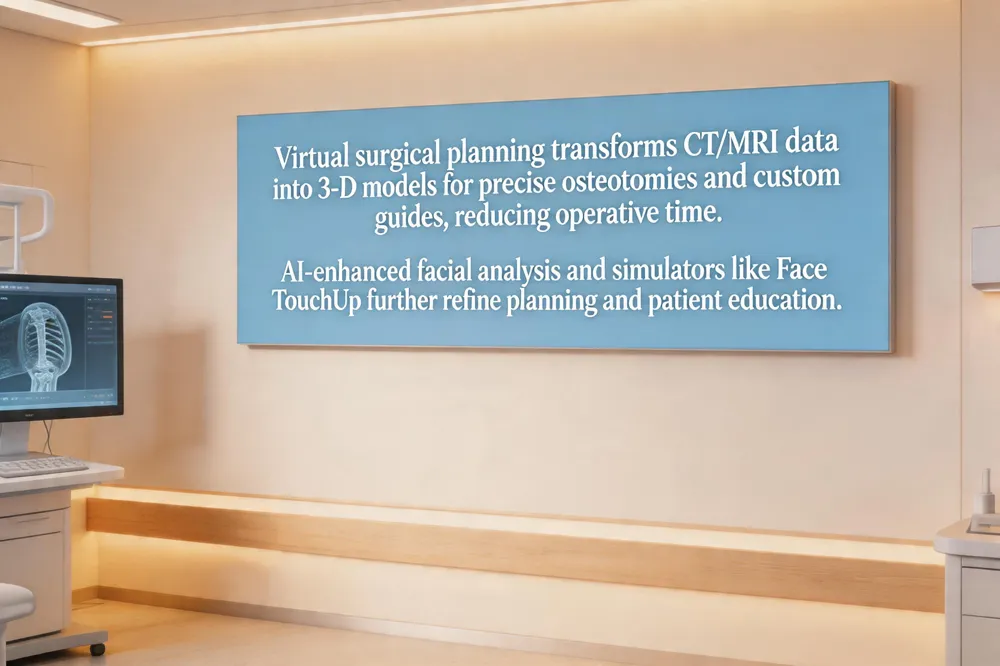 Virtual surgical planning (VSP) begins with high‑resolution CT, MRI, or cone‑beam scans that are converted into a 3‑D digital model of the patient’s facial anatomy. Surgeons, often alongside biomedical engineers, manipulate this model to simulate osteotomies, reposition bony segments, and design patient‑specific guides or plates that are 3‑D printed for intra‑operative use. This rehearsal reduces operative time by up to 45 minutes, improves accuracy, and enhances patient education by allowing real‑time visual walkthroughs of the planned outcome.
AI‑enhanced facial analysis tools further refine VSP by automatically quantifying symmetry, skin texture, and predicting postoperative results, feeding the simulation with data‑driven forecasts.
What is virtual surgical planning?
Virtual surgical planning (VSP) is a computer‑based workflow that converts patient‑specific imaging data—typically CT or MRI scans—into a detailed three‑dimensional model of the anatomy to be treated. Surgeons use this virtual model to simulate the procedure, map out precise osteotomies, and design custom implants or patient‑specific surgical guides before entering the operating room. The planning session is often conducted online with a biomedical engineer, allowing real‑time adjustments to ensure the digital plan matches the patient’s unique structures. Once approved, the plan is translated into 3D‑printed guides, splints, or anatomical models that assist the surgeon during the actual surgery, improving accuracy and predictability. This personalized, pre‑operative rehearsal reduces operative time, minimizes intra‑operative surprises, and helps achieve more consistent aesthetic and functional outcomes.
FaceTouchUp FaceTouchUp is an AI‑powered plastic‑surgery simulator that lets patients upload a photo and instantly visualize the results of procedures such as rhinoplasty, facelift, breast augmentation, liposuction, chin augmentation and more. The platform is cloud‑based and can be accessed from any device, making it easy for both in‑clinic consultations and remote sessions. Its intuitive, no‑training‑required interface enables surgeons at the Aesthetic Surgery Center in San Francisco to show realistic, lifelike adjustments and help patients set clear expectations. FaceTouchUp also offers website integration and a professional license that lets practices embed the tool directly on their own sites for continuous engagement. By providing personalized, real‑time visualizations, the simulator enhances patient education, builds confidence and streamlines the decision‑making process.
Balancing Convenience with Clinical Rigor
Virtual consultations broaden patient reach, cut travel time, and expedite pre‑op education, yet they cannot replace hands‑on tactile assessment of skin elasticity, texture, and dynamic symmetry. A hybrid approach—initial video visit followed by focused in‑person exam—balances convenience with clinical rigor, ensuring accurate planning and optimal outcomes for the patient.