Introduction
Providing a clear, day‑by‑day healing timeline empowers patients to set realistic expectations, plan daily activities, and communicate effectively with their surgical team. Knowing when swelling peaks, when sutures are removed, and when normal work can resume reduces anxiety and promotes adherence to postoperative instructions. Recovery speed is influenced by several individual factors: age, overall health, skin quality, smoking status, nutrition, and the specific facelift technique (traditional, deep‑plane, or mini). Genetic healing capacity and any concurrent procedures also play a role. The postoperative course can be grouped into four phases. Phase 1 (Days 1‑6) involves peak bruising, pain management, head elevation, and limited movement. Phase 2 (Days 7‑14) sees decreasing swelling, suture removal, and return to light duties. Phase 3 (Days 15‑30) includes residual tightness, contour improvement, and clearance for light exercise. Phase 4 (Beyond Day 30) marks the transition to normal activities while minor edema and numbness may linger for months. Patience and consistent follow‑up ensure the best long‑term aesthetic outcome.
Day‑by‑Day Early Recovery (Days 1‑7)
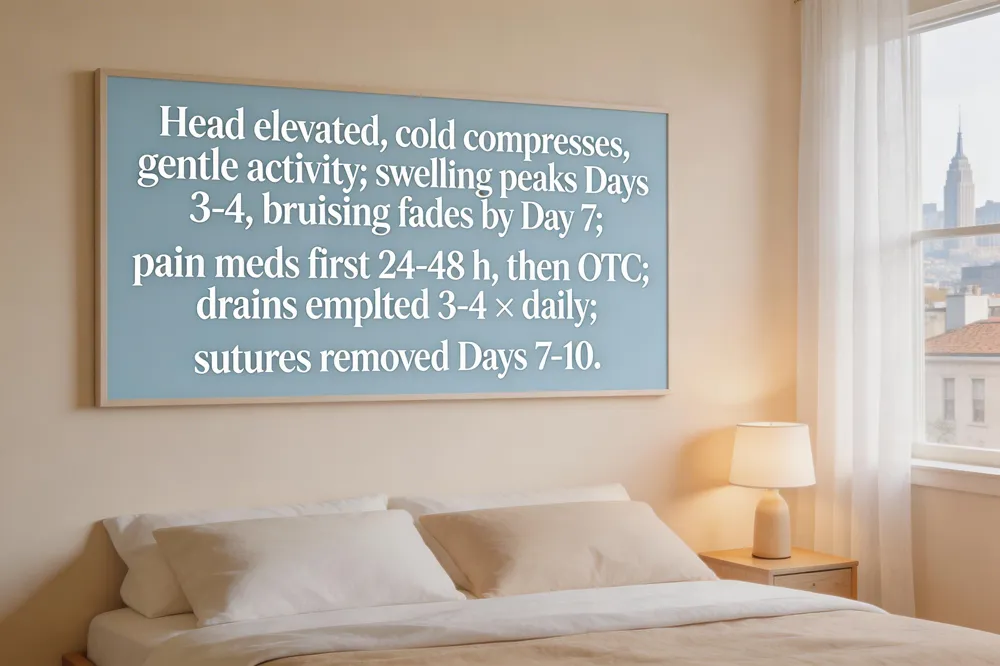 The first week after a facelift is the most intensive phase of healing. Immediate postoperative care focuses on keeping the head elevated (two to three pillows), applying cold compresses with a barrier, and limiting activity to gentle walking and light housework. Swelling and bruising typically peak between Days 3‑4, presenting as a “puffy” jawline, cheeks, and periorbital area; by Days 4‑7 the edema begins to soften and the bruising shifts from deep purple to yellow‑green. Pain is managed with prescription pain medication for the first 24‑48 hours, after which many patients transition to over‑the‑counter analgesics such as acetaminophen or ibuprofen. Incision sites are protected with dressings or a compression wrap; drains, if placed, are emptied 3‑4 times daily and recorded until removal at the first follow‑up. Sutures (often dissolvable) are typically removed between Days 7‑10, and the incisions may appear pink‑red during this period.
Post Plastic surgery care near me – Our San Francisco Aesthetic Surgery Center offers personalized post‑operative support, including scheduled dressing changes, 24‑hour nurse hotline, medication management, and optional in‑home visits for out‑of‑town patients.
Swelling facelift recovery day by day photos – Days 1‑3 show pronounced puffiness; Days 4‑7 reveal a gradual flattening of the face; Weeks 2‑4 display mostly resolved swelling with subtle residual tightness.
Facelift pictures after 5 days – By Day 5 bruising has softened, swelling is reduced, and the jawline begins to look more defined; patients can often wear light makeup.
Facelift recovery pictures day by day – Early photos (Days 1‑2) show heavy bruising; Days 3‑5 demonstrate flattening; Days 6‑10 reveal smooth contours; Weeks 2‑3 show clearer definition; Weeks 4‑6 present the final refined look.
Mid face lift recovery photos – Swelling diminishes rapidly in the first week, cheekbones become defined by week 2, and by weeks 4‑5 the subtle lift is fully visible.
Week 2 to Week 4: Transition Phase
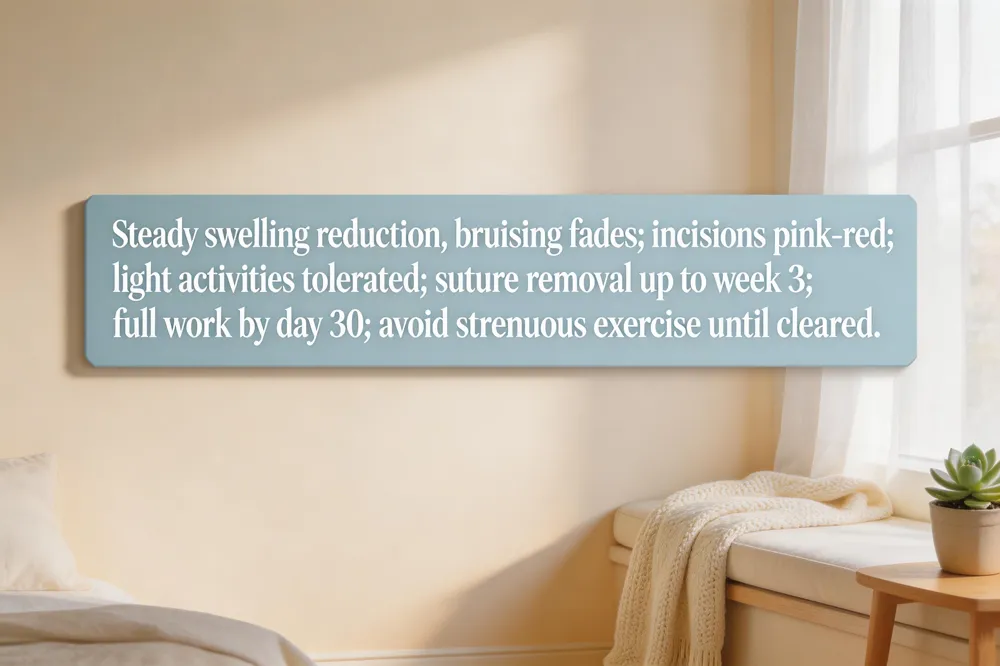 During the transition from week 2 to week 4 the most noticeable change is the steady reduction of swelling and the fading of bruising. By day 21 (about three weeks after surgery) most of the bulk of fluid has resolved, leaving a smoother, more defined contour. The skin may still feel a little tight and the incision lines appear pink‑red, but they are already fading. Patients typically look refreshed and natural at this stage, with jowls lifted and jawline sharper, while light activities such as short walks and gentle exercise are well tolerated.
Suture removal usually occurs between the end of week 1 and week 3, depending on the surgeon’s protocol and individual healing. Once the stitches are out, many patients feel comfortable returning to desk‑job duties and light household tasks, often by the end of week 2. Full return to work is common around day 30, although mild swelling may linger for several more weeks. This residual puffiness is normal; it often results from fluid shifts and lymphatic drainage that is still catching up. Keeping the head elevated, staying hydrated, limiting salty foods, and gentle lymphatic massage can help speed resolution. Strenuous exercise, heavy lifting, or any activity that raises facial blood pressure should be avoided until the surgeon gives clearance; doing so can prolong swelling and increase discomfort. If swelling becomes painful, red, feverish, or unusually firm, contact the surgeon promptly to rule out infection or other complications.
Beyond One Month: Long‑Term Healing (Weeks 5‑12)
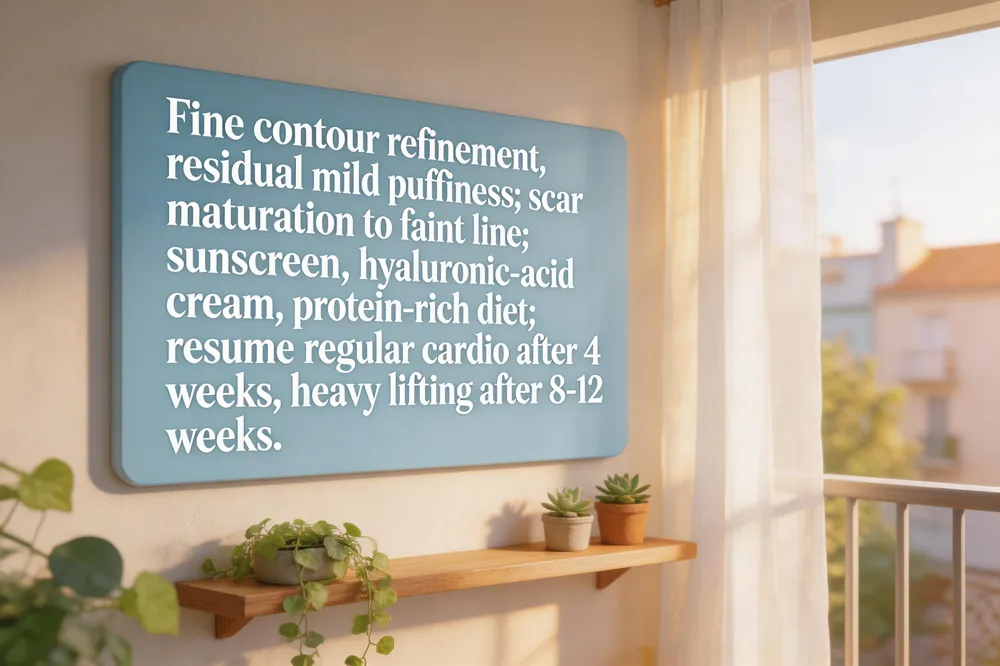 During weeks 5‑12 the face continues to refine its new contour while the body completes its deep‑tissue remodeling.
Residual swelling and tightness – By the sixth month most patients notice only mild puffiness along the jawline or neck. This lingering fluid reflects the final stages of lymphatic drainage and tissue remodeling. Persistent or increasing swelling, firmness, pain, or redness should be evaluated at a routine follow‑up, as it may indicate a scar‑tissue “roadblock” that an early—. Gentle manual lymphatic drainage, low‑sodium potassium‑rich meals, and keeping the head slightly elevated while sleeping help the remaining fluid clear efficiently.
Scar maturation and skin care – Incisions transition from a pink‑red hue to a faint, almost invisible line. A medical‑grade hyaluronic‑acid cream paired with a fragrance‑free moisturizer containing peptides and antioxidants supports supple healing. Broad‑spectrum SPF 30+ sunscreen must be applied daily from the first week onward; avoid retinoids, strong exfoliants, and scented products for at least a month.
Nutrition, hydration, and lymphatic support – Adequate protein, vitamin C, zinc, and antioxidants are essential for collagen synthesis. Hydration with water, electrolyte drinks, or bone‑broth‑based smoothies promotes tissue elasticity. Light walking and approved facial massage stimulate circulation and lymph flow.
When to resume full exercise and activities – Most patients can return to regular cardio or light resistance training after the first month, provided they feel no pain and the surgeon has cleared them. High‑impact or heavy‑lifting activities are best delayed until the 8‑12‑week mark, when scar tissue has softened and the jawline is fully defined.
Key FAQs
- Swelling 6 months after facelift: mild residual puffiness is normal; persistent swelling should be checked.
- Tightness 6 months after facelift: usually mild; gentle facial exercises and moisturization help.
- How long does facial cosmetic surgery take to heal?: light activities by 2‑3 weeks, most external swelling by 4 weeks, final contour by 3 months, subtle remodeling up to 6 months.
- How can I speed up healing after plastic surgery?: follow surgeon’s instructions, stay hydrated, eat protein‑rich foods, elevate head, avoid nicotine, and incorporate gentle lymphatic massage.
- Plastic surgery recovery time: varies by procedure; minimally invasive 3‑5 days, moderate facial 10‑14 days, major body contouring 5‑10 days off work with 2‑6 weeks low lifting restrictions.
- What is the best cream to use after a facelift?: medical‑grade hyaluronic‑acid cream with peptide‑rich moisturizer and diligent sunscreen use.
Special Situations and Patient Populations
 Older patients and physiological considerations
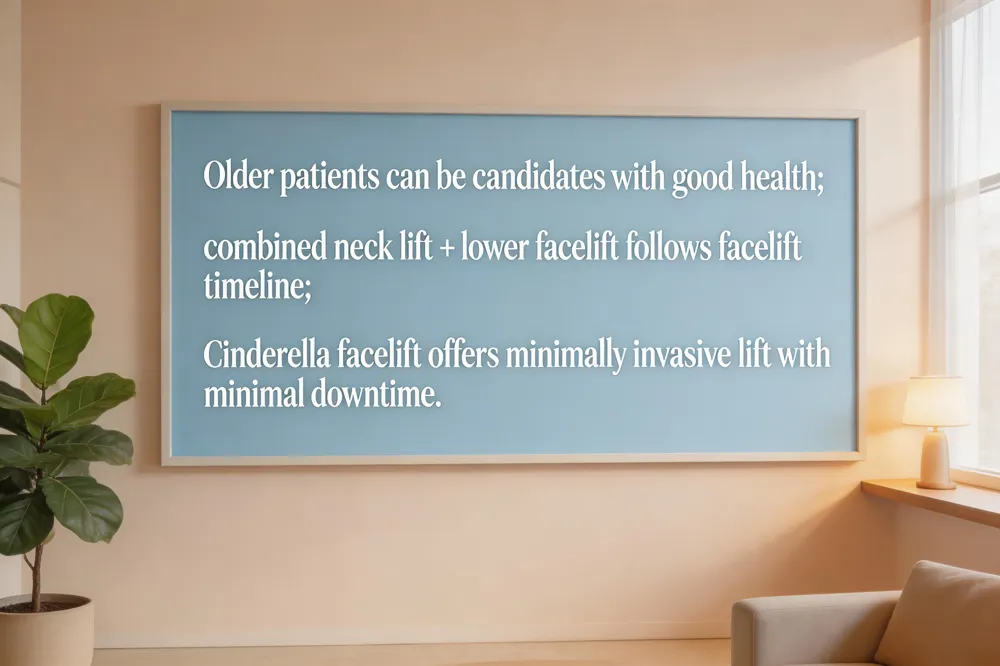
A facelift is not ruled out by chronological age alone. A 70‑year‑old can be a good candidate if overall health is stable, cardiac and pulmonary status are optimized, and expectations are realistic. Surgeons evaluate physiologic age, skin elasticity, and support systems before proceeding. Recovery may be slower, but a tailored surgical plan can safely refresh facial contours and boost confidence.
Combined procedures (neck lift + lower facelift)
When a neck lift is performed with a lower facelift, the recovery timeline aligns with the most intensive phase of a facelift. Patients typically resume light daily activities within 10‑14 days and return to non‑physical work after about ten days. Swelling and bruising subside progressively, with noticeable reduction by weeks 4‑6. Full contour refinement and skin‑tightening become evident between 3 and 6 months, and final scar maturation may continue up to a year.
Non‑surgical alternatives like Cinderella facelift
A Cinderella facelift is a minimally invasive option that blends soft thread‑lifting, Botox, and dermal fillers. Tiny absorbable threads provide an immediate lift, while Botox smooths fine lines and fillers restore volume. No incisions or anesthesia are required, resulting in little to no downtime. Results are temporary but can be refreshed with repeat sessions, making it attractive for patients seeking a quick, low‑risk rejuvenation.
Support Services and Post‑Op Care at Our San Francisco Center
 Our Aesthetic Surgery Center offers private, on‑site after‑care suites staffed by board‑certified plastic‑surgery nurses, certified wound‑care specialists, and licensed therapists. These professionals monitor vital signs, manage pain, and watch for complications such as hematomas or infection. Each patient receives a personalized recovery plan that includes daily dressing changes, scar‑management guidance, nutrition counseling and 24‑hour IV therapy or compression garments when needed.
A 24‑hour nurse hotline is available for any post‑op questions. Our nursing staff provides step‑by‑step instructions on incision care, dressing changes, drain management, medication schedules, safe activity restrictions, diet, and proper icing techniques. They also educate patients on warning signs of infection—fever, excessive drainage, increasing pain—so prompt care can be sought.
Transportation and out‑of‑town assistance are coordinated through our concierge service. We arrange airport pickups, private vehicle transport to follow‑up appointments, and, when desired, home‑visit support from our wound‑care experts or a luxury recovery house. This comprehensive network ensures continuous, compassionate care from the moment you leave the operating room until you are fully healed.
Conclusion
From day 1’s drowsiness and swelling peaks around days 3‑4, through the gradual subsidence of bruising and the removal of sutures by week 2‑3, to the noticeable contour improvements and pink‑red incision fading by day 30, the facelift healing journey follows a predictable 30‑day roadmap before longer subtle refinements continue for months. Patients should remember that pain control, head‑elevation, hydration, and light activity are essential early, while avoiding heavy lifting, smoking, and sun exposure. Strict adherence to the surgeon’s postoperative guide—attending follow‑ups, caring for incisions, and reporting warning signs—optimizes safety, comfort, and the final aesthetic result.