Why Personalization Matters
Patient‑centered care places the individual’s values, preferences, and lifestyle at the core of the recovery plan. By tailoring follow‑up timing, communication mode, and wound‑care instructions to each client, aesthetic surgeons honor the eight principles of patient‑centered care—respect, coordination, education, comfort, emotional support, family involvement, continuity, and access. This individualized approach has been shown to boost satisfaction scores, reduce unnecessary emergency visits, and enhance safety by catching complications early through scheduled calls or tele‑checks. At the Aesthetic Surgery Center, personalized follow‑up aligns with our commitment to compassionate, transparent, and outcome‑focused care, ensuring every patient feels heard, supported, and confident throughout their healing journey.
Recovery Phases: Phase 1 vs Phase 2
 Recovery after cosmetic surgery is best understood as a series of distinct phases that guide both the surgeon’s follow‑up plan and the patient’s self‑care routine.
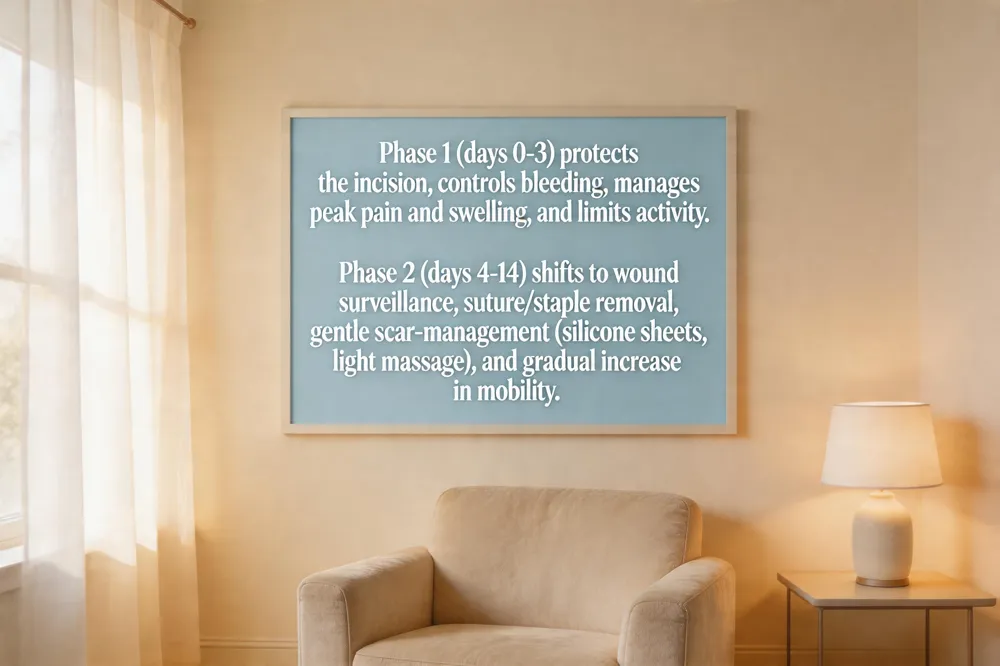
Day‑by‑day healing priorities – Phase 1 (days 0‑3) focuses on protecting the surgical site, controlling bleeding, and establishing a clean wound environment. Dressings remain intact for the first 48 hours, compression garments are worn continuously, and head‑elevation reduces facial edema. Phase 2 (days 4‑14) shifts to monitoring wound integrity, removing sutures or staples as scheduled, and beginning gentle scar‑management techniques such as silicone sheets or light massage after two weeks.
Pain and swelling management – In Phase 1 patients experience the highest pain scores; a multimodal regimen of prescribed analgesics, scheduled NSAIDs, and ice packs (20‑minute applications 3‑4 times daily) is emphasized. By Phase 2 pain typically eases to mild‑moderate levels, allowing the transition to oral acetaminophen and occasional breakthrough opioids if needed. Swelling peaks within the first 48‑72 hours and gradually subsides during Phase 2, aided by continued compression and low‑impact activity.
Activity restrictions and gradual mobility – During Phase 1 patients are advised to remain in bed or perform only short walks, avoid bending, lifting more than 5 lb, and keep the incision dry. Light ambulation, deep‑breathing exercises, and gentle neck or facial movements are introduced in Phase 2, with a goal of resuming light household chores and short walks by day 7‑10. Heavy lifting, vigorous exercise, and sun exposure are postponed until scar remodeling progresses (usually after 4‑6 weeks).
Overall, Phase 1 emphasizes protection, fluid drainage, and pain control, while Phase 2 promotes measured mobility, continued wound surveillance, and early functional recovery.
Recovery Room Stay and Immediate Post‑Op Care
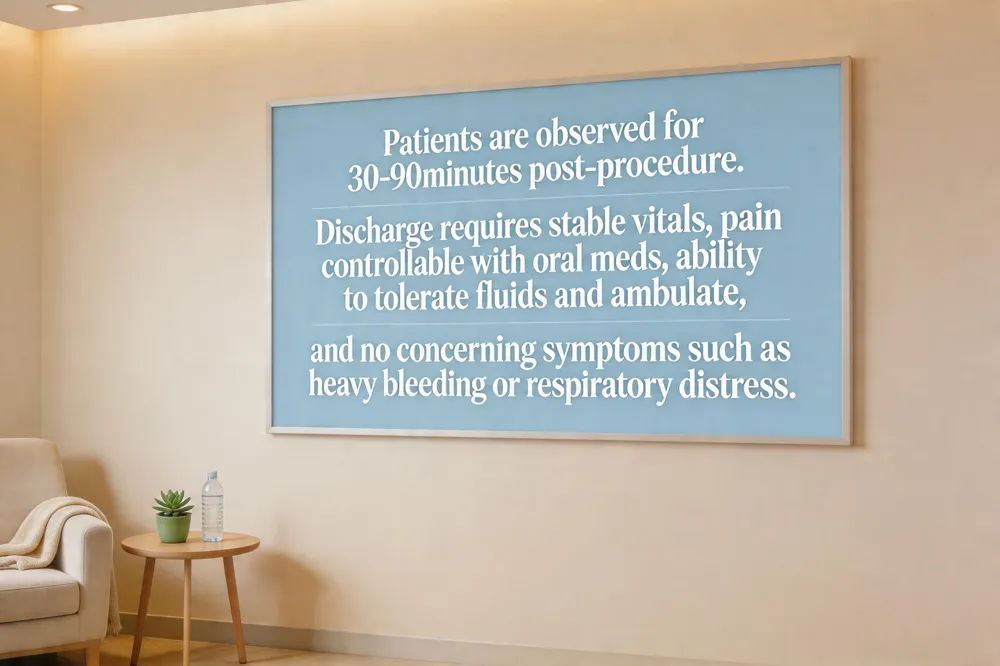 Patients are typically monitored in the recovery room for about 30 to 90 minutes after a facial or body cosmetic procedure. The exact duration depends on anesthesia type, procedure extent, and how quickly vital signs stabilize. For minimally invasive facial work performed under local anesthesia, the stay is often closer to 30 minutes; more extensive body lifts or surgeries requiring deeper sedation may extend to an hour or slightly longer. During this period nurses assess pain, nausea, blood pressure, pulse, and oxygen saturation, ensuring the patient can tolerate oral fluids and ambulation. Discharge criteria include stable vital signs, controlled pain with oral medication, absence of concerning symptoms (e.g., excessive bleeding or respiratory distress), and the patient’s ability to understand post‑operative instructions. Once these benchmarks are met, the patient is cleared to transition to home recovery.
Typical Recovery Milestones for Plastic‑Surgery Patients
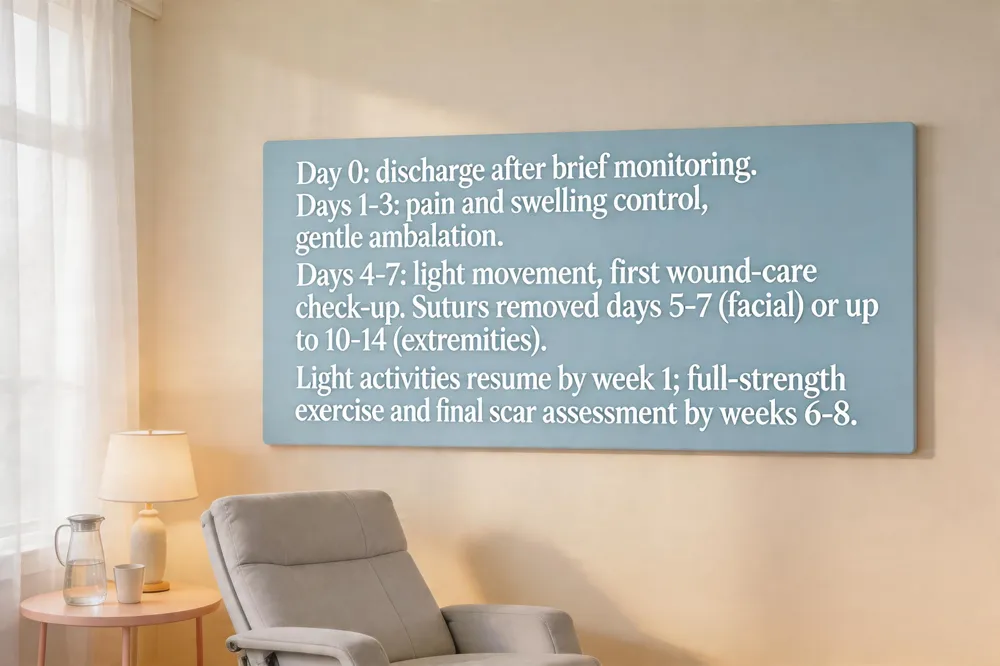 Recovery after aesthetic surgery follows a predictable pattern that can be broken down into day‑by‑day expectations, suture removal timing, and the transition back to normal activities.
Day‑by‑day expectations – Most patients are discharged on the day of surgery (Day 0) after a brief monitoring period. The first 1‑3 days focus on pain control, swelling management, and, if present, drain care; gentle ambulation is encouraged to promote circulation. Days 4‑7 bring light movement, basic wound care, and the first postoperative check‑up, often by phone or telehealth.
When sutures are removed – Non‑dissolvable sutures are typically taken out between Days 5‑7 for facial sites and up to 10‑14 days for hands or extremities, depending on the surgeon’s protocol. This window aligns with the inflammatory phase of healing, when wound strength is sufficient to tolerate suture removal without risking dehiscence.
Transition to normal activities – By weeks 2‑4 most patients experience reduced bruising and swelling, allowing a gradual return to light daily tasks and, for many, a return to work on a part‑time basis. Full‑strength exercise, vigorous activities, and a final scar assessment are usually achieved by weeks 6‑8, though exact timing varies with procedure complexity and individual healing factors such as age, nutrition, and smoking status.
Answer to the key question – The typical recovery milestones for plastic‑surgery patients include discharge on Day 0, intensive pain and swelling management during the first three days, suture removal around Day 5‑7 (or up to 10‑14 days for certain sites), a steady return to light activities by the end of the first week, and progressive escalation to normal exercise and final scar evaluation by six to eight weeks post‑procedure.
Scheduling, Monitoring, and Digital Tools for Follow‑Up
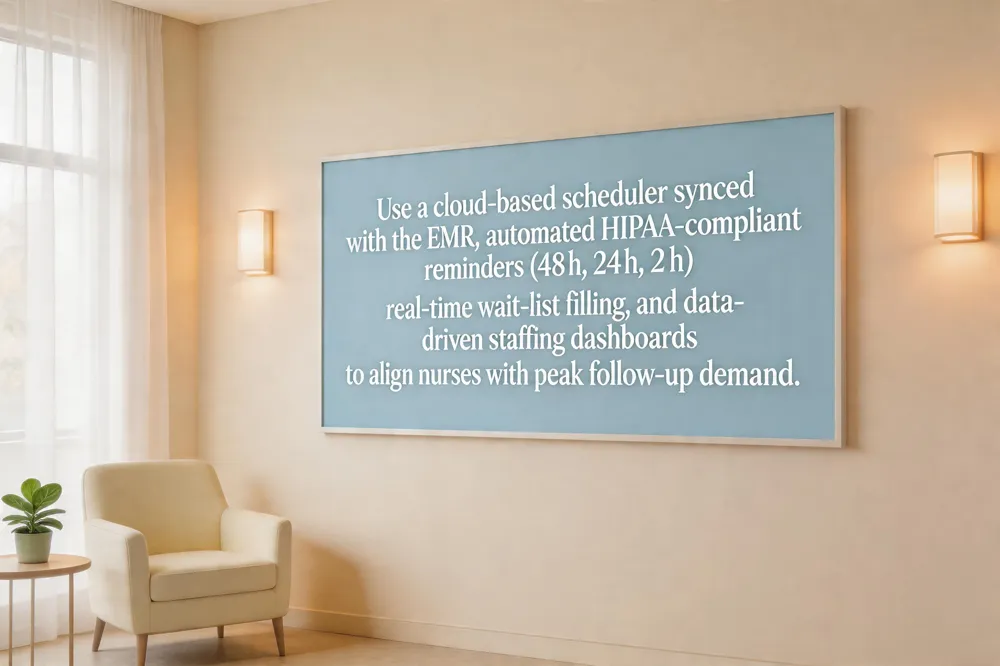 Effective follow‑up at an aesthetic‑surgery center hinges on three interconnected pillars: integrated digital scheduling platforms, automated reminder and wait‑list systems, and data‑driven staffing alignment.
Integrated digital scheduling platforms – Deploy a cloud‑based scheduler that syncs directly with the electronic medical record (EMR). The system should allow staff to create customizable appointment types (initial consult, 24‑hour check‑in, 1‑week wound‑assessment, 1‑month scar‑care visit) with built‑in preparation and recovery buffers. A patient‑facing portal lets clients self‑schedule 24/7, automatically restricting high‑risk or invasive procedures to in‑person booking while routing routine post‑op calls to virtual slots.
Automated reminders and wait‑list management – Use HIPAA‑compliant messaging (SMS, email, patient portal) to send personalized reminders 48 hours, 24 hours, and 2 hours before each appointment, reinforcing wound‑care instructions and pain‑medication schedules. An automated wait‑list engine fills last‑minute cancellations by notifying eligible patients in real time, cutting no‑show rates by up to 30 %.
Staffing alignment and data‑driven workflow – Analyze historical data on procedure duration, anesthesia type, and complication rates to predict peak follow‑up demand. Align nursing and clinician rosters accordingly, assigning telephone‑nursing staff to day‑7 and day‑14 calls for patients who received general or regional anesthesia, as these groups show higher odds of reported pain or swelling. Real‑time dashboards display upcoming slots, pending callbacks, and patient‑reported outcome measures (PROMs) enabling supervisors to re‑allocate resources instantly.
By combining these strategies—seamless digital scheduling, proactive communication, and analytics‑guided staffing—surgical centers can deliver patient‑centered timely follow‑up while minimizing missed appointments and optimizing clinical efficiency.
Local Resources for Post‑Plastic‑Surgery Care in San Francisco
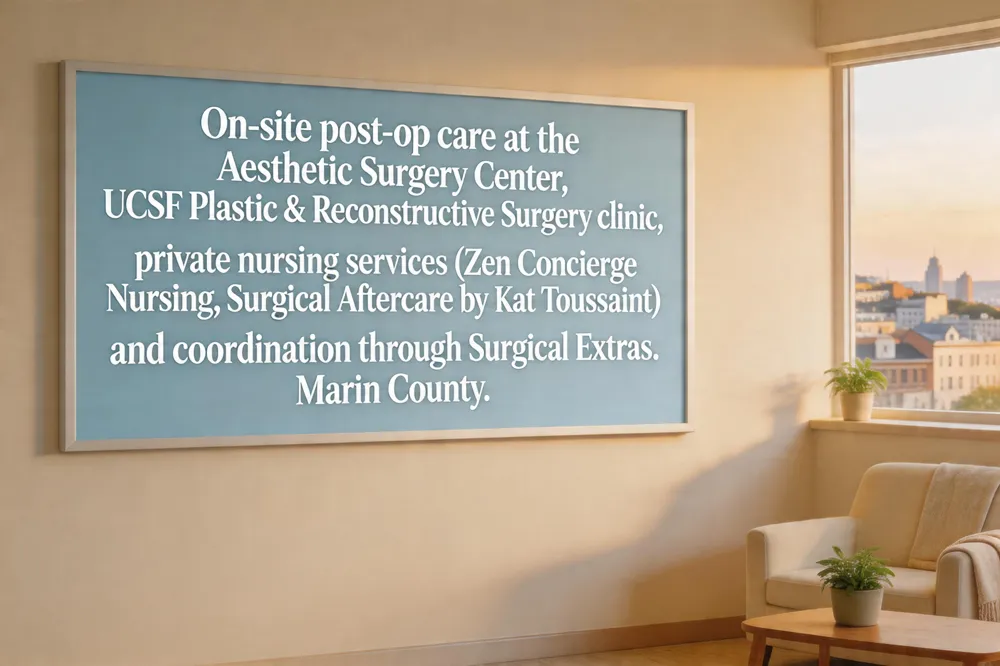 The Aesthetic Surgery Center in San Francisco provides on‑site post‑operative care for facial and body procedures, including wound checks, suture removal, and scar‑management guidance. For those who prefer a hospital setting, the UCSF Plastic & Reconstructive Surgery clinic offers comprehensive follow‑up appointments, wound‑care nursing, and access to multidisciplinary support services. Private nursing options are abundant in the Mission District—Zen Concierge Nursing at 3354 20th Street delivers in‑home or hotel nursing, medication management, and lymphatic drainage therapy. Surgical Aftercare by Kat Toussaint supplies personalized post‑surgery nursing, transportation, and tele‑health check‑ins throughout the Bay Area. The Surgical Extras office in Marin County coordinates recovery plans for patients traveling to and from San Francisco, ensuring seamless continuity of care.
Frequently Asked Questions: Coding, Appointment Length, Nursing, Pain, Follow‑Up, Healing Tips, and 1‑Week Timeline
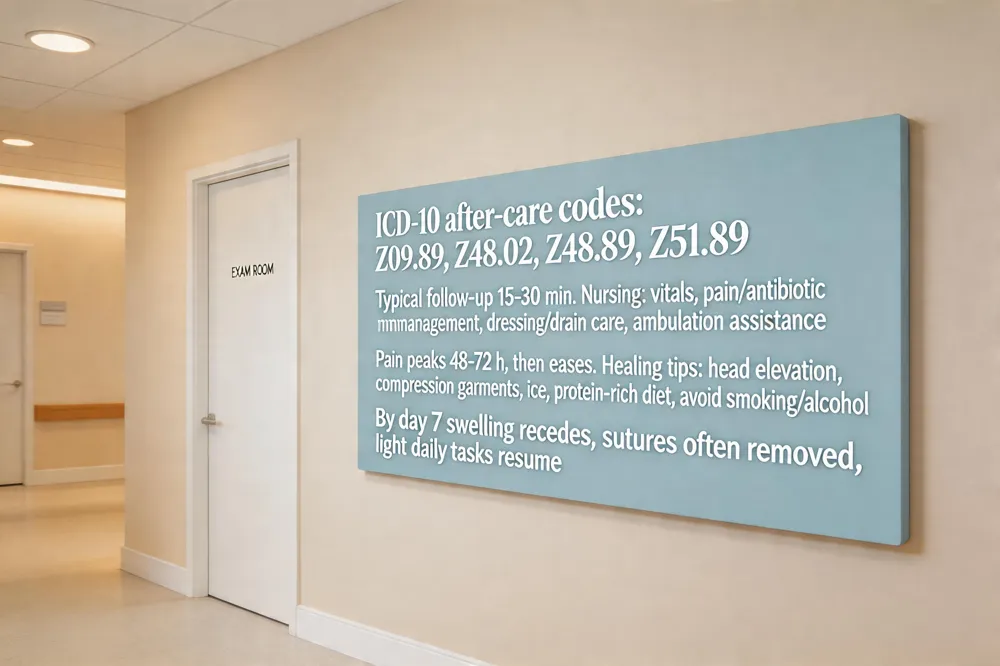 Knowing what ICD‑10‑ are used for post‑surgery follow‑up visits? Follow‑up encounters are usually coded with Z‑category after‑care codes such as Z09.89 (follow‑up after other procedures), Z48.02 (suture removal), Z48.89 (general after‑care), and Z51.89 (other after‑care). Selecting the correct code ensures proper reimbursement and documentation.
How long is a typical post‑op follow‑up appointment? Most routine visits last 15‑30 minutes; more detailed evaluations (scar revision, imaging) may extend to 45‑60 minutes.
What nursing care is provided after plastic surgery? Post‑op nurses monitor vitals, manage pain and antibiotics, change dressings, assess drains, assist with ambulation and showering, and coordinate transportation for follow‑up.
When can I expect the most pain after surgery? Pain peaks within the first 48‑72 hours, coinciding with the inflammatory response and tapering of strong analgesics.
Is a follow‑up appointment after surgery normal? Yes—early visits (usually within the first 1‑2 weeks) allow the surgeon to inspect incisions, remove sutures, adjust medications, and address concerns.
Tips to speed up healing after cosmetic surgery Keep head elevated and wear compression garments, follow medication and ice‑pack protocols, stay hydrated with protein‑rich foods, avoid smoking/alcohol, and begin gentle walking early.
What does ‘1 week post‑op’ mean for recovery? By day 7 swelling is receding, sutures are often removed, pain is manageable, and light daily activities can resume, marking the shift from acute recovery to steady healing.
The Future of Patient‑Centric Post‑Op Care
Continuous digital monitoring transforms recovery by letting patients log pain scores, swelling measurements, and wound photos through secure apps that sync instantly with the surgeon’s portal. AI‑driven personalized alerts analyze these data, flagging deviations from expected healing patterns and prompting timely nurse callbacks or tele‑visits, thereby preventing minor issues from escalating. By combining real‑time feedback with automated appointment reminders, the system sustains high satisfaction while maintaining safety, reducing unnecessary clinic trips and emergency visits. This seamless, patient‑centered loop empowers individuals to participate actively in their care, aligns follow‑up timing with personal recovery trajectories, and reinforces trust in the aesthetic practice.