Why Longevity Matters
Rhinoplasty is performed with the goal of delivering a lasting aesthetic and functional improvement that can endure for decades, often a lifetime. Patients come to the Aesthetic Surgery Center expecting a permanent transformation—one that sustains facial harmony, improves breathing, and boosts confidence without the need for repeated interventions. Achieving that longevity starts with a personalized, minimally invasive approach. Our surgeons evaluate each patient’s unique anatomy, skin thickness, cartilage strength, and age to design a plan that preserves structural support while minimizing tissue trauma. By employing advanced grafting techniques, careful ligament handling, and precise open or closed methods, we create a stable nasal framework that resists aging changes, scar contracture, and external trauma. Coupled with meticulous post‑operative care—elevated head positioning, smoking cessation, sun protection, and a balanced diet—the result is a nose that ages gracefully, meeting the patient’s expectation of a lifelong, natural‑looking outcome.
Structural Foundations: Why Rhinoplasty Can Last a Lifetime
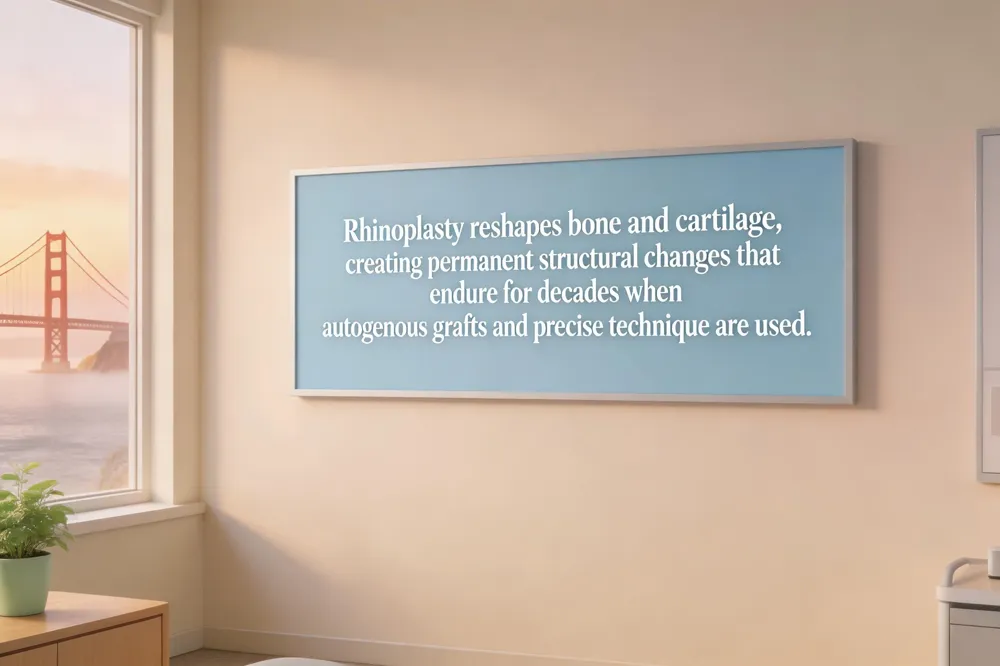 Rhinoplasty fundamentally alters the nose by reshaping its rigid framework—bone and cartilage—rather than merely adjusting the overlying skin. Because bone is a solid, non‑renewable tissue and cartilage, when reinforced, retains its new contour, the core structural changes can endure for decades or a lifetime. Experienced surgeons often employ autogenous cartilage grafts harvested from the septum, ear, or rib to reinforce areas that have been reduced or repositioned. These grafts integrate with native tissue, providing lasting support and minimizing the risk of postoperative warping or resorption that can compromise the result.
The surgeon’s expertise and technique are equally critical. Precise osteotomies, careful ligament preservation, and meticulous placement of grafts ensure that the new nasal architecture remains stable as the tissues heal. Board‑certified facial plastic surgeons who specialize in structural grafting and who tailor their approach to each patient’s anatomy consistently achieve the most durable outcomes.
Does rhinoplasty permanent? Yes—by permanently reshaping the nasal bone and cartilage, the core framework stays altered for life, while skin and soft tissue continue to age naturally.
Does rhinoplasty last forever? The structural changes are permanent, but natural aging, skin thinning, and lifestyle factors (e.g., smoking, sun exposure) may subtly modify the external appearance over decades. The underlying bone and cartilage, however, remain permanently changed.
Aging, Skin Thickness, and Natural Changes Over Time
 The long‑term look of a rhinoplasty is shaped by three inter‑related factors: skin elasticity, skin thickness, and the natural aging of cartilage. Thin, elastic skin reveals the precise contour of a surgically reshaped nose, but it also magnifies subtle shifts such as tip drooping or lengthening that occur as the skin thins and loses support with age. Thick skin, conversely, can mask fine details and retain swelling longer, yet it tends to hide early signs of tip descent, making any later changes appear more dramatic. Genetics add another layer: some patients have cartilage that “remembers” its original shape, leading to warping or slight loss of projection over decades.
Rhinoplasty ages well – When an experienced surgeon uses structural grafts and preserves ligament preservation, the nose is reinforced against gravity and tissue thinning, allowing the result to stay proportionate for many years.
Why nose jobs sometimes age poorly – Reductive techniques that over‑resect bone or cartilage leave the framework vulnerable; as skin thins and soft tissue relaxes, the tip may droop and the dorsum can widen, producing an aged appearance.
Side effects – Short‑term effects include swelling, bruising, congestion, mild pain, and temporary numbness. Rare but serious complications can be infection, bleeding, scar contracture, septal perforation, altered smell, or the need for revision.
Long‑term side effects – Persistent numbness, scar tissue that subtly shifts shape, graft resorption or warping, and breathing changes are possible. Implants, if used, may later extrude or become infected, necessitating removal.
Impact of Surgical Technique and Surgeon Expertise
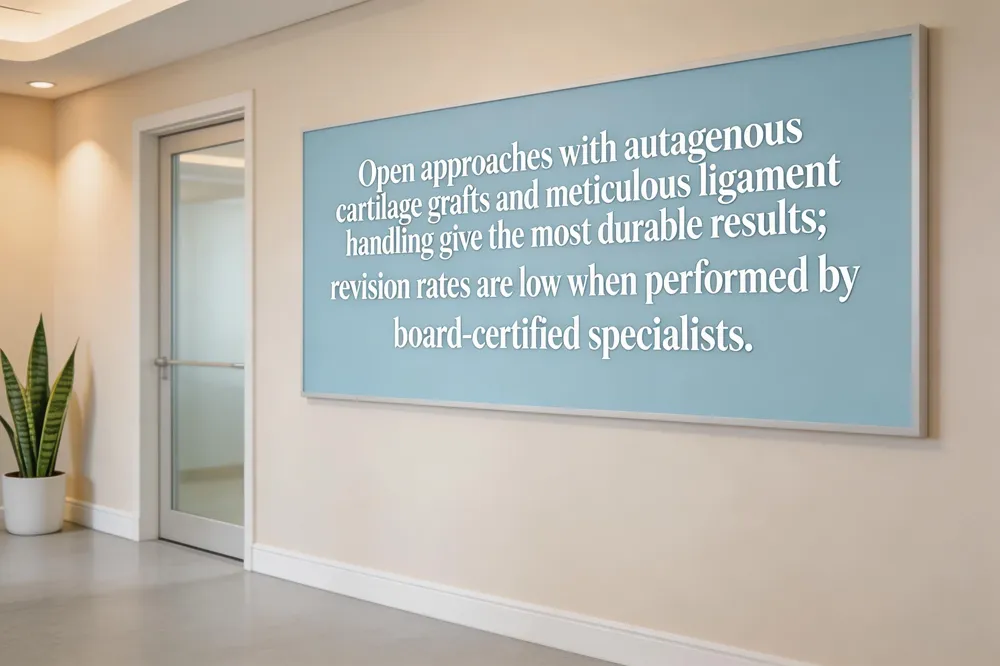 The long‑term durability of a nose job hinges on both the operative approach and the surgeon’s skill. Open rhinoplasty, which includes a small columellar incision, offers superior visualization for precise placement of structural grafts and careful ligament preservation, often resulting in more stable tip projection. Closed (endonasal) techniques avoid an external scar but may limit graft placement, making them best suited for modest revisions. Surgeons who employ autogenous cartilage grafts—septal, ear, or rib cartilage—reinforce the nasal framework and reduce the likelihood of warping or resorption, whereas alloplastic implants carry higher extrusion rates (5‑20 %).
Is rhinoplasty dangerous? When performed by a board‑certified facial plastic surgeon, it is generally safe; most complications are mild and temporary, with serious adverse events occurring in less than 1 % of cases.
How often do rhinoplasties fail? Revision surgery is needed in roughly 5 % to 15 % of patients, with many series reporting an 8.6 % revision rate, typically due to postoperative deformities or functional issues rather than surgical error.
Rhinoplasty complications rate? Complications vary by technique and material; autogenous cartilage grafts have low long‑term problems, while silicone implants can present a 5‑20 % extrusion or infection risk. Overall, experienced surgeons keep complication rates modest.
Rhinoplasty after 20 years? The core shape persists because bone and cartilage are permanently reshaped. Natural aging may cause slight tip droop, skin thinning, and subtle contour shifts, which can be accelerated by smoking, excessive sun exposure or significant weight changes.
Post‑Operative Care, Recovery Timeline, and Essential Practices
 Rhinoplasty recovery follows a predictable pattern that blends careful swelling control, staged activity, and supportive nutrition.
Day‑by‑day swelling management – Days 1‑2: Keep the head elevated 30‑45°, apply ice packs for 15‑minute intervals, and keep the splint dry; swelling and bruising start, and prescribed analgesics control discomfort. Days 3‑7: Swelling peaks, bruising fades, avoid nose‑blowing, heavy lifting, and keep the splint on. Days 8‑14: Splint removal, bruising diminishes, light daily tasks resume.
Week‑by‑week milestones – Week 1: Splint, most swelling, head elevation. Week 2: Splint removed, bruising fades, light work possible. Weeks 3‑4: Most visible swelling gone, tip may still feel slightly swollen; begin gentle cardio, avoid contact sports. Weeks 5‑6: External swelling largely resolved, breathing improves. By 12 months the final contour is stable.
Diet, activity, and protective measures – First 24 hrs: clear broth, oatmeal, yogurt; week 1: soft protein‑rich foods (scrambled eggs, mashed potatoes); week 2: re‑introduce regular meals, avoid crunchy items. Include anti‑inflammatory foods (salmon, olive oil, berries) and stay hydrated. Elevate the head while sleeping, use a pillow wedge, and abstain from smoking for at least three weeks.
If you sneeze, keep your mouth open, gently support the bridge, and avoid blowing the nose; contact your surgeon if bleeding or shape changes occur. Pain is mild after anesthesia, described as pressure; cold compresses and pain meds usually relieve it by day 3‑4. The most uncomfortable day is often Splint removal (day 5‑7) when swelling becomes more apparent.
Factors That Can Compromise Longevity and How to Preserve Results
 Rhinoplasty reshapes bone and cartilage, which are inherently stable, yet several factors can erode those results over time.
Trauma, Smoking, Sun Exposure, and Weight Changes – Accidental blows, contact sports, or even habitual nose‑touching can displace grafts or fracture healed bone. Smoking impairs blood flow, delays collagen synthesis, and accelerates scar contracture, while chronic UV exposure thins the skin and accentuates any underlying irregularities. Significant weight gain or loss alters facial soft‑tissue volume, making previously subtle contours more or less pronounced.
Scar Tissue Formation and Graft Resorption – Individual healing responses vary; excessive scar tissue can subtly reshape the tip or dorsum, especially in patients with thick skin. Autologous cartilage grafts may warp or resorb, particularly if over‑resected bone leaves insufficient support. Using structural grafts (septal, conchal, rib) and meticulous ligament handling, as practiced by experienced surgeons, reduces these risks.
Best Practices for Long‑Term Stability – Follow all post‑operative instructions: keep the head elevation, apply cold compresses, avoid blowing the nose, and refrain from heavy lifting for the first six weeks. Protect the nose from sunlight with sunscreen, maintain a healthy diet rich in vitamins A and C, and quit smoking. Schedule regular follow‑up visits for the first two years, then periodic check‑ins to catch early signs of asymmetry or breathing issues.
Common Patient Concerns
- 10 years after rhinoplasty my nose is drooping*: Likely due to loss of cartilage support, thinning skin elasticity, or scar contracture. A board‑certified surgeon can assess whether a revision with graft reinforcement is needed.
- Rhinoplasty side effects long‑term: Persistent numbness, scar‑induced shape changes, graft warping or resorption, and occasional breathing difficulties are the most frequent. Rarely, implants may extrude or become infected years later.
- Does rhinoplasty need maintenance?: Core results are permanent, but diligent early after‑care, sun protection, and periodic exams help preserve them. Minor touch‑ups may be considered after the nose fully settles.
- What can mess up rhinoplasty results?: Pressing, rubbing, blowing the nose, smoking, premature heavy lifting, and wearing glasses on the bridge can shift healing tissues. Trauma, uncontrolled swelling, infection, and poor compliance also jeopardize stability.
- Does rhinoplasty leave scars?: Closed rhinoplasty leaves no visible external scar. Open rhinoplasty creates a small columellar incision that typically heals as a thin, flat line, becoming barely noticeable after several months with proper care.
- Rhinoplasty after 20 years: The fundamental shape remains, but natural aging may cause slight tip droop, skin thinning, and subtle contour shifts. Lifestyle factors such as smoking, UV exposure, and weight fluctuations can accelerate these changes; regular follow‑up allows early detection and corrective options if needed.
Revision, Touch‑Ups, and Non‑Surgical Options
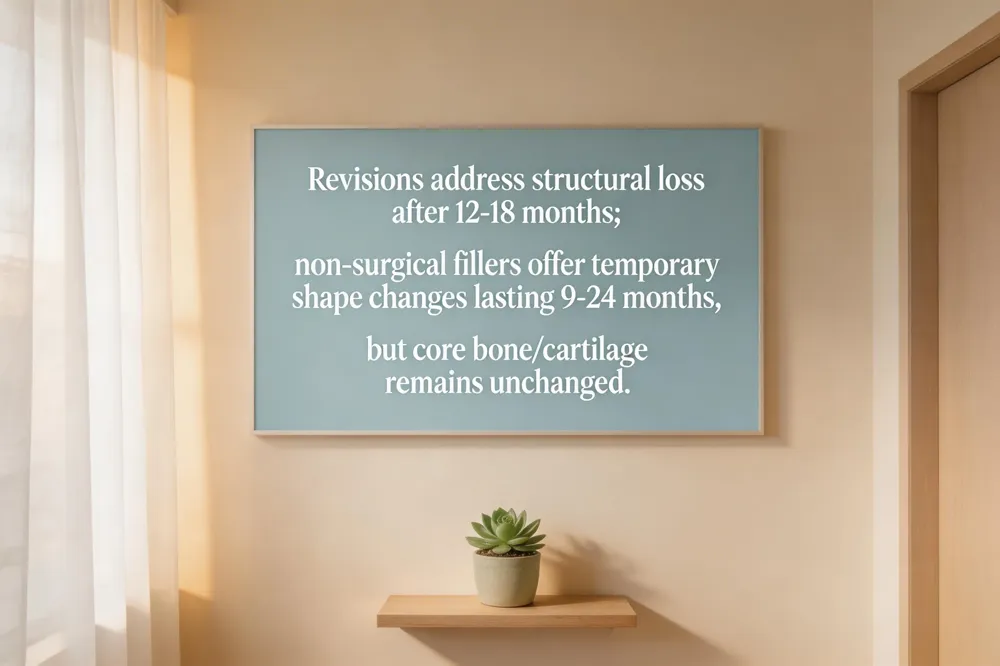 Revision is appropriate when structural support has weakened, asymmetry or functional breathing problems appear, or aging causes tip droop or skin thinning. Surgeons typically wait at least 12‑18 months after the primary surgery for the nose to fully settle before planning a secondary procedure, allowing scar tissue to mature and ensuring accurate assessment of residual issues. Non‑surgical rhinoplasty with hyaluronic‑acid fillers offers a temporary fix; it usually lasts 9‑18 months, with some robust formulations lasting up to two years. Longevity depends on filler type, amount, metabolism, and skin thickness. Touch‑ups are required once the filler dissolves. After 20 years, the core bone and cartilage framework remains, but natural aging may produce subtle tip settling and skin changes. Revision at this stage can reinforce the framework, address functional concerns, and fine‑tune aesthetics, but scar tissue and reduced cartilage must be carefully managed.
Key Takeaways for Long‑Lasting Rhinoplasty Results
Rhinoplasty reshapes the nose’s bone and cartilage, providing a structural foundation that can last a lifetime. However, natural aging—skin thinning, loss of sub‑cutaneous fat, and subtle tip droop—will mirror the rest of the face, and lifestyle factors such as smoking, sun exposure, and trauma can accelerate changes. The durability of the result hinges on surgeon expertise: precise osteotomies, preservation of ligaments, and the use of autologous cartilage grafts (septal, ear, or rib) reinforce the framework and guard against warping or collapse. Meticulous post‑operative care—elevated head, cold compresses, avoidance of smoking, and protection from impact—along with regular follow‑up visits helps the scar tissue mature and the nose settle into its final shape. If minor shifts appear over years, a revision rhinoplasty or non‑surgical touch‑up with fillers can fine‑tune the appearance while preserving the core structural changes.