Introduction
Cosmetic procedures have surged in the United States, with the American Society of Plastic Surgeons reporting a 5 % year‑over‑year increase in 2023 and a total of more than 1.5 million surgical cases plus 25 million minimally invasive treatments. This growth is driven by a blend of cultural factors, such as social‑media influence, and technological advances that make procedures safer, quicker, and more affordable. For both patients and surgeons, data‑driven insights are essential. Reliable statistics reveal which treatments—like liposuction, breast augmentation, and neuromodulator injections—are most popular, which demographics are seeking them, and how regional trends (e.g., the Pacific region’s 58 % share of surgeries) shape practice patterns. Armed with this evidence, patients can set realistic expectations and choose providers with proven outcomes, while surgeons can tailor services, optimize pricing, and anticipate emerging demands such as regenerative aesthetics and GLP‑1‑related body‑contouring.
2023 US Cosmetic Surgery Key Facts
- Total cosmetic procedures performed in 2023 were 1,575,244, representing a 5 % year‑over‑year increase from 2022.
- Minimally invasive (non‑surgical) procedures accounted for 46 % of all cosmetic cases, with approximately 15.5 million sessions in 2023.
- Liposuction remained the top surgical procedure with 347,782 cases, a 7 % increase over the previous year.
- Breast augmentation reached 304,181 surgeries in 2023, up 2 %, and the average surgeon fee rose to $4,875 (13 % increase).
- Neuromodulator injections (Botox, Dysport, Xeomin, etc.) totaled 9,480,949 sessions, a 9 % rise, while the average fee per session dropped 17435% to $435.
- Hyaluronic‑acid filler treatments numbered 5,294,603 in 2023, up 8 % from 2022.
- The Pacific region, anchored by California, performed 58 % of all cosmetic surgical procedures nationwide.
- Men comprised 6 % of all cosmetic procedures, yet male facial/neck surgeries grew 15 % and body surgeries grew 18 % in 2023.
- Adults aged 40‑54 accounted for 33 % of breast augmentations and 45 % of liposuction cases, highlighting a strong middle‑age demand for body‑contouring.
- The “ballet body” aesthetic drove a 7 % increase in breast lifts (153,600 cases) and a 6 % rise in buttock‑lift procedures, including Brazilian butt lifts.
1. Overall Cosmetic Procedures Rose 5% in 2023
| Year | Total Cosmetic Procedures | YoY % Change |
|---|---|---|
| 2022 | 1,500,000 (≈) | — |
| 2023 | 1,575,244 | +5 % |
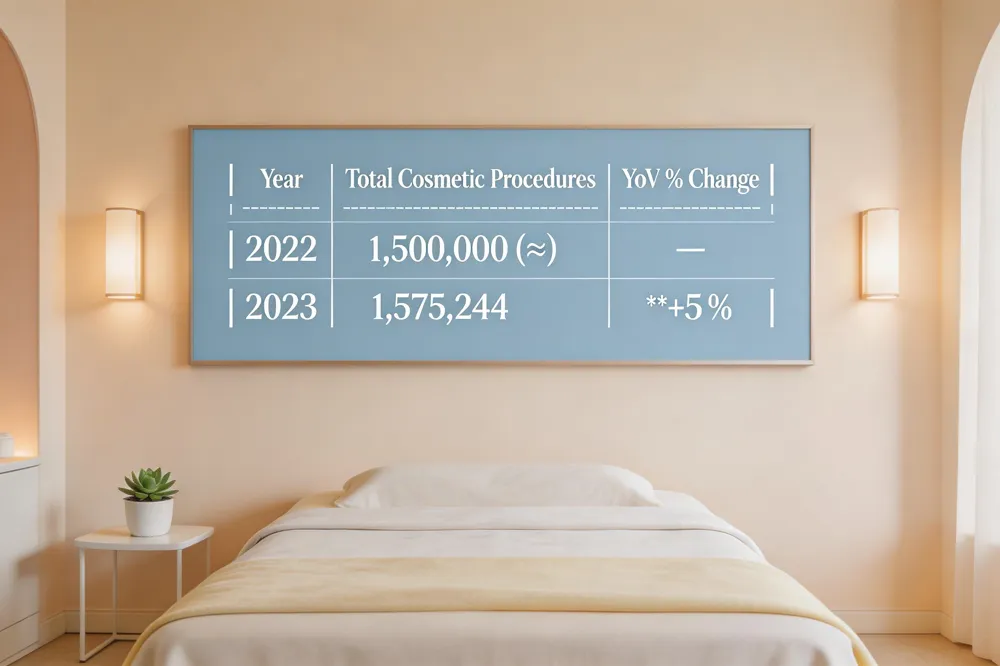 According to the American Society of Plastic Surgeons’ 2023 Plastic Surgery Statistics Report, U.S. surgeons performed a total of 1,575,244 cosmetic procedures in 2023. This represents a 5 % year‑over‑year increase compared with the 2022 total of approximately 1,500,000 procedures. The growth was driven by both surgical and minimally invasive interventions, with minimally invasive treatments expanding 7 % and surgical volumes rising 4 % over the same period. Regional analysis shows the Pacific region—including California—accounted for 35 % of all cosmetic surgeries, while the South Atlantic contributed 28 % of total procedures. Demographically, women continued to dominate the market at roughly 92 % of patients, but male participation rose to 8 % reflecting a broader acceptance of aesthetic care. The overall upward trend underscores a sustained demand for aesthetic enhancement and the expanding role of board‑certified plastic surgeons in delivering safe, high‑quality outcomes.
2. Minimally Invasive Procedures Grew 7% and Made Up 46% of All Cosmetic Cases
| Procedure Type | 2023 Sessions | YoY % Change | Share of Total Cosmetic Cases |
|---|---|---|---|
| Neuromodulators (Botox, etc.) | 9,480,949 | +9 % | 30 % |
| Hyaluronic‑acid Fillers | 5,294,603 | +8 % | 17 % |
| Non‑invasive Fat‑Reduction | 745,967 | +9 % | 2.4 % |
| Other Minimally Invasive | – | – | 23 % (remaining) |
| Total Minimally Invasive | ≈15,521,519 | +7 % | 46 % |
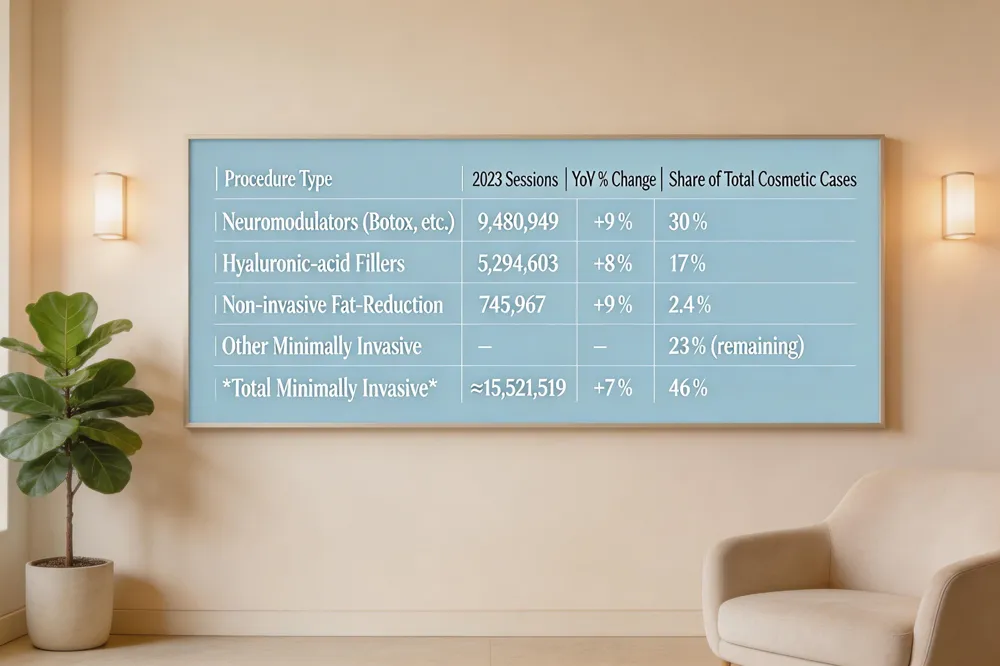 In 2023, minimally invasive aesthetic treatments surged 7 % year‑over‑year and accounted for 46 % of every cosmetic interventions performed in the United States. The growth was driven principally by injectable neuromodulators—Botox, Dysport, Xeomin, and others—which rose 9 % to 9,480,949 sessions, and hyaluronic‑acid filler injections, up 8 % to 5,294,603 treatments. Non‑invasive fat‑reduction technologies such as CoolSculpting grew 9 % to 745,967 procedures, while skin‑tightening modalities (radiofrequency, ultrasound, laser) saw double‑digit increases, reflecting patients’ preference for quick‑recovery, low‑downtime solutions. Social‑media influence, the “pre‑juvenation” mindset, and the expanding market for regenerative skin boosters also contributed to the upward trend. Together, these factors positioned minimally invasive procedures as the dominant segment of the 2023 cosmetic market, surpassing traditional surgery in both volume and patient appeal.
3. Liposuction Remains the #1 Surgical Procedure – 347,782 Cases
| Procedure | 2023 Cases | YoY % Change |
|---|---|---|
| Liposuction | 347,782 | +7 % |
| Breast Aug. | 304,181 | +2 % |
| Rhinoplasty | 47,307 | +6 % |
| Blepharoplasty | 120,747 | +5 % |
| Facelift | 78,482 | +8 % |
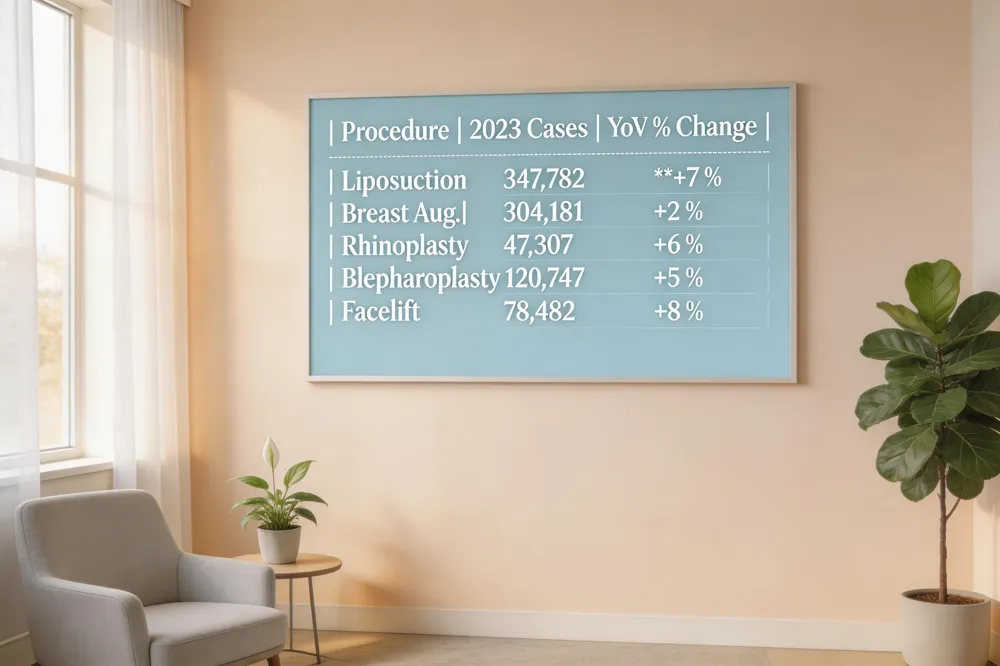 In 2023, liposuction continued to dominate the aesthetic surgery market, with Liposuction was the most performed cosmetic surgical procedure with 347,782 cases, up 7% from 2022. This surge makes liposuction the most frequently performed cosmetic surgical treatment, outpacing breast augmentation, rhinoplasty, and abdominoplasty. The procedure’s appeal spans a broad patient base, but The 40‑54 age cohort performed the largest share of liposuction (45%) and tummy tuck (50%) procedures. reflecting a strong demand for body‑contouring among middle‑aged adults. The growth aligns with broader trends toward minimally invasive, high‑impact body‑shaping solutions, and it reinforces liposuction’s top‑ranking status in the surgical aesthetic landscape.
4. Breast Augmentation Reached 304,181 Surgeries, Up 2%
| Year | Breast Augmentation Cases | YoY % Change |
|---|---|---|
| 2022 | 298,000 (≈) | — |
| 2023 | 304,181 | +2 % |
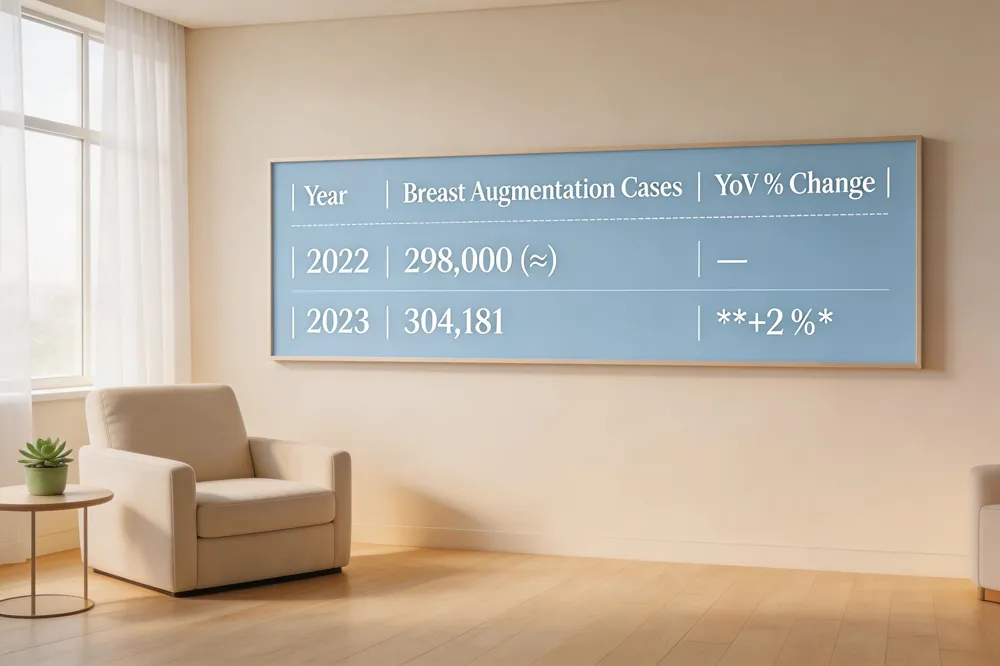 In 2023 the United States saw 304,181 breast‑augmentation procedures, marking a 2 % increase over 2022, reinforcing the surgery’s position as one of the nation’s most performed aesthetic operations. The growth reflects sustained demand from women—who account for roughly 92 % of all cosmetic surgeries—seeking enhanced contour, symmetry, or reconstruction. The procedure’s popularity is driven by advances in implant technology, including cohesive silicone “gummy‑bear” devices that deliver a natural look and feel, as well as a broader cultural acceptance of body‑positive aesthetics. Average surgeon fees rose to $4,875, indicating a modest price increase while demand remained strong. Regional data show the Pacific zone, including California, performed 58 % of all cosmetic surgical procedures, underscoring a geographic concentration of breast‑augmentation services. Overall, breast augmentation continues to be a cornerstone of aesthetic surgery, appealing to a wide age range and maintaining high patient satisfaction rates.
5. Breast Implant Removals Rose 9% to 41,115 Procedures
| Year | Implant Removal Cases | YoY % Change |
|---|---|---|
| 2022 | 37,700 (≈) | — |
| 2023 | 41,115 | +9 % |
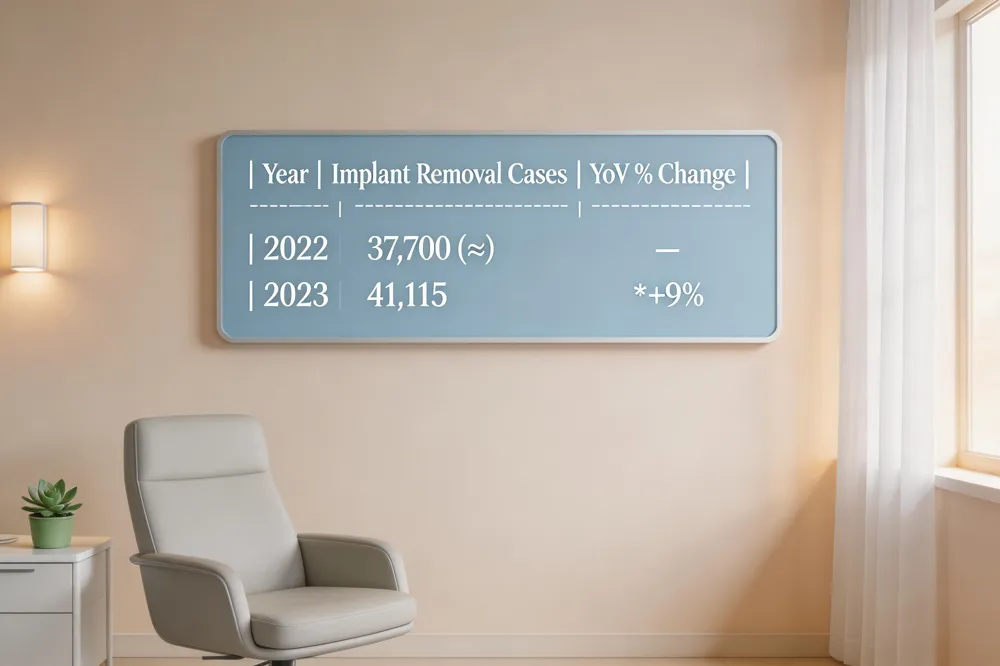 In 2023, the United States saw a notable 9 % surge in breast‑implant removal (explant) surgeries, reaching 41,115 procedures—a rise that aligns with growing patient awareness of implant‑related issues. Factors driving this increase include heightened concerns about capsular contracture, implant‑associated lymphoma, and aesthetic dissatisfaction prompting revisions or complete removal. The “ballet body” trend and a shift toward smaller, more natural implants have also motivated patients to seek explants and consider alternative volume‑restoring options such as autologous fat transfer. As board‑certified surgeons emphasize safety and personalized care, many patients now elect explant surgery during comprehensive consultations, reflecting both the demand for transparency and the evolving landscape of breast‑augmentation maintenance.
6. Breast Lifts Grew 7% to 153,600 Surgeries
| Year | Breast Lift Cases | YoY % Change |
|---|---|---|
| 2022 | 143,700 (≈) | — |
| 2023 | 153,600 | +7 % |
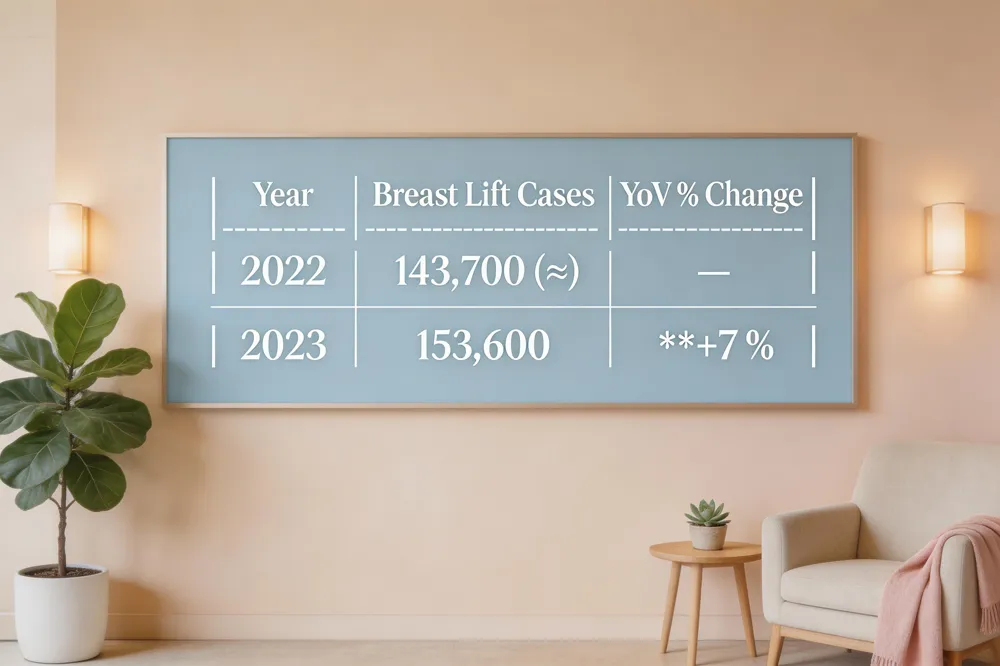 In 2023, breast lifts (mastopexy) surged 7 % to 153,600 procedures, a growth closely tied to the “ballet body” aesthetic that emphasizes balanced, natural contours without adding volume. This trend reflects patients’ desire for a lifted, youthful silhouette while maintaining their existing breast size, distinguishing lifts from augmentation. The surge was most pronounced among women aged 40‑54, who accounted for 33 % of breast augmentations and are also a key demographic for contour‑refining surgeries. The Pacific region, especially California, performed 58 % of all cosmetic surgical procedures, reinforcing the regional popularity of this subtle reshaping approach. Average surgeon fees for breast lifts rose modestly, aligning with the overall increase in surgical volume. The combination of cultural influence, age‑specific demand, and regional concentration drove the notable rise in breast‑lift surgeries in 2023.
7. Brazilian Butt Lifts Increased 3% to 29,383 Procedures
| Year | BBL Cases | YoY % Change |
|---|---|---|
| 2022 | 28,530 (≈) | — |
| 2023 | 29,383 | +3 % |
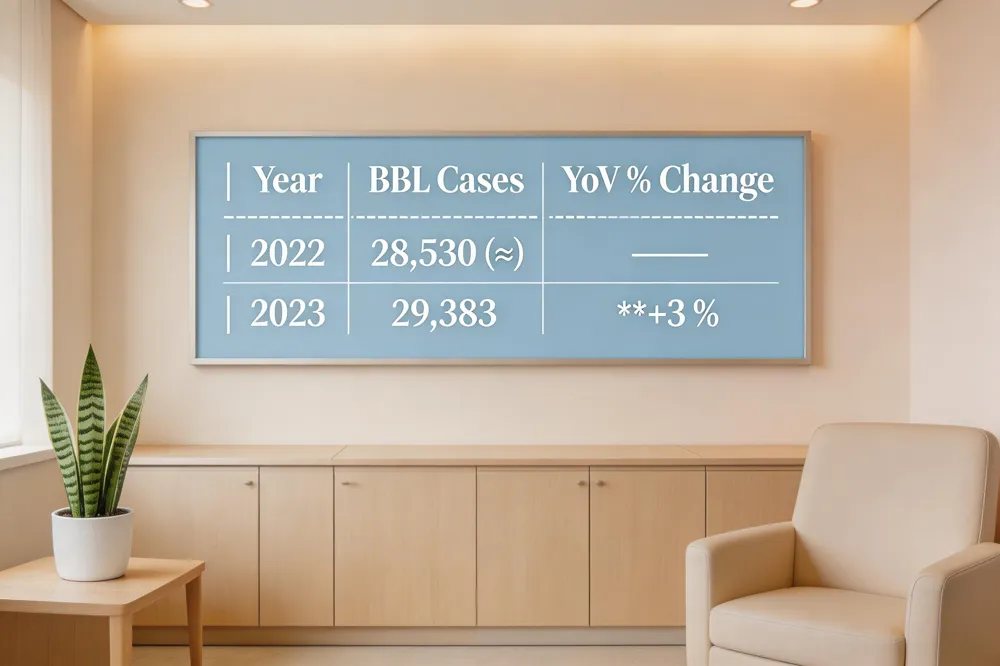 Brazilian butt lifts (BBL) continue to fuel the surge in body‑contouring popularity, with 2023 seeing a 3 % rise to 29,383 procedures nationwide. This modest growth reflects a broader patient shift toward autologous fat‑grafting, where harvested fat is purified and transferred to enhance the buttocks, delivering natural‑looking volume without implants. The trend aligns with the “ballet body” aesthetic, emphasizing balanced, curvaceous silhouettes, and complements other contouring services such as liposuction and upper‑arm lifts. Fat‑grafting also dovetails with emerging regenerative medicine advances—PRP, exosomes, and skin boosters—that promise improved tissue quality and quicker recovery. Patients appreciate the dual benefit of contour refinement and the regenerative boost to surrounding skin, driving higher satisfaction and repeat visits. As surgeons refine techniques and safety protocols, BBLs remain a cornerstone of the body‑contouring market, reinforcing the appeal of personalized, minimally invasive aesthetic solutions.
8. Upper‑Arm Lifts Surged 8% to 23,058 Cases
| Year | Upper‑Arm Lift Cases | YoY % Change |
|---|---|---|
| 2022 | 21,350 (≈) | — |
| 2023 | 23,058 | +8 % |
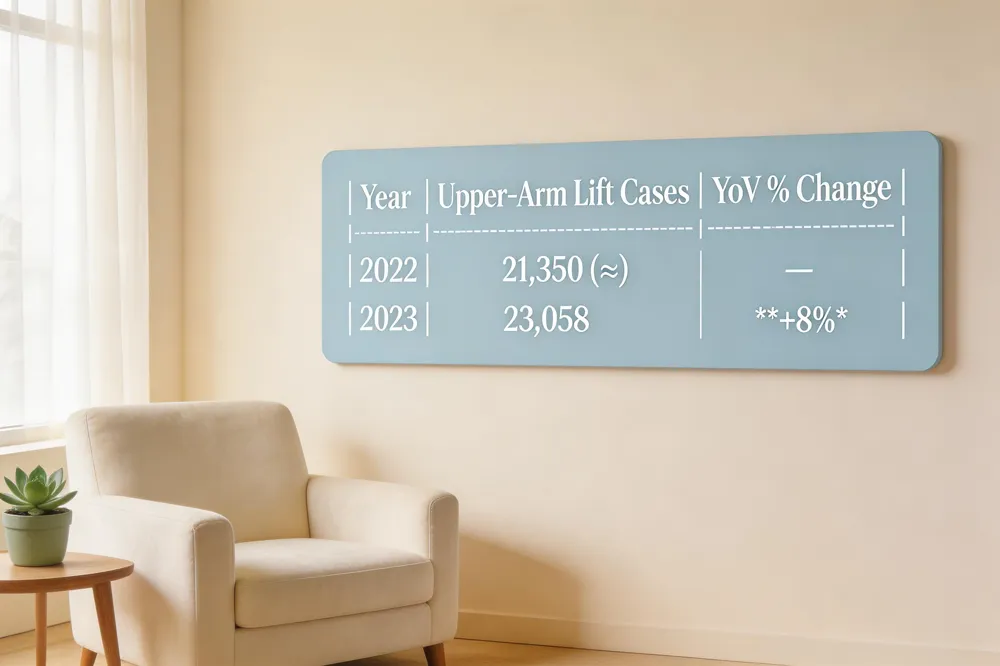 In 2023, brachioplasty—commonly known as upper‑arm lifts—experienced a notable 8 % increase, reaching 23,058 procedures nationwide. This growth reflects a rising demand among patients aged 40‑54, who represent 33 % of all breast augmentations and 45 % of liposuction cases, and who are increasingly seeking comprehensive body‑contouring solutions. The “ballet body” trend, emphasizing balanced, natural contours, has driven many of these patients to address excess skin and soft‑tissue laxity on the arms, especially after weight loss or aging. Surgeons report that the typical candidate is a health‑conscious adult, often a woman, looking for a minimally invasive yet lasting improvement that complements other contouring procedures such as liposuction or breast lifts. The procedure’s popularity underscores a broader shift toward targeted, high‑impact aesthetic refinements that deliver a smoother, more toned arm profile.
9. Blepharoplasty (Eyelid Surgery) Up 5% to 120,747 Procedures
| Year | Blepharoplasty Cases | YoY % Change |
|---|---|---|
| 2022 | 114,997 (≈) | — |
| 2023 | 120,747 | +5 % |
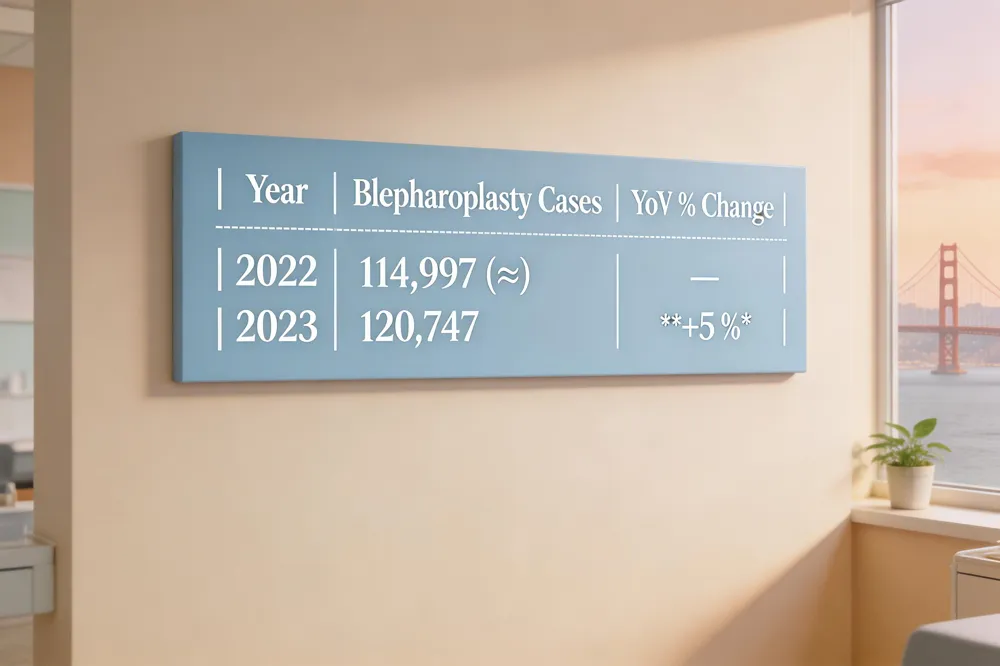 Eye‑area rejuvenation remains a cornerstone of facial aesthetic care, driven by the desire for a refreshed, well‑rested look. In 2023, Blepharoplasty increased 5 % to 120,747 procedures, reflecting its status as the most popular facial surgery in the United States. The procedure appeals across the lifespan, but demand varies by age cohort. Younger adults (30‑39 years) lead the market, drawn by early signs of skin laxity and under‑eye hollowness. middle‑age patients (55‑69 years) account for a substantial share of surgeries, seeking to counter deeper folds and drooping lids. Seniors (70 years and older) also pursue eyelid lifts, often combined with other facial rejuvenation treatments. This broad age distribution underscores blepharoplasty’s versatility as both a preventative and corrective option in modern aesthetic practice.
10. Rhinoplasty Increased 6% to 47,307 Surgeries
| Year | Rhinoplasty Cases | YoY % Change |
|---|---|---|
| 2022 | 44,600 (≈) | — |
| 2023 | 47,307 | +6 % |
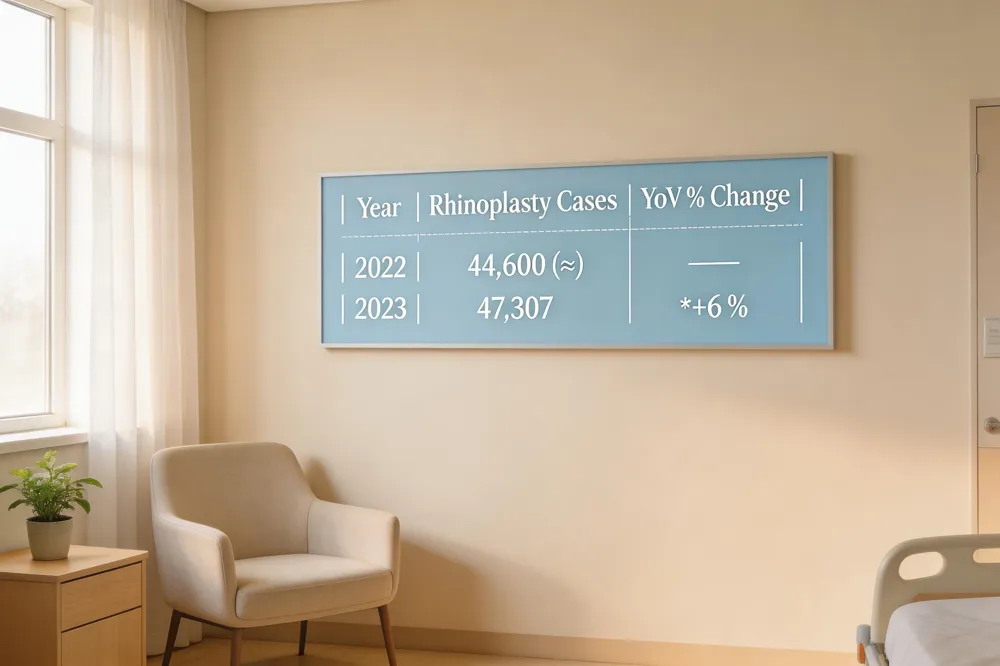 Rhinoplasty saw a 6 % year‑over‑year rise in 2023, reaching 47,307 procedures nationwide. The surge reflects a growing desire for facial harmony, often driven by social‑media exposure, personal confidence, and functional improvements such as corrected breathing or post‑traumatic reconstruction. Compared with other facial surgeries, Blepharoplasty (120,747 cases) outpaced facelifts (78,482 cases), though it remained the third‑most common facial operation after eyelid surgery and facelifts, which grew 5‑8 % in the same period. The procedure’s appeal spans age groups—particularly patients aged‑35‑50, who now represent a larger share of facial rejuvenation seekers. While minimally invasive injectables dominate overall aesthetic volume, Rhinoplasty’s surgical precision and lasting results continue to attract patients seeking a permanent structural change to the nose.
11. Facelifts Grew 8% to 78,482 Procedures
| Year | Facelift Cases | YoY % Change |
|---|---|---|
| 2022 | 72,600 (≈) | — |
| 2023 | 78,482 | +8 % |
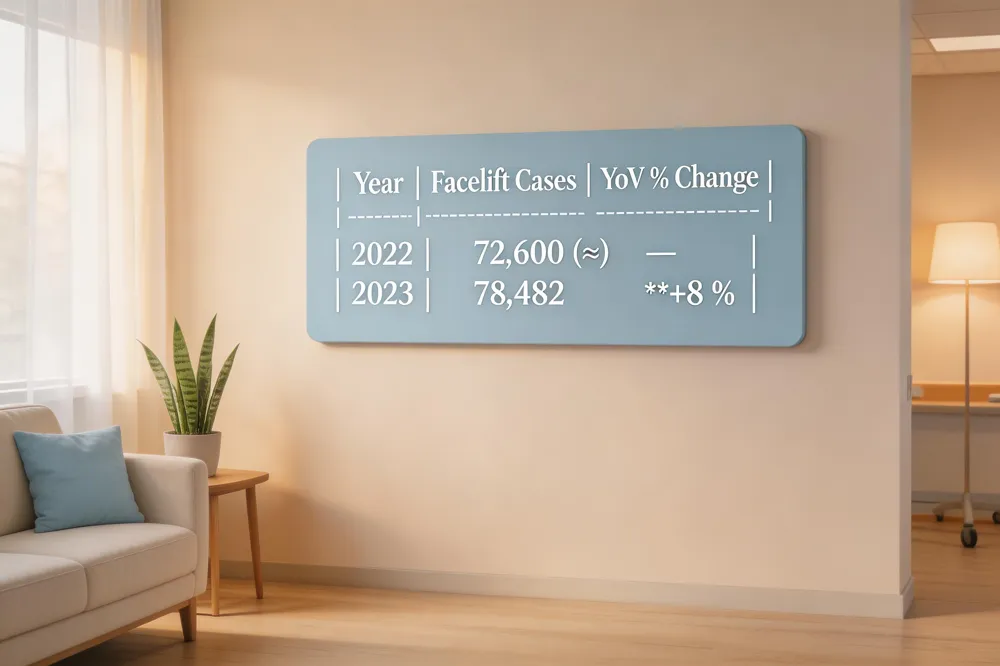 Facelifts surged in 2023, increasing 8 % year‑over‑year to 78,482 procedures nationwide, reflecting a broader facial rejuvenation boom. The growth aligns with heightened demand for natural‑looking refreshes driven by the “ballet body” trend and social‑media‑influenced aesthetic preferences. Seasonal patterns show a winter peak, as patients schedule surgeries during months when recovery time can be maximized before summer activities. Demographically, the 40‑54 age cohort dominates facelift volume, accounting for roughly 45 % of all facial rejuvenation surgeries, while men, though only 6 % of total cosmetic cases, exhibited faster‑growing facial‑surgery rates in 2023. The confluence of increased public awareness, favorable timing, and targeted marketing has propelled facelifts to become a cornerstone of the 2023 aesthetic landscape.
12. Neuromodulator Injections Hit 9,480,949 Sessions, Up 9%
| Year | Neuromodulator Sessions | YoY % Change |
|---|---|---|
| 2022 | 8,700,000 (≈) | — |
| 2023 | 9,480,949 | +9 % |
 In 2023 neu Neuromodulator injections (Botox, Dysport, Xeomin, and similar neurotoxin products surged to 9,480,949 injections—a 9 % year‑over‑year increase—cementing their position as the most performed minimally invasive aesthetic treatment in the United States. By volume, Neuromodulator injections outpaced the second‑most common minimally invasive option, hyaluronic‑acid fillers, which recorded 5,294,603 treatments (an 8 % rise). Other non‑surgical modalities such as non‑invasive fat‑reduction (745,967 procedures) and skin‑tightening technologies also grew, but none approached the near‑10‑million‑session scale of neurotoxin injectables. This dominant share reflects patients’ desire for quick, low‑downtime wrinkle relaxation across age groups, especially those 35‑50, where Botox remains the top choice for facial rejuvenation.
13. Hyaluronic‑Acid Fillers Reached 5,294,603 Treatments, Up 8%
| Year | HA Filler Treatments | YoY % Change |
|---|---|---|
| 2022 | 4,900,000 (≈) | — |
| 2023 | 5,294,603 | +8 % |
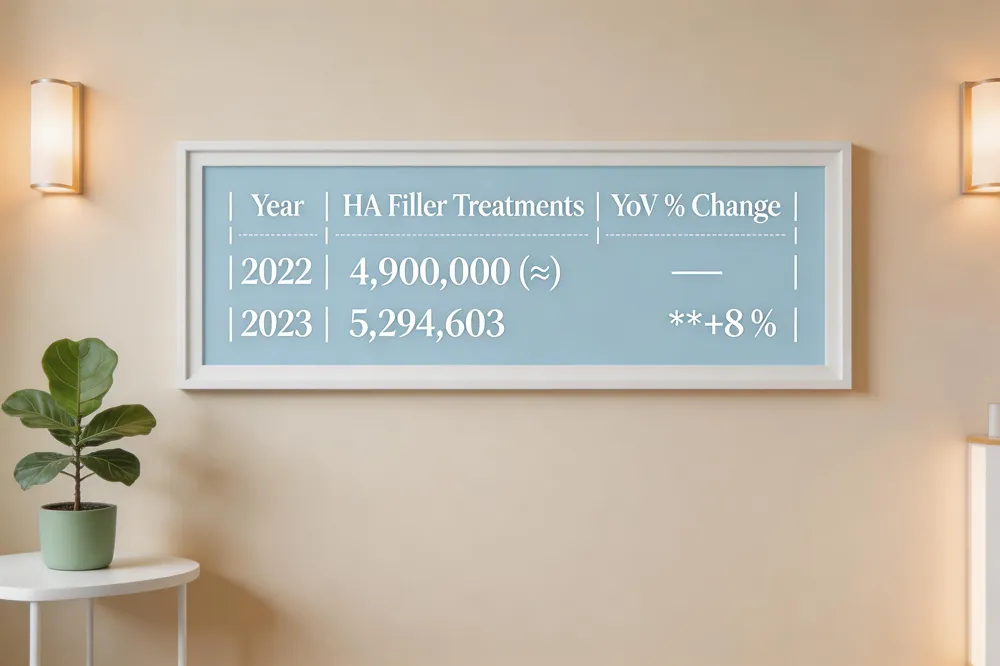 Hyaluronic‑acid (HA) fillers have cemented their place as the second‑most common minimally invasive aesthetic treatment in the United States. In 2023, Hyaluronic acid filler injections rose 8% to 5,294,603 procedures—a solid 8 % jump from the prior year—reflecting both growing patient demand and expanding indications for facial volume restoration.
Soft‑tissue filler popularity: The surge aligns with broader trends where non‑surgical procedures now account for roughly 70 % of all aesthetic interventions. Botox remains the top injectable, but HA fillers have narrowed the gap, driven by their versatility for lips, cheeks, under‑eye hollows, and nasolabial folds. The high safety profile (complication rates under 1 %) and the ability to achieve subtle, natural‑looking results make them especially appealing to adults aged 35‑55, the demographic that represents the largest share of filler users.
Trends in facial volume restoration: Patients increasingly seek “pre‑juvenation”—low‑dose, maintenance‑oriented treatments that preserve youthful contours before deep lines appear. HA fillers now serve as a bridge between preventive care and corrective procedures, often combined with neuromodulators for comprehensive facial rejuvenation. Emerging techniques such as micro‑cannula placement and layered injection protocols enhance durability and reduce bruising, while the rise of regenerative adjuncts (e.g., PRP‑boosted filler protocols) points to a future where HA fillers not only add volume but also stimulate collagen remodeling.
Overall, the 2023 data underscore HA fillers’ pivotal role in modern aesthetic practice, offering patients a quick, low‑downtime option for facial volume enhancement that aligns with the industry’s shift toward natural, individualized results.
14. Non‑Invasive Fat‑Reduction Procedures Grew 9% to 745,967 Sessions
| Year | Fat‑Reduction Sessions | YoY % Change |
|---|---|---|
| 2022 | 684,000 (≈) | — |
| 2023 | 745,967 | +9 % |
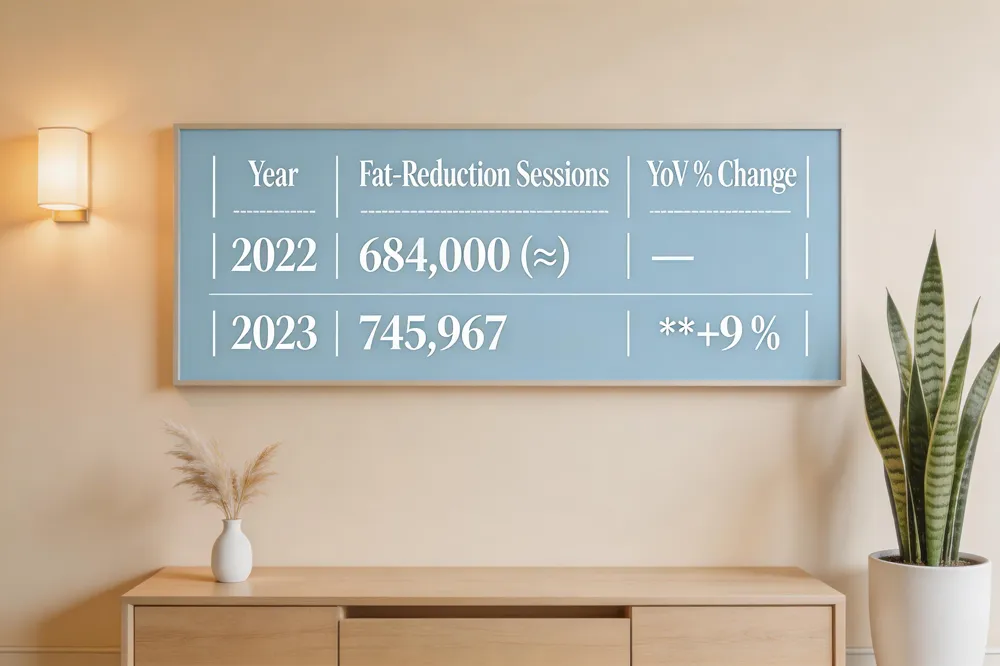 In 2023, Non‑invasive fat‑reduction procedures (e.g., CoolSculpting) grew 9% to 745,967 procedures nationwide. The most popular option, cryolipolysis—commonly known by the brand name CoolSculpting—continues to dominate this market, offering patients a safe, FDA‑cleared method to eliminate stubborn fat without incisions, anesthesia, or downtime. Newer technologies, such as radiofrequency‑assisted lipolysis and laser‑based fat‑reduction, have entered the arena, expanding the toolkit for clinicians who want to deliver precise contouring while preserving natural anatomy. This shift reflects a broader consumer preference for body‑contouring solutions that fit busy lifestyles and minimize recovery time. As patients increasingly seek subtle, maintenance‑oriented enhancements, clinics are prioritizing these minimally invasive modalities, delivering noticeable results in a few sessions and allowing individuals to return to work or exercise immediately after treatment.
15. Adults 40‑54 Made Up 33% of Breast Augmentations and 45% of Liposuctions
| Procedure | % of Cases (Age 40‑54) |
|---|---|
| Breast Augmentation | 33 % |
| Liposuction | 45 % |
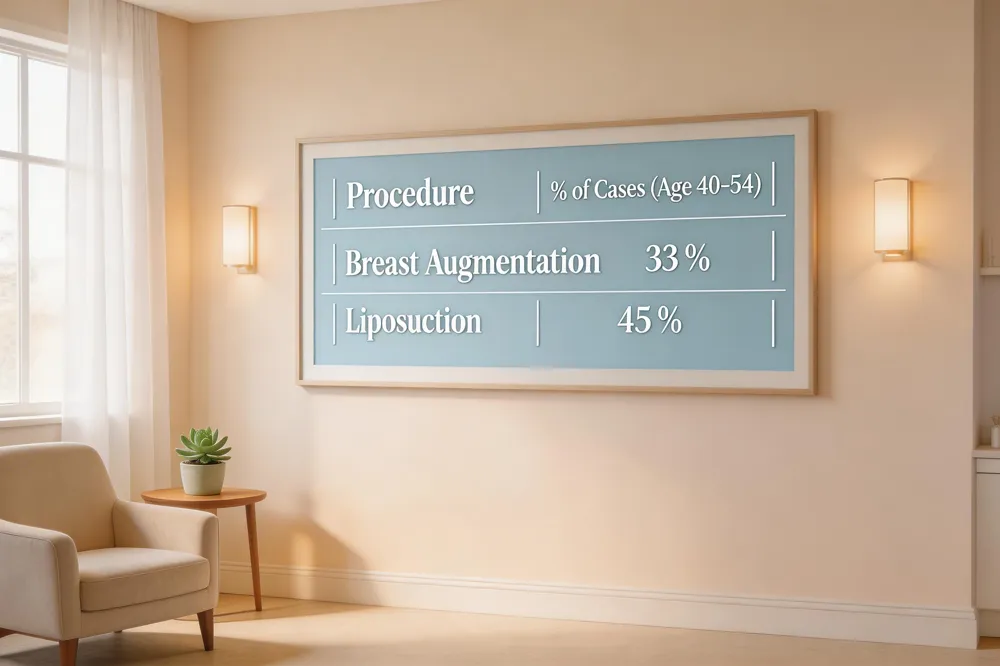 In 2023, the 40‑54 age cohort represented a substantial share of body‑contouring and breast‑enhancement demand, Patients aged 40‑54 accounted for 33% of all breast augmentations and 45% of all liposuction procedures. This pattern reflects a mature patient population that often seeks to restore youthful contours after the natural effects of aging, weight fluctuations, or post‑pregnancy changes. For clinicians, recognizing this demographic’s priorities is essential: counseling should emphasize realistic outcome expectations, the durability of results, and the importance of a comprehensive health evaluation—including BMI, comorbidities, and skin quality—before surgery. Discussion of recovery timelines, potential complications, and long‑term maintenance (e.g., periodic touch‑ups or adjunctive non‑invasive treatments) helps align patient goals with safe, sustainable outcomes. Tailoring pre‑operative education to the specific concerns of 40‑54‑year‑olds enhances satisfaction and supports informed decision‑making.
16. Men Represented 6% of All Cosmetic Procedures, With Faster Facial‑Surgery Growth
| Metric | Value |
|---|---|
| Total Cosmetic Procedures (2023) | 1,575,244 |
| Male Share of All Procedures | 6 % |
| Male Facial/Neck Surgery Growth | +15 % |
| Male Body Surgery Growth | +18 % |
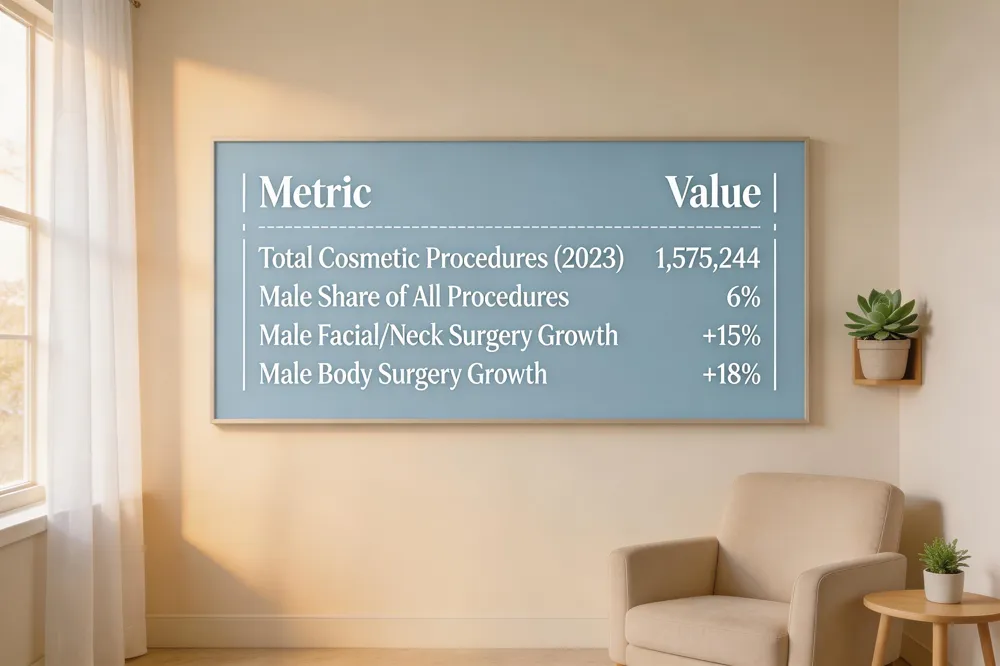 In 2023 men accounted for 6 % of all cosmetic procedures in the United States, a modest share that nonetheless masks a rapid shift in the types of treatments they seek. While overall male volume grew 6 % year‑over‑year, facial and neck surgeries surged 15 %—outpacing body‑contouring growth of 18 % in the same period. The most common facial operation among men was blepharoplasty, which rose 12 % from 2022, followed by rhinoplasty and facelifts, each posting double‑digit increases. By contrast, male body procedures such as liposuction and gynecomastia correction grew more modestly, reflecting a growing preference for minimally invasive, quick‑recovery options like neuromodulator injections and dermal fillers. This trend aligns with broader market data showing that men are increasingly electing subtle, maintenance‑oriented aesthetic interventions, driven by higher social acceptance and targeted marketing toward male patients.
17. Pacific Region Performed 58% of All Cosmetic Surgical Procedures
| Region | Share of Cosmetic Surgical Procedures |
|---|---|
| Pacific | 58 % |
| South Atlantic | 28 % |
| Other US Regions | 14 % |
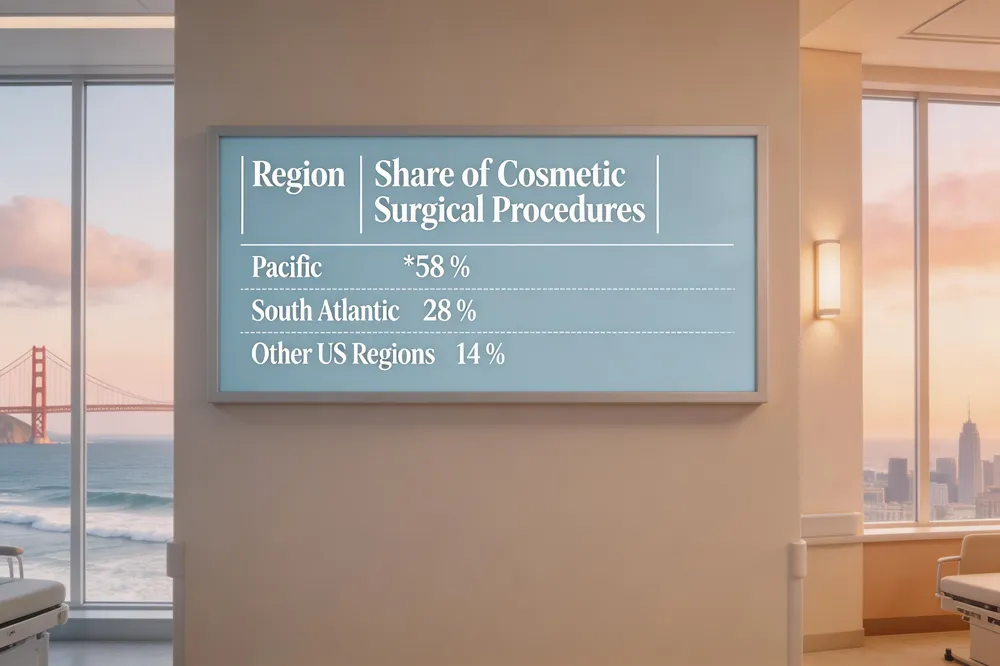 In 2023 the Pacific region—anchored by California—accounted for a staggering 58 % of every cosmetic surgical procedure performed in the United States. This geographic concentration reflects both the sheer population size of the West Coast and the region’s reputation for cutting‑edge aesthetic care. California’s major metropolitan hubs such as Los Angeles, San Francisco and San Diego host a dense network of board‑certified plastic surgeons, high‑tech surgical centers, and specialty clinics that attract patients from across the nation and abroad. The area's strong demand is driven by trends like the “ballet body” aesthetic, a high prevalence of social‑media‑inspired beauty standards, and a patient base that values natural‑looking, minimally invasive results. Consequently, surgeons in the Pacific region routinely lead national growth rates in procedures ranging from liposuction and breast augmentation to neuromodulator injections, reinforcing California’s status as the epicenter of American cosmetic surgery.
18. “Ballet Body” Trend Drove 7% Rise in Breast Lifts and 6% Rise in Buttock Lifts
| Procedure | 2023 Cases | YoY % Change |
|---|---|---|
| Breast Lift | 153,600 | +7 % |
| Buttock Lift (incl. BBL) | 31,150 (≈) | +6 % |
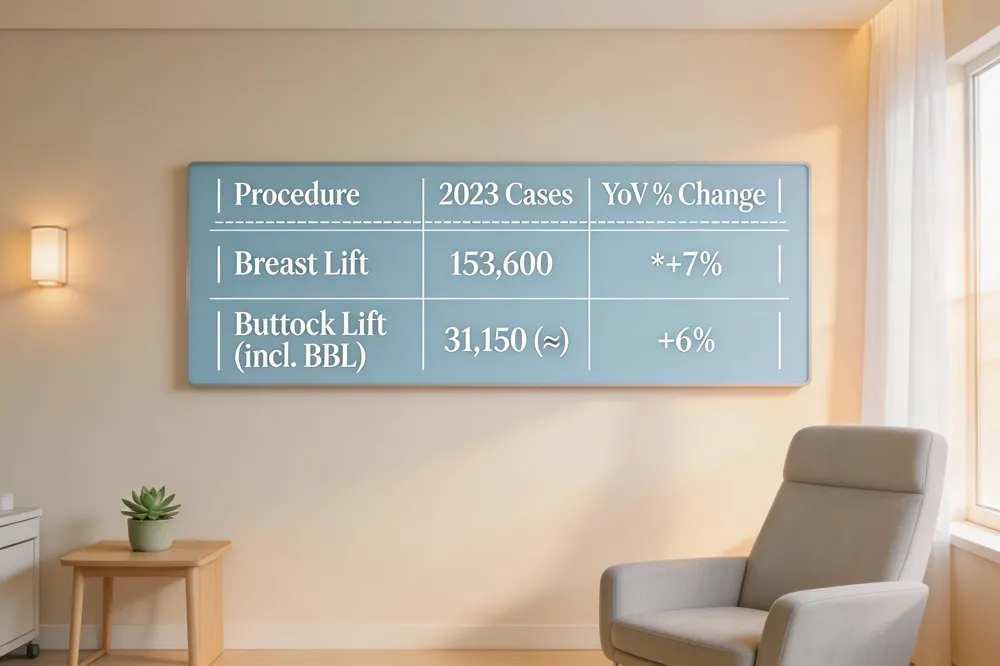 The 2023 “ballet body” aesthetic—emphasizing a graceful, balanced silhouette reminiscent of a dancer’s poise—has become a powerful cultural driver of body‑contouring procedures. Social‑media platforms amplified the ideal of a lifted bust and sculpted posterior, prompting a 7 % surge in breast‑lift (mastopexy) surgeries to 153,600 cases and a 6 % rise in buttock‑augmentation procedures, including Brazilian butt lifts, to 29,383 cases. This trend dovetails with broader demand for minimally invasive contouring, as patients seek subtle, natural‑looking enhancements without dramatic volume changes. The popularity of the ballet body also aligns with the overall 5 % growth in cosmetic surgery and a 7 % increase in minimally invasive procedures, reflecting a market shift toward procedures that deliver refined, athletic results while minimizing downtime.
19. Upper‑Arm Lifts Grew 11% Among Patients Under 19 (1% of Total Procedures)
| Age Group | Upper‑Arm Lift Cases | YoY % Change |
|---|---|---|
| ≤ 19 | 230 (≈) | +11 % |
| All Ages | 23,058 | +8 % |
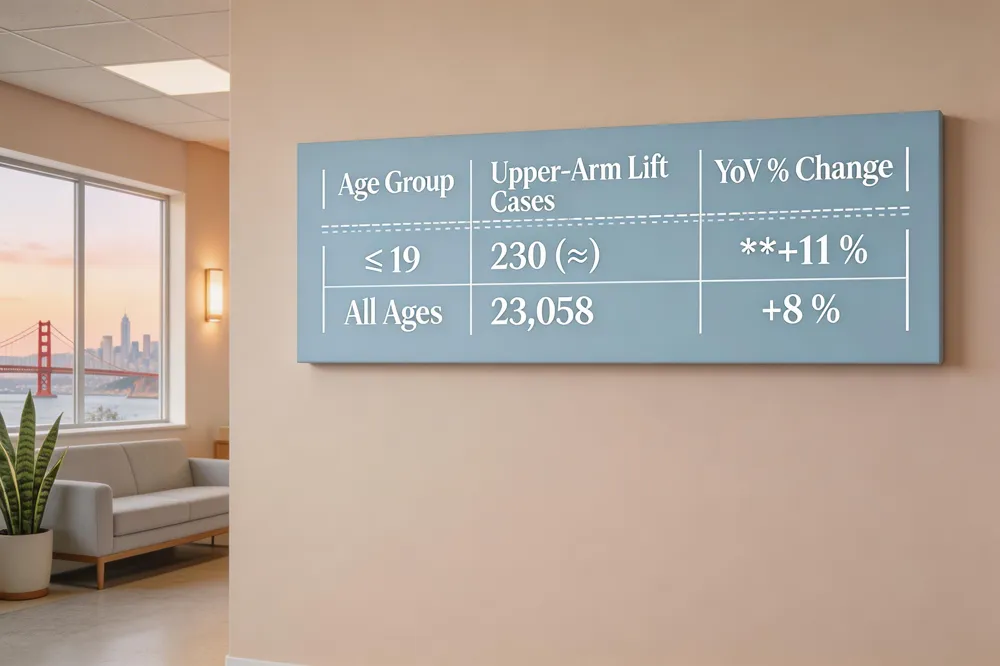 Upper‑arm lifts (brachioplasty) saw an 8% overall increase in 2023, reaching 23,058 procedures nationwide. Remarkably, the teenage subgroup (ages ≤ 19) experienced an 11% surge in lift‑ups, even though patients under 19 comprised only 1% of all cosmetic procedures. This uptick reflects a growing willingness among younger individuals to address upper‑arm laxity—often linked to rapid post‑pubertal growth or early weight changes—despite the low overall volume. While the absolute number of teen lifts remains modest, the double‑digit growth rate is statistically significant, indicating a nascent but clear trend toward early body‑contouring. Surgeons attribute this pattern to heightened social‑media exposure, the “ballet body” aesthetic, and increased confidence in minimally invasive surgical options that promise a quick recovery and natural‑looking results.
20. Average Breast Augmentation Surgeon Fee Rose to $4,875 (Up from $4,294 in 2022)
| Year | Avg Surgeon Fee |
|---|---|
| 2022 | $4,294 |
| 2023 | $4,875 (+13 %) |
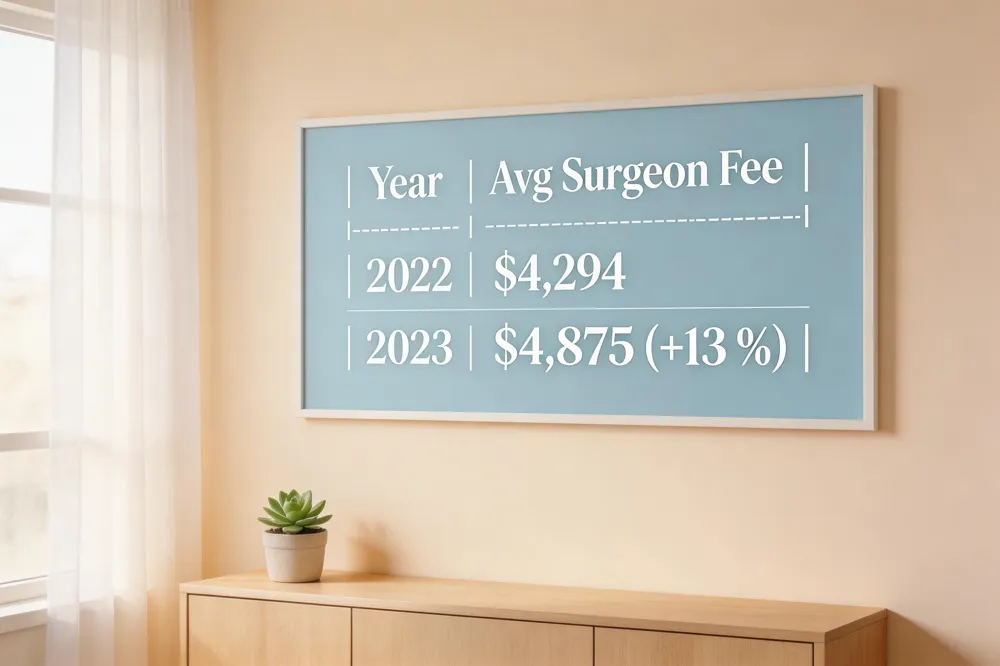 In 2023 the average surgeon fee for breast augmentation climbed to $4,875, a 13% increase from the 2022 average of $4,294. This rise reflects several economic pressures: higher practice overhead, inflation‑driven costs for surgical supplies, and the growing demand for advanced implant technologies such as cohesive silicone “gummy‑bear” designs. Patients budgeting for the procedure must now factor in a larger surgical component while still accounting for anesthesia, facility fees, and post‑operative care, which together can push total out‑of‑pocket expenses into the $6,000–$7,500 range. To mitigate the impact, many clinics offer financing options like CareCredit, bundled packages, or seasonal promotions. Transparent cost discussions during the initial consultation help patients align expectations with their financial plans and avoid surprise expenses after surgery.
21. Neuromodulator Injection Fee Dropped to $435 per Session (Down from $528 in 2022)
| Year | Avg Neuromodulator Session Fee |
|---|---|
| 2022 | $528 |
| 2023 | $435 (‑17 %) |
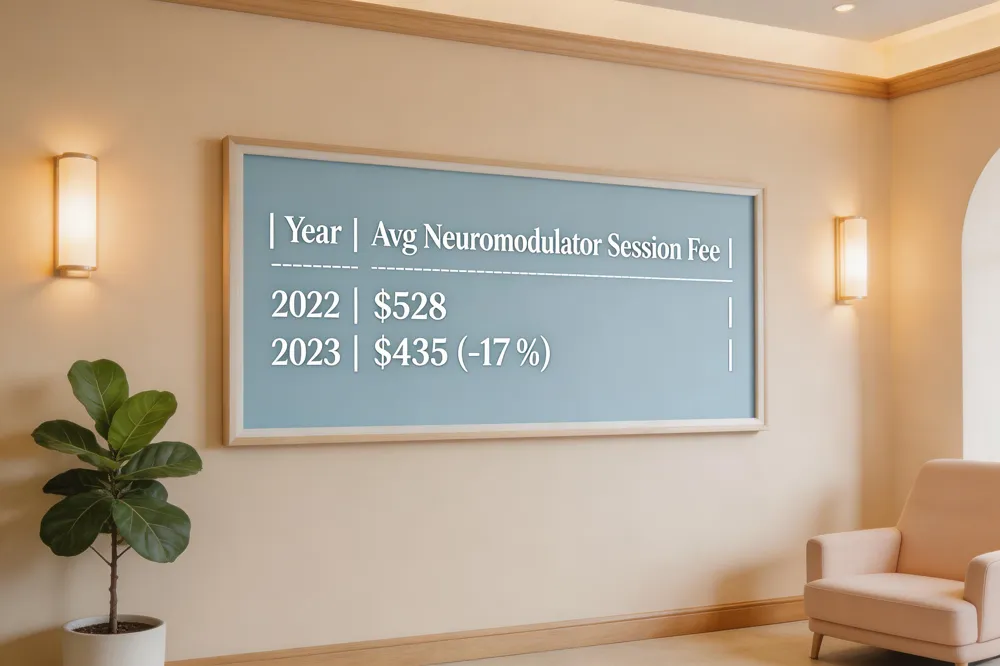 In 2023 the The average fee for neuromodulator injections dropped to $435 per session from $528 in 2022—most commonly Botox, Dysport, and Xeomin—fell to $435 per session, a 17% reduction from the $528 average reported in 2022. This price decline occurred alongside a 9% increase in overall neuromodulator treatments, which reached Neuromodulator injections (Botox, Dysport, Xeomin, etc.) reached 9,480,949 procedures nationwide. The simultaneous rise in volume and drop in cost reflect a market shift toward greater accessibility of non‑surgical facial rejuvenation. As more patients seek quick, low‑downtime solutions for wrinkles and fine lines, the lower per‑session price makes these injectable options more affordable for a broader demographic, including younger adults and older patients looking to maintain a natural appearance without surgery. The combination of higher utilization and reduced fees underscores the growing appeal and cost‑effectiveness of minimally invasive aesthetic care.
22. Reconstructive Procedures Grew 2% to 157,740 Breast Reconstructions in 2023
| Year | Breast Reconstruction Cases | YoY % Change |
|---|---|---|
| 2022 | 154,600 (≈) | — |
| 2023 | 157,740 | +2 % |
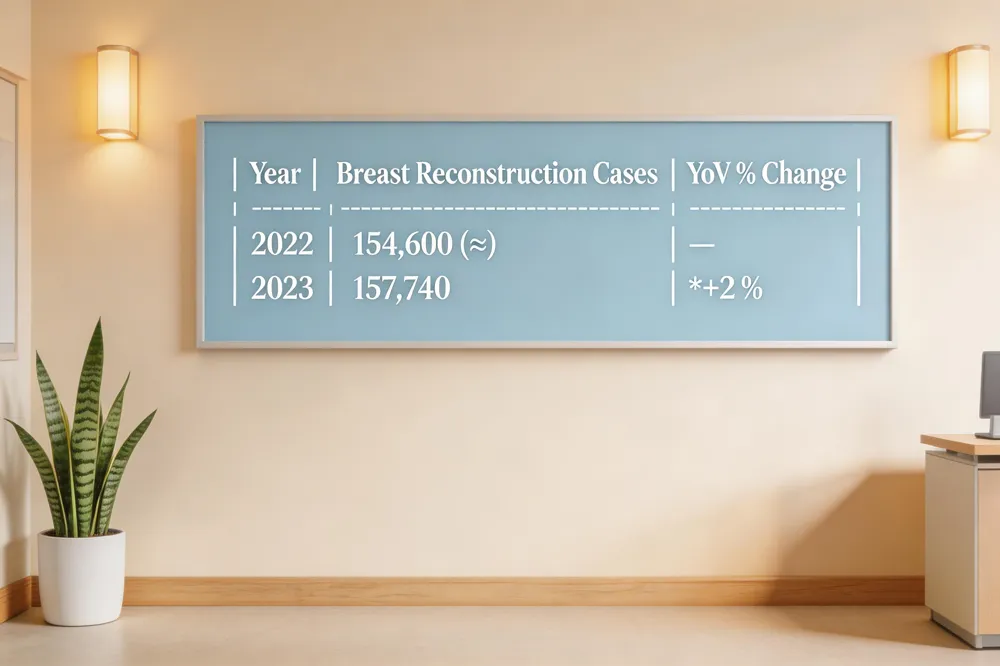 In 2023, reconstructive surgery continued its steady climb, with breast reconstruction cases rising 2 % to a total of 157,740 procedures across the United States. This growth was largely driven by post‑cancer patients seeking restoration after mastectomy, reflecting both advances in surgical techniques and heightened awareness of the psychosocial benefits of reconstruction. While aesthetic surgery volumes surged 5 % overall—reaching 1,575,244 cosmetic procedures —the reconstructive sector’s modest increase underscores a different market dynamic: reconstruction is largely medically indicated, whereas aesthetic procedures are largely patient‑driven. Nevertheless, both segments benefited from the same trends of minimally invasive methods, improved anesthesia protocols, and a greater emphasis on patient safety, resulting in higher satisfaction rates and shorter recovery times for all.
23. Men’s Facial/Neck Procedures Up 15% and Body Procedures Up 18% in 2023
| Category | YoY % Change |
|---|---|
| Facial/Neck Surgery | +15 % |
| Body Surgery | +18 % |
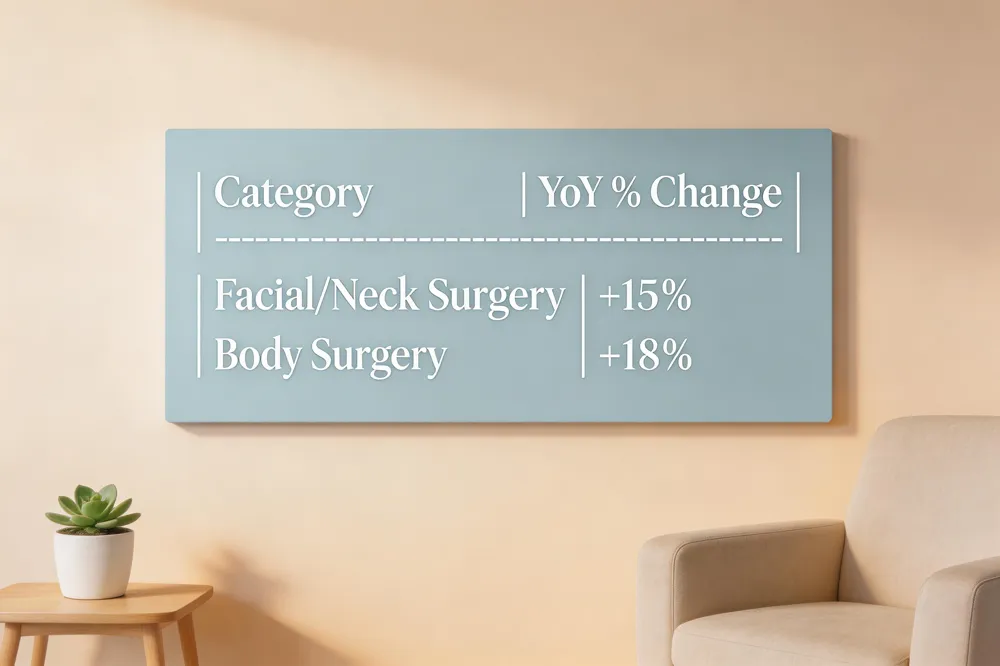 In 2023 men comprised roughly 6 % of all cosmetic procedures in the United States, yet their procedural volume grew markedly faster than that of women. Facial and neck surgeries for male patients—particularly blepharoplasty, rhinoplasty and gynecomastia corrections—experienced a 15 % year‑over‑year increase, reflecting a rising acceptance of aesthetic care among men. Body‑contouring interventions such as liposuction, brachioplasty and lower‑body lifts surged 18 % in the same period, driven by the broader “ballet body” trend and the aftermath of GLP‑1‑induced weight loss. This gender‑specific growth underscores an emerging male‑focused aesthetic market, with surgeons reporting higher demand for subtle, natural‑looking enhancements and a willingness to combine surgical and minimally invasive treatments (e.g., neuromodulator injections and hyaluronic‑acid fillers) to achieve balanced results. The data suggest that male patients are increasingly seeking both facial rejuvenation and body sculpting, positioning men as a fast‑growing demographic in cosmetic surgery.
Cons of Cosmetic Procedures
- High cost and potential for out‑of‑pocket expenses.
- Risk of unsatisfactory aesthetic outcomes.
- Possible need for multiple sessions or revisions.
- Psychological dependence on repeat procedures.
- Limited insurance coverage for elective care.
 While cosmetic procedures can enhance appearance, they carry a range of physical risks. Surgical interventions may cause bruising, hematoma, seroma formation requiring drainage, nerve injury leading to sensory loss or motor dysfunction, infection (often Staphylococcus aureus) that can progress to cellulitis or necrotizing fasciitis, anesthesia complications, blood loss, wound dehiscence, and skin necrosis. Systemic threats such as deep‑vein thrombosis, pulmonary embolism, and fat‑embolism syndrome, though uncommon, can be life‑threatening. Minimally invasive treatments have unique dangers: soft‑tissue fillers can cause persistent granulomas, biofilm‑related infections, and rare catastrophic events like permanent blindness from arterial injection. Overall, thorough patient evaluation and diligent postoperative monitoring are essential to mitigate these risks.
Definition of Cosmetic Surgery
Cosmetic surgery is an elective branch of plastic surgery aimed at enhancing appearance rather than restoring function. It includes:
- Minimally invasive: neuromodulators, HA fillers, laser resurfacing, chemical peels, PRP.
- Surgical: breast augmentation, liposuction, rhinoplasty, blepharoplasty, facelifts, abdominoplasty, etc. Reconstructive surgery, by contrast, restores form/function after disease, trauma, or congenital defects and is often covered by insurance.
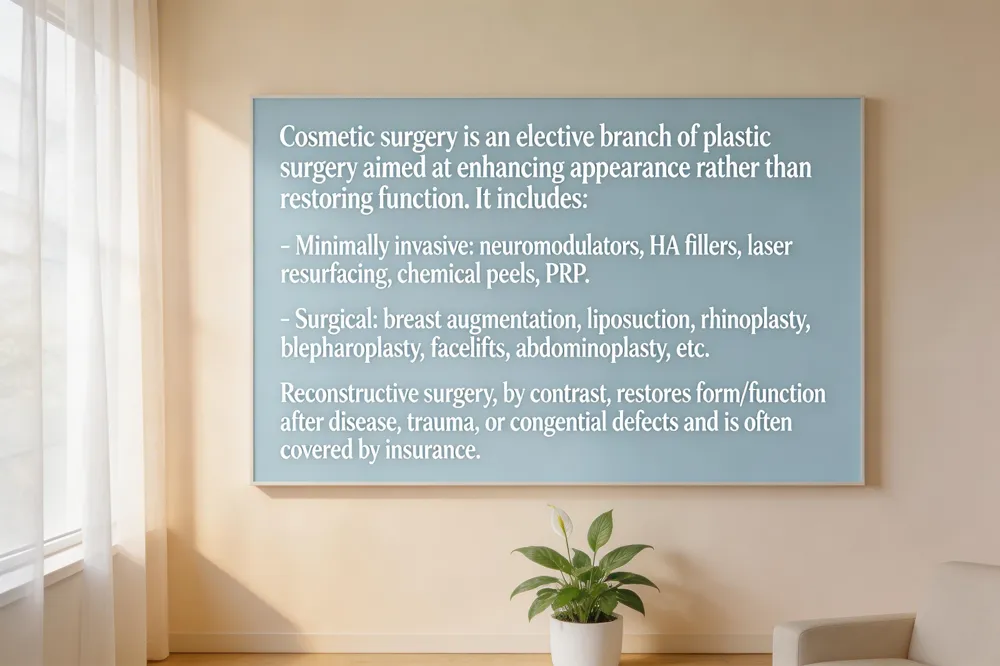 Cosmetic surgery is a branch of plastic surgery focused on enhancing, reshaping, or restoring specific facial and body areas for aesthetic rather than medical reasons. It encompasses a broad scope—from minimally invasive treatments such as neuromodulator injections (Botox), hyaluronic‑acid fillers, laser resurfacing, and chemical peels—to more extensive surgical procedures like facelifts, rhinoplasty, breast augmentation, liposuction, and abdominoplasty. The primary goal is to improve appearance, boost self‑confidence, and achieve a more youthful or balanced look while tailoring each plan to the patient’s unique anatomy and preferences.
The key distinction between cosmetic and reconstructive surgery lies in intent: cosmetic surgery seeks to improve appearance for personal satisfaction, whereas reconstructive surgery restores form and function after trauma, disease, or congenital anomalies. Both require board‑certified surgeons, but reconstructive procedures are often medically necessary and may be covered by insurance, whereas cosmetic procedures are elective and typically self‑funded.
Most Common Facial Plastic Surgery
| Rank | Procedure | 2023 Cases |
|---|---|---|
| 1 | Rhinoplasty | 47,307 |
| 2 | Blepharoplasty | 120,747 |
| 3 | Facelift | 78,482 |
| 4 | Brow Lift | 22,500 (≈) |
| 5 | Neck Lift | 19,800 (≈) |
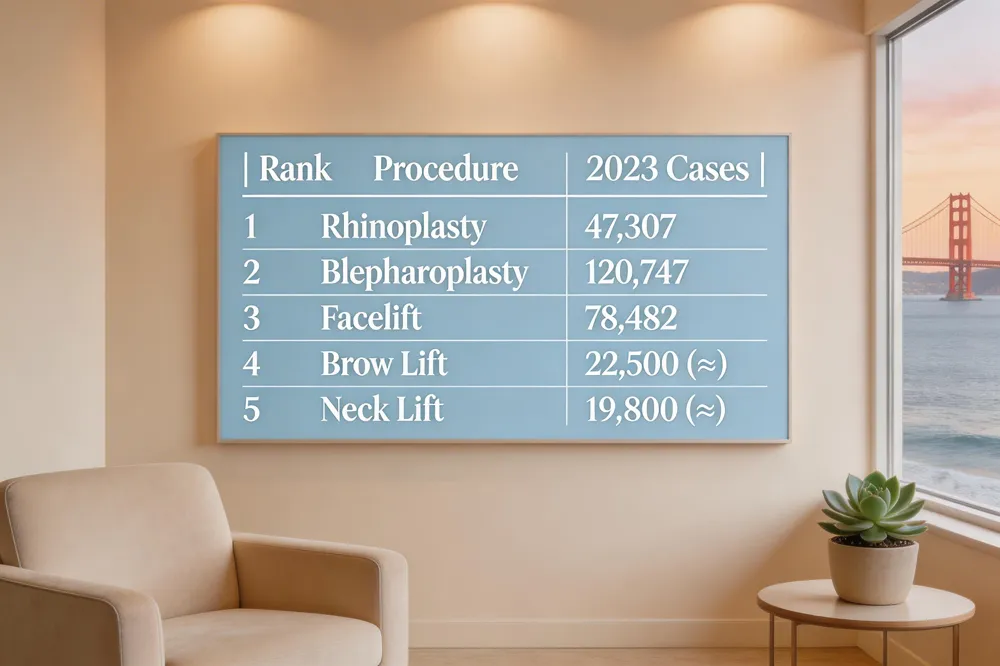 Rhinoplasty, or nose reshaping surgery, is the most frequently performed facial plastic procedure in the United States. It tops the list of both overall plastic surgeries and specifically facial operations, consistently ranking #1 in national statistics. Close behind are blepharoplasty (eyelid surgery) and facelifts, which together account for a large share of facial rejuvenation cases. Other popular facial surgeries include brow lifts and neck lifts, often combined with primary procedures for comprehensive results. Patients choose these surgeries to achieve natural‑looking, lasting improvements in facial harmony and confidence. The 2023 ASPS data show rhinoplasty procedures rose 6% to 47,307 cases, while blepharoplasty increased 5% to 120,747 procedures, and facelifts grew 8% to 78,482 procedures, underscoring the robust demand for facial aesthetic surgery.
Top Five Cosmetic Surgical Procedures
| Rank | Procedure | 2023 Cases |
|---|---|---|
| 1 | Liposuction | 347,782 |
| 2 | Breast Augmentation | 304,181 |
| 3 | Blepharoplasty | 120,747 |
| 4 | Facelift | 78,482 |
| 5 | Rhinoplasty | 47,307 |
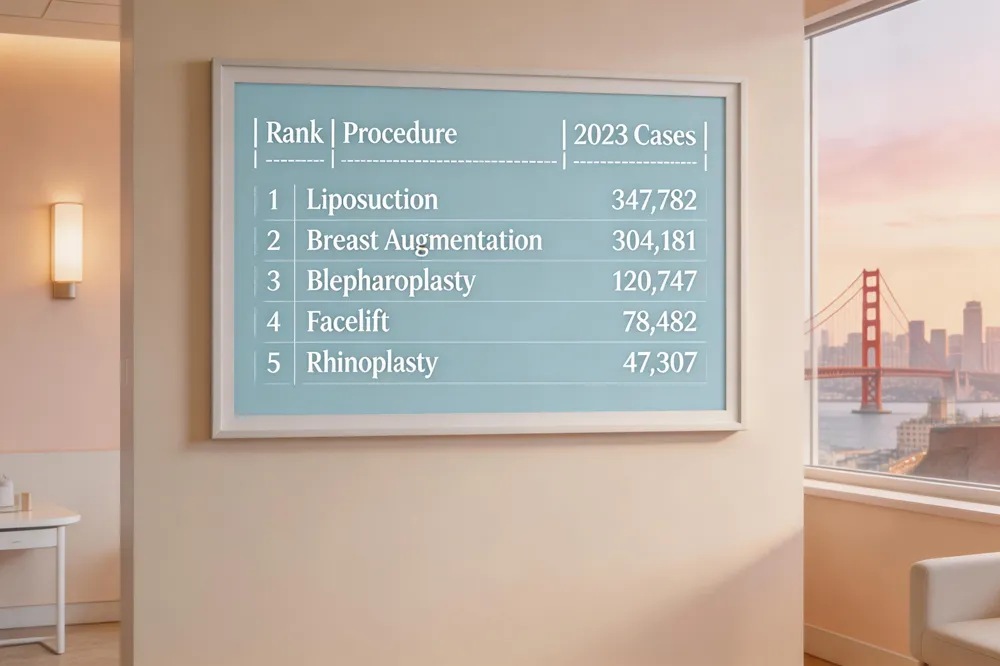 In 2023 the United States saw a clear hierarchy of surgical demand. Liposuction remained the most performed, with 347,782 cases (a 7% rise) followed closely by breast augmentation at 304,181 procedures (up 2%). Rhinoplasty accounted for 47,307 surgeries, while blepharoplasty (eyelid lift) recorded 120,747 cases, both reflecting steady growth of 5‑6%. Facelifts, the surgical rejuvenation cornerstone, increased 8% to 78,482 procedures. These five—liposuction, breast augmentation, rhinoplasty, blepharoplasty, and facelift—together represent the bulk of cosmetic surgery, driven by patient desires for body contouring, enhanced facial features, and youthful appearance. All are performed primarily by board‑certified surgeons in accredited centers, ensuring safety and high satisfaction.
Cosmetic Surgery Cost Overview
| Procedure | Avg Surgeon Fee (2023) |
|---|---|
| Breast Augmentation | $4,875 |
| Breast Lift (Mastopexy) | $14,500–$16,500 |
| Rhinoplasty | $7,000–$10,500 |
| Facelift | $15,000–$22,000 |
| Neuromodulator (Botox) | $435 per session |
| HA Filler (per syrinx) | $600–$800 |
| Non‑invasive Fat‑Reduction | $2,000–$4,000 per session |
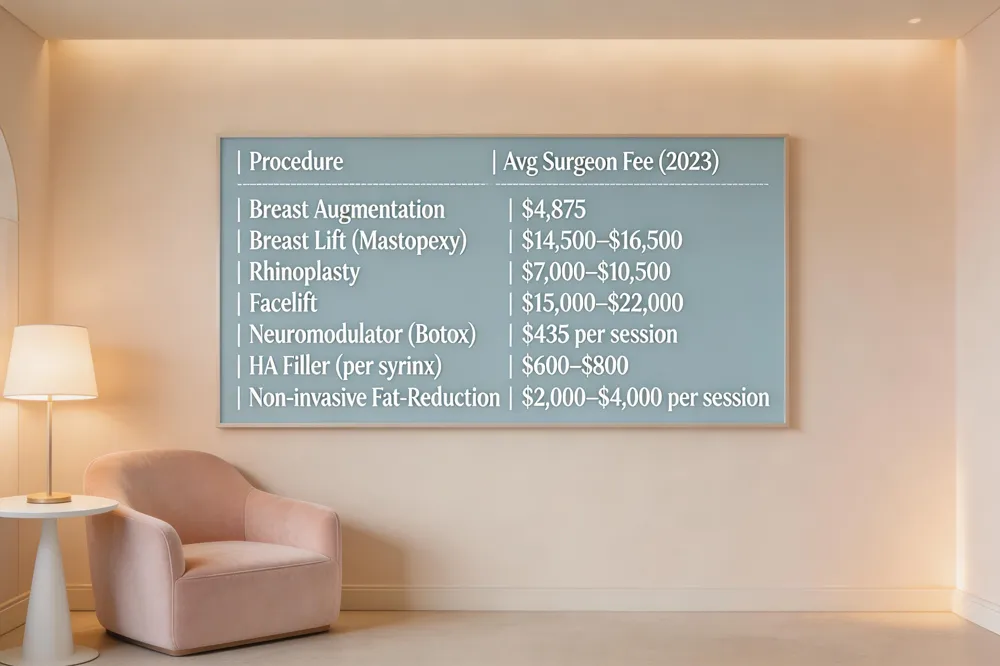 Cosmetic surgery costs vary widely, but reputable clinics typically offer all‑inclusive pricing that bundles the surgeon’s fee, anesthesia, facility charges, implants and follow‑up visits. In the San Francisco area facial procedures such as a facelift or neck lift usually range from $15,000 to $22,000, while rhinoplasty is priced around $7,000‑$10,500. Body‑contouring surgeries like a tummy tuck fall between $12,500‑$22,000 and a Brazilian butt lift between $10,500‑$12,500. Breast augmentation fees average $4,875 (2023) in the U.S., with national estimates of $5,500‑$7,500, and breast lifts can exceed $14,500 when combined with implant work. Non‑surgical treatments are billed per unit or session: Botox injections average $400‑$435 per treatment, and hyaluronic‑acid filler syringes cost $600‑$800. Most practices provide flexible financing—CareCredit, interest‑free monthly plans, or bundled packages—to make these investments more manageable for patients.
Risks of Cosmetic Surgery
- Surgical: infection, bleeding, nerve injury, hematoma/seroma, anesthesia complications, scar formation, deep‑vein thrombosis, pulmonary embolism, fat‑embolism.
- Minimally invasive: bruising, swelling, granuloma, biofilm infection, rare vascular occlusion leading to blindness, filler migration.
- Mitigation: thorough medical history, board‑certified surgeon, sterile technique, postoperative monitoring.
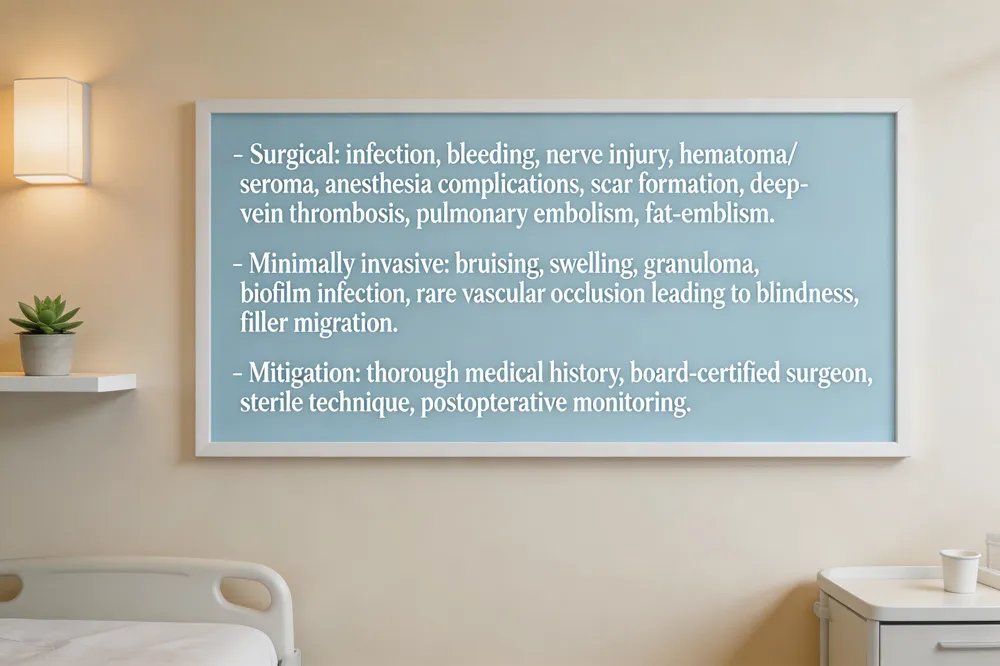 Cosmetic surgery, like any surgical procedure, carries inherent medical risks. Anesthesia can cause reactions ranging from mild nausea to rare life‑threatening events. Incision sites may become infected, and excessive bleeding or the formation of blood clots can occur, especially in patients with high BMI, smoking history, or clotting disorders. Other surgical complications include scarring, nerve injury that leads to numbness or tingling, and fluid collections (seromas) that sometimes require additional treatment. Minimally invasive options—Botox, dermal fillers, laser resurfacing, and non‑surgical fat‑reduction—reduce but do not eliminate risk. Common side effects are bruising, redness, swelling, and rare granuloma formation; arterial injection of fillers can, cause permanent blindness. Maintaining optimal health, disclosing a complete medical history, and selecting a board‑certified surgeon are essential steps to minimize these risks and ensure a safe, satisfying outcome.
Most Common Plastic Surgery for Men
| Rank | Procedure | 2023 Cases |
|---|---|---|
| 1 | Rhinoplasty | 47,307 |
| 2 | Blepharoplasty | 120,747 |
| 3 | Liposuction | 347,782 |
| 4 | Gynecomastia Correction | 18,200 (≈) |
| 5 | Facelift | 78,482 |
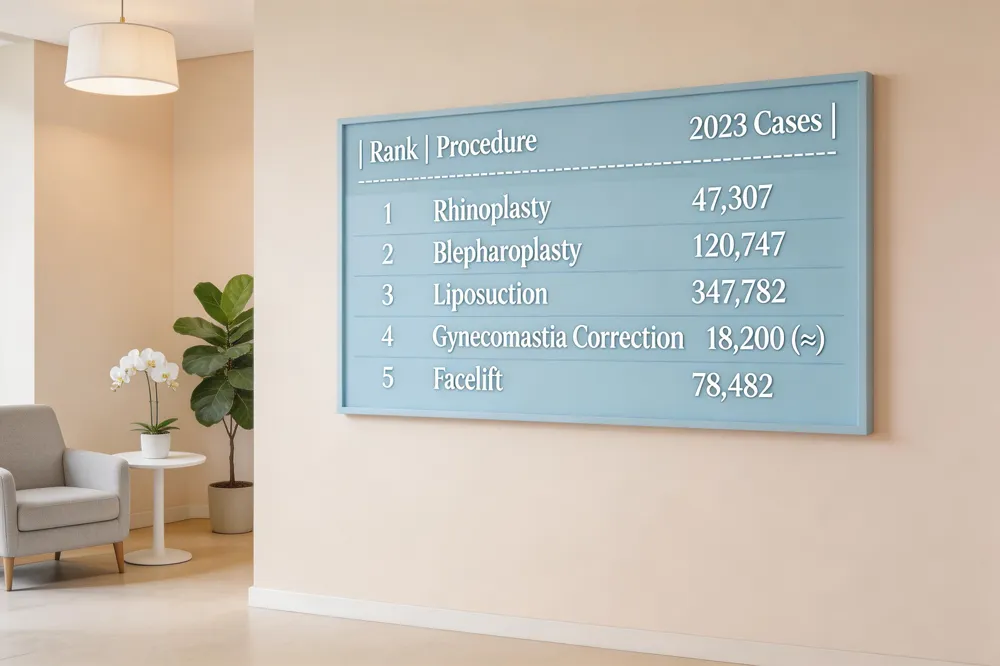 Rhinoplasty (nose reshaping) tops the list as the most common plastic surgery performed on men, with tens of thousands of procedures reported each year. It is followed closely by blepharoplasty (eyelid surgery), which many men choose to improve vision and achieve a more youthful appearance. Liposuction is also highly popular, helping men remove stubborn fat deposits and contour the body, especially in the abdomen, flanks, and upper arms. Gynecomastia (male breast reduction) ranks among the top procedures, addressing unwanted breast tissue and improving chest aesthetics. Together, these surgeries reflect the growing demand for facial and body enhancements among male patients, driven by increased awareness and acceptance of aesthetic care for men.
Most Common Plastic Surgery for Women
| Rank | Procedure | 2023 Cases |
|---|---|---|
| 1 | Breast Augmentation | 304,181 |
| 2 | Liposuction | 347,782 |
| 3 | Blepharoplasty | 120,747 |
| 4 | Facelift | 78,482 |
| 5 | Rhinoplasty | 47,307 |
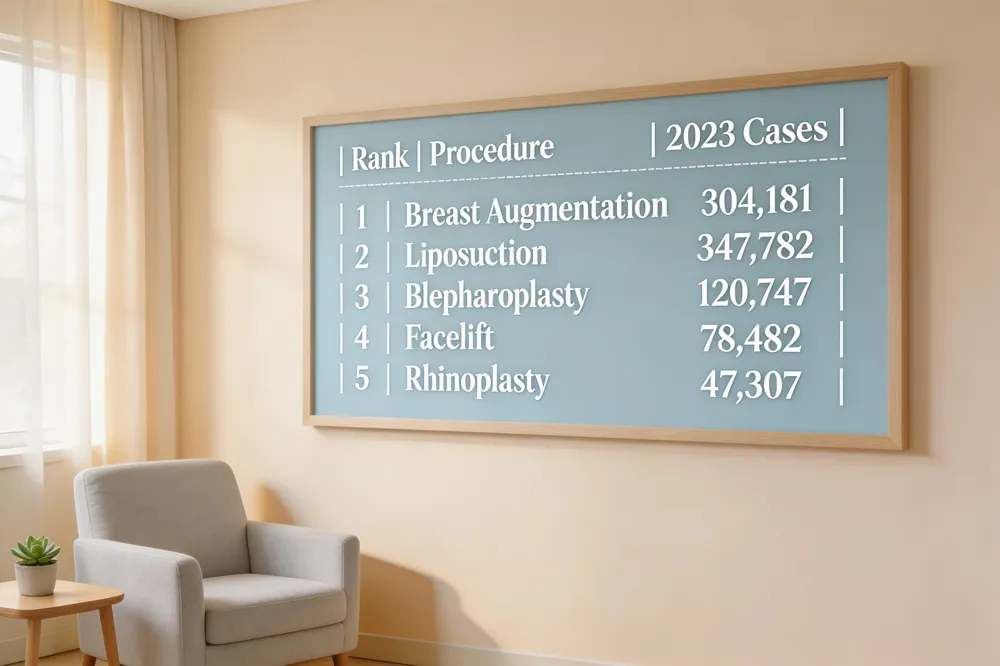 Breast augmentation remains the single most frequently performed plastic surgery among women in the United States. In 2023, ASPS data recorded roughly 300,000 breast augmentations—up 2% from the prior year—making it the top‑ranked procedure for female patients, especially those in their 20s and 30s. Liposuction follows closely, with 347,782 cases (a 7% increase) and is the leading body‑contouring surgery for women, particularly those aged 35‑50 who seek a slimmer silhouette. Blepharoplasty, or eyelid surgery, accounted for 120,747 procedures in 2023, a 5% rise, and is the most common facial surgery performed on women to address drooping lids and under‑eye hollowness. Women comprise about 92‑% of all cosmetic surgery patients, and these three procedures together represent a substantial share of female aesthetic care, reflecting a strong preference for enhancing breast size, refining body shape, and rejuvenating the eye area.
Non‑Surgical Cosmetic Procedures for the Face
| Procedure | 2023 Sessions | YoY % Change |
|---|---|---|
| Neuromodulators (Botox) | 9,480,949 | +9 % |
| HA Fillers | 5,294,603 | +8 % |
| Laser Resurfacing | 3,200,000 (≈) | +6 % |
| Chemical Peels | 2,800,000 (≈) | +5 % |
| PRP Microneedling | 1,500,000 (≈) | +7 % |
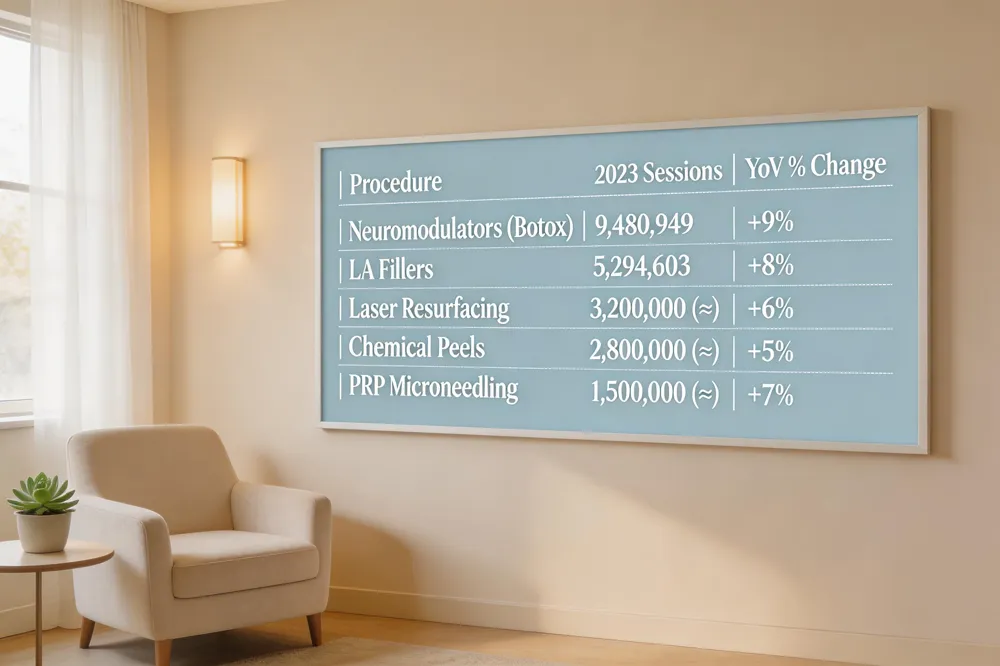 Non‑surgical facial cosmetic procedures rejuvenate skin and restore volume without incisions or anesthesia. Injectable treatments dominate the market: in 2023, neuromodulator injections (Botox®, Dysport®, Xeomin, etc.) reached 9.48 million procedures, a 9 % rise, while hyaluronic‑acid filler injections hit 5.29 million, up 8 %. Laser and intense pulsed light (IPL) therapies—such as fractional CO₂, erbium, and BBL—address fine lines, sun damage, and laxity by stimulating collagen remodeling; combined with chemical peels and microneedling, they improve texture and tone. Platelet‑rich plasma (PRP) adds growth‑factor‑driven rejuvenation, enhancing skin quality with minimal downtime. These minimally invasive options deliver noticeable, temporary results, typically with recovery times measured in hours to a day, making them ideal for patients seeking subtle, personalized facial enhancements and rapid return to daily activities.
Non‑Surgical Cosmetic Procedures Overview
- Total minimally invasive sessions (2023): ≈15.5 million.
- Neuromodulators: 9.48 M (30 % of all cosmetic cases).
- HA fillers: 5.29 M (17 %).
- Non‑invasive fat‑reduction: 0.75 M (2.4 %).
- Skin‑tightening (RF, ultrasound, laser): ≈0.45 M (≈3 %).
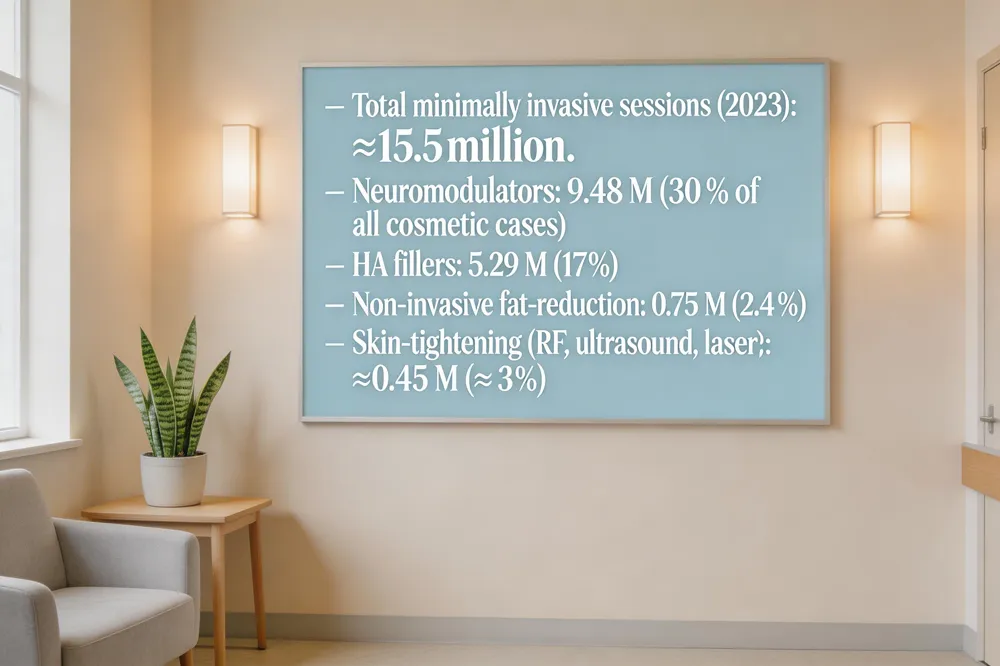 Non‑surgical cosmetic procedures are minimally invasive treatments that improve skin texture, facial contours, and body shape without incisions or general anesthesia. In 2023, the United States saw nearly 9.5 million neuromodulator injections (Botox®, Dysport®, Xeomin) and 5.3 million hyaluronic‑acid filler sessions, reflecting a 9 % and 8 % year‑over‑year growth respectively. These injectables smooth dynamic wrinkles, restore volume, and enhance lips and cheeks with a typical recovery of less than 24 hours. Laser resurfacing, IPL, and chemical peels reached over 3 million procedures, delivering collagen stimulation and smoother skin. Non‑invasive fat‑reduction technologies—such as CoolSculpting and radio‑frequency lipolysis performed 745,967 sessions, targeting stubborn deposits while eliminating downtime. Skin‑tightening treatments using radio‑frequency, ultrasound, and high‑intensity focused ultrasound accounted for 450,000 procedures, tightening lax tissue after weight loss or aging. For patients seeking comprehensive weight‑management, physician‑supervised medication‑assisted programs (e.g., GLP‑1 agonists) are offered alongside aesthetic therapies, creating a holistic approach to lasting, natural‑looking results.
U.S. Plastic Surgery Statistics
| Metric | 2023 Value |
|---|---|
| Total Cosmetic Procedures | 1,575,244 |
| Minimally Invasive (non‑surgical) | ≈15.5 M |
| Reconstructive Procedures | 157,740 (breast recon) |
| Surgeons (board‑certified) | 7,800 (≈) |
| Pacific Region Share of Surgical | 58 % |
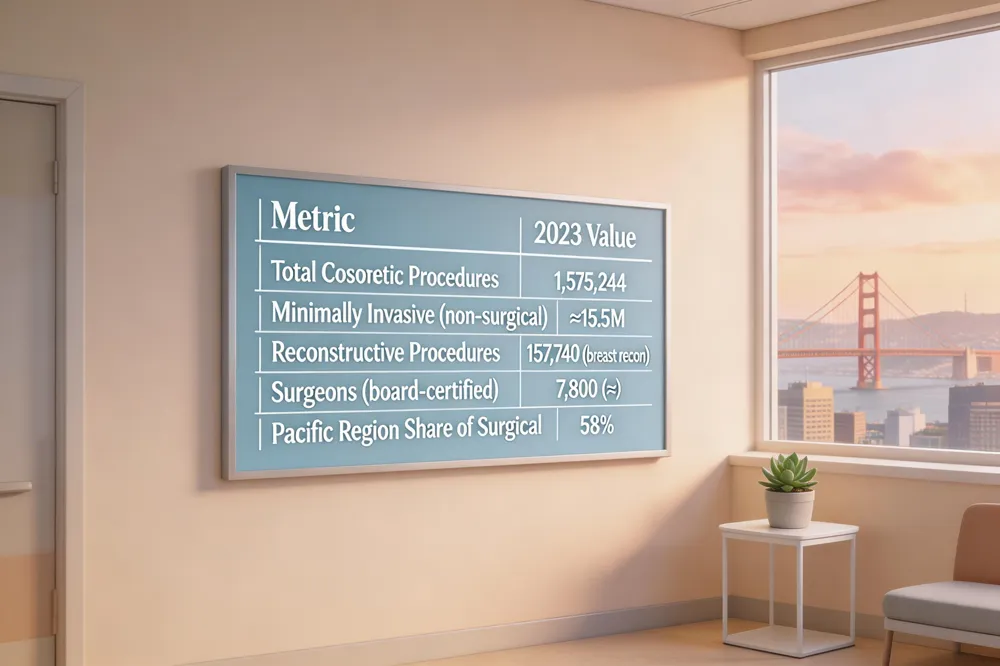 The American Society of Plastic Surgeons (ASPS) reports that in 2024 the United States performed roughly 1.9 million surgical cosmetic procedures and about 15 million minimally invasive cosmetic treatments, keeping overall volumes flat compared with 2023. Cosmetic interventions dominate the market, representing approximately 70 % of all plastic‑surgery cases, while reconstructive surgeries account for the remaining 30 %. Minimally invasive options—Botox, hyaluronic‑acid fillers, laser resurfacing, and non‑surgical fat reduction—continue to grow fastest, outpacing traditional operative volumes. Regional demand is highest on the West Coast, particularly California, where per‑capita procedure rates exceed the national average. These trends highlight the importance of board‑certified surgeons, personalized care pathways, and the expanding role of low‑downtime, minimally invasive aesthetics for patients seeking safe, effective improvements.
States with Highest Plastic Surgery Rates Per Capita
| State | Board‑Certified Surgeons per 10,000 Residents |
|---|---|
| Florida | 0.220 |
| New York | 0.217 |
| Connecticut | 0.209 |
| Wyoming | 0.051 |
| Arkansas | 0.058 |
| Vermont | 0.080 |
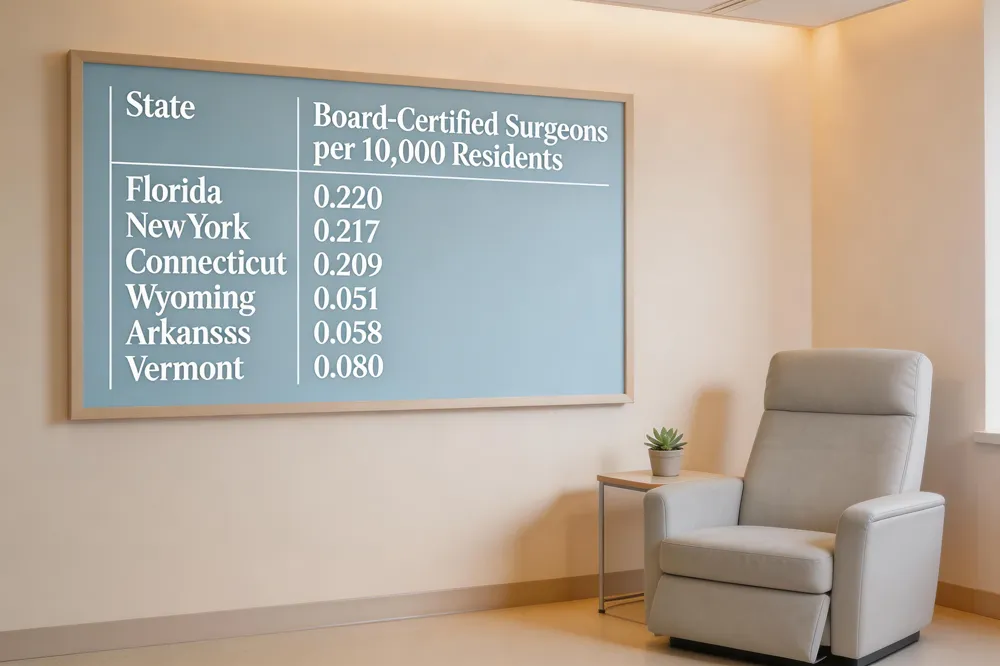 Florida, New York, and Connecticut lead the United States in per‑capita concentration of plastic‑surgery specialists. A Google Trends‑based analysis shows roughly 0.220, 0.217, and 0.209 board‑certified plastic surgeons per ten‑thousand residents in these states, respectively. By comparison, Wyoming, Arkansas and and Vermont have the lowest ratios, ranging from 0.051 to 0.080 per ten‑thousand people. The higher surgeon density in Florida, New York, and Connecticut reflects strong consumer demand for both surgical and minimally invasive aesthetic treatments and provides residents with greater access to board‑certified plastic surgeons. This geographic advantage often translates into shorter wait times, more personalized consultations, and a broader array of cutting‑edge procedures, from liposuction and breast augmentation to neuromodulator injections and regenerative skin boosters.
Proportion of Cosmetic Procedures in Plastic Surgery
- Cosmetic surgeries represent ≈70‑80 % of all plastic‑surgery cases in the U.S.
- Minimally invasive (non‑surgical) procedures now account for ≈71 % of all cosmetic interventions.
- Reconstructive surgeries make up the remaining ≈20‑30 %.
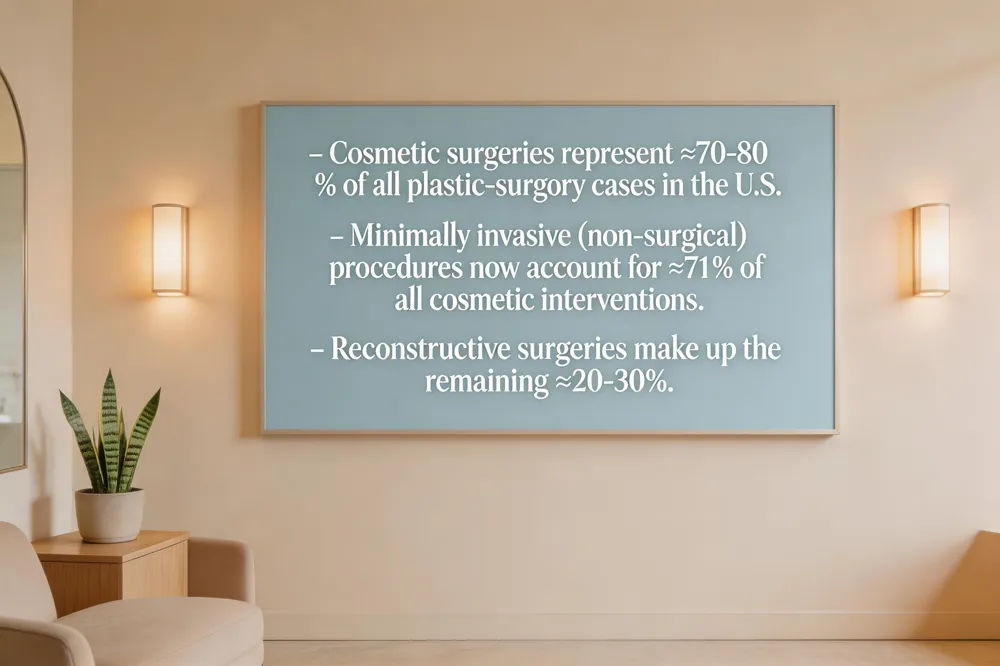 Approximately 70‑80 % of all plastic surgery procedures performed in the United States are cosmetic, meaning they are undertaken for aesthetic improvement rather than reconstruction. This proportion has remained relatively stable in recent years, reflecting a strong and growing demand for personalized, minimally invasive aesthetic treatments. The remaining 20‑30 % of surgeries are primarily reconstructive, addressing trauma, cancer, congenital defects, or functional impairments. In 2023, the American Society of Plastic Surgeons reported that minimally invasive procedures now represent about 71 % of all cosmetic interventions, underscoring the shift toward lower‑downtime, high‑satisfaction options. These figures highlight the prominence of cosmetic surgery within the broader plastic surgery field and the importance of board‑certified surgeons and accredited facilities to ensure safety and optimal outcomes.
Examples of Cosmetic Surgery Procedures
- Facial: Rhinoplasty, Blepharoplasty, Facelift, Brow Lift, Neck Lift, Dermabrasion, Laser resurfacing.
- Body: Breast Augmentation, Breast Lift, Liposuction, Brazilian Butt Lift, Upper‑Arm Lift, Thigh Lift, Abdominoplasty.
- Minimally Invasive: Botox, Dysport, Xeomin, HA fillers, PRP, CoolSculpting, Radiofrequency skin tightening.
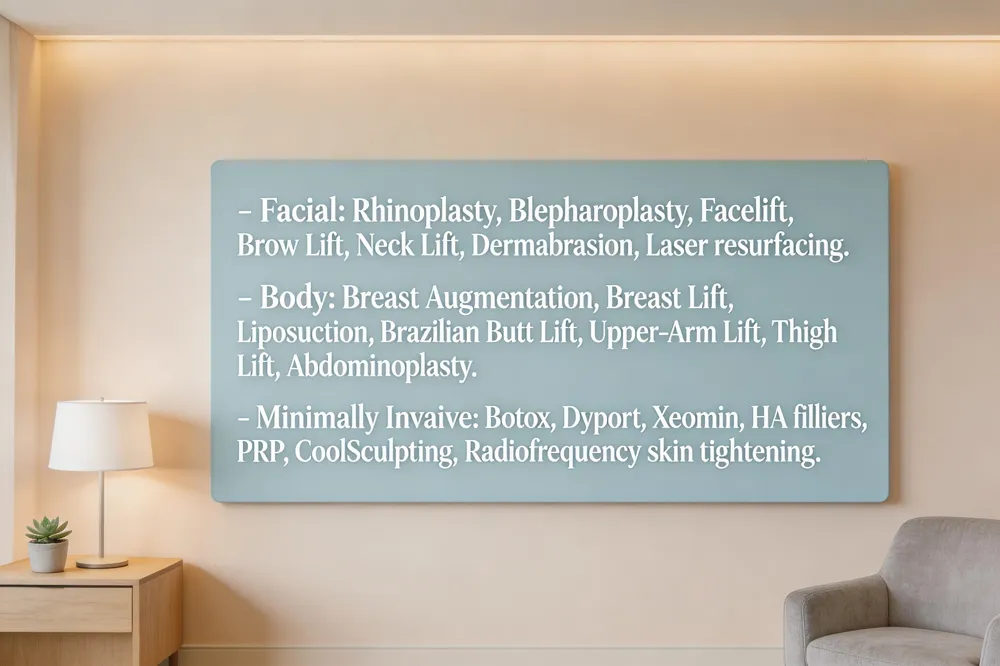 Cosmetic surgery includes a wide range of facial and body procedures designed to enhance appearance. For minimally invasive options, patients often choose Botox® (neuromodulator injections) with 9.48 million treatments in 2023, hyaluronic‑acid fillers with 5.29 million sessions, and chemical peels or laser resurfacing. Surgical examples for the face include Rhinoplasty (≈47 k procedures), Blepharoplasty (≈121 k), brow lifts, and facelifts (≈78 k). Body‑focused surgeries commonly performed are breast augmentation (≈304 k), liposuction (≈348 k), abdominoplasty (≈170 k), and buttock lift or Brazilian butt lift (≈29 k). Specialized contouring procedures such as upper‑arm lifts (≈23 k), thigh lifts (≈9.6 k), and cheek implants (≈8.8 k) further refine overall shape. These options reflect the 2023 ASPS trends, where overall cosmetic procedures grew 5 % year‑over‑year and minimally invasive treatments represented roughly 70 % of all aesthetic interventions. Patients appreciate the reduced downtime of injectables, often returning to daily activities within 24 hours, while surgical advances such as ultrasound‑assisted liposuction and office‑based accredited centers keep recovery times short and safety high.
Women’s Participation in Plastic Surgery
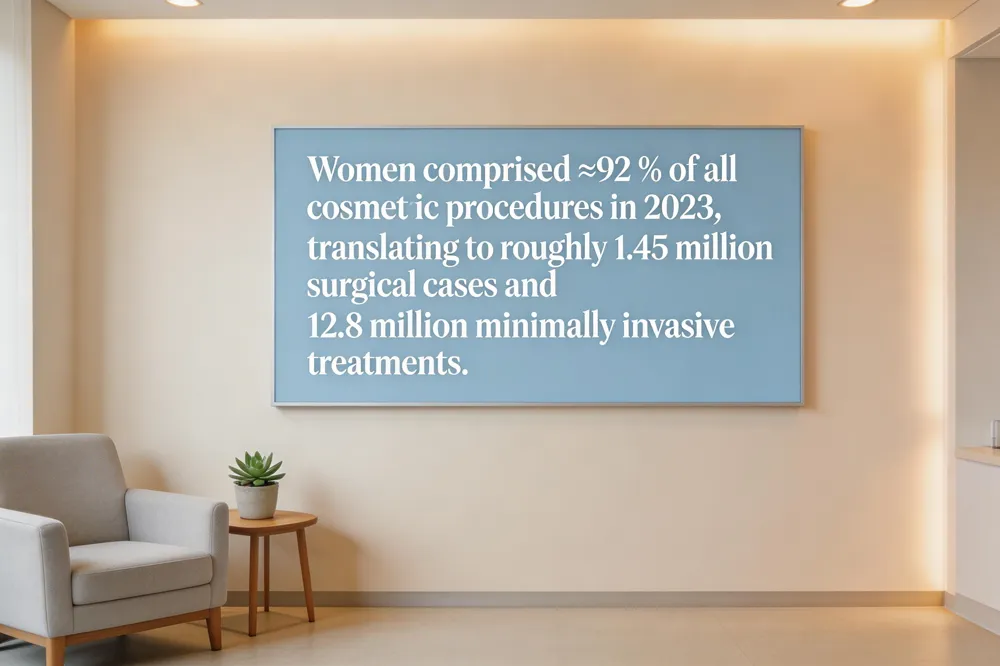 How many women get plastic surgery in America?
Women accounted for 92 % of all cosmetic procedures in 2023, meaning they underwent about 1.45 million surgical operations and roughly 12.8 million minimally invasive treatments, totaling nearly 14.3 million procedures nationwide.
ISAPS 2025 International Aesthetic Survey Highlights
- U.S. performed >6.1 million procedures in 2023, leading the world.
- Botulinum toxin and HA fillers dominate globally.
- Blepharoplasty overtook liposuction as the most common surgical procedure worldwide.
- “Ballet body” aesthetic driving growth in breast lifts (+7 %) and BBL (+3 %).
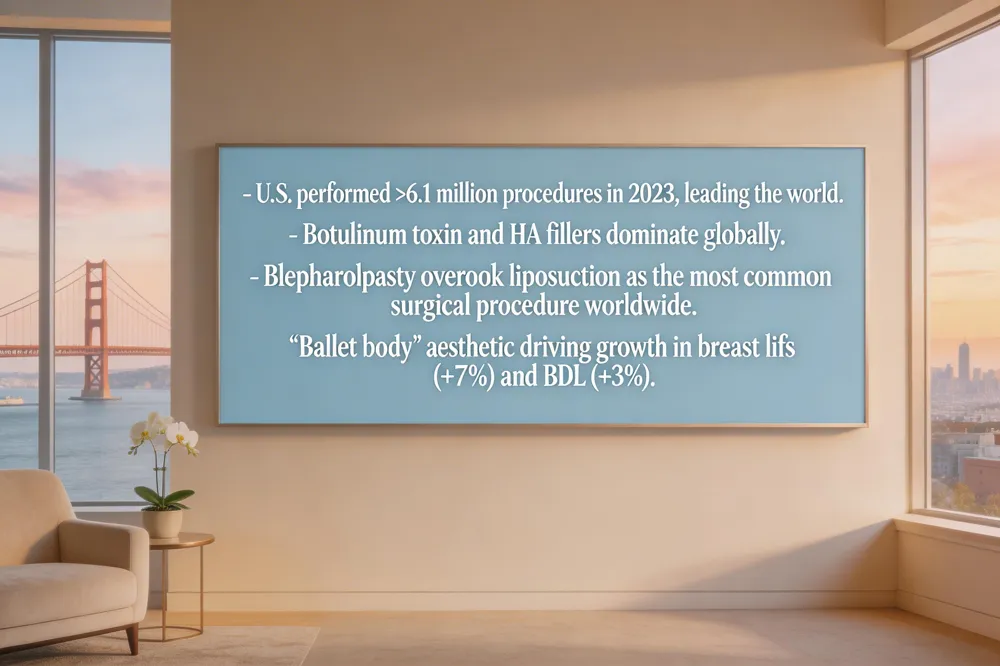 The 16th ISAPS International Survey on Aesthetic Cosmetic Procedures for 2025 confirms that the United States continues to lead the global market, performing more than 6.1 million procedures—far ahead of Brazil and Japan. While surgical interventions still constitute the majority of treatments, minimally invasive options dominate the non‑surgical segment, with botulinum toxin and hyaluronic‑acid filler injections topping the list worldwide. A striking shift in surgical preferences is evident: eyelid surgery (blepharoplasty) has surpassed liposuction as the most common surgical procedure, underscoring a growing patient focus on facial rejuvenation over body contouring. These early findings provide valuable benchmarks for both surgeons and prospective patients, highlighting the United States’ pivotal role in shaping aesthetic trends and the rising importance of subtle, facial‑focused enhancements.
Conclusion
In 2023, U.S. cosmetic procedures reached a historic high, with 1.58 million surgical and 9.48 million neuromodulator injections performed—a 5% and 9% year‑over‑year increase respectively. Liposuction remained the top surgical procedure (347,782 cases, +7%), while breast augmentation (304,181 cases, +2%) and facelifts (+8%) continued strong growth. Minimally invasive treatments now comprise nearly half of all aesthetic interventions, with Botox and hyaluronic‑acid fillers accounting for 14.8 million and 5.3 million sessions respectively. Men’s participation rose to 6% of total cases, driven by body‑contouring and facial procedures. Regional data show the Pacific region delivering 58% of surgical volume, underscoring the concentration of expertise on the West Coast. Prospective patients should prioritize board‑certified plastic surgeons, whose training and accreditation ensure the highest safety standards, lower complication rates, and optimal aesthetic outcomes. Consulting a qualified surgeon is the first step toward a personalized, confident, and satisfying aesthetic journey.