Overview of Non‑Surgical Facelifts
Non‑surgical facelifts offer patients a minimally invasive alternative to traditional surgery, using energy‑based devices to stimulate collagen and lift the skin. Ultrasound technologies such as Ultherapy and Sofwave deliver focused sound waves to deep layers—including the SMAS—to produce a lift that develops over 2–3 months and can last up to two years. Radiofrequency (RF) platforms, including Thermage, Venus Legacy, and RF microneedling systems like Sylfirm X, heat the dermis to 40‑45 °C, causing immediate collagen contraction and gradual remodeling over 3–6 months. Choosing the right option depends on skin laxity depth, skin tone, treatment area, and tolerance for discomfort; ultrasound excels at deeper structural tightening, while RF is versatile for larger bodies and all skin tones. A thorough consultation with a board‑certified aesthetic specialist ensures safe, personalized care.
Understanding Ultrasound Skin Tightening
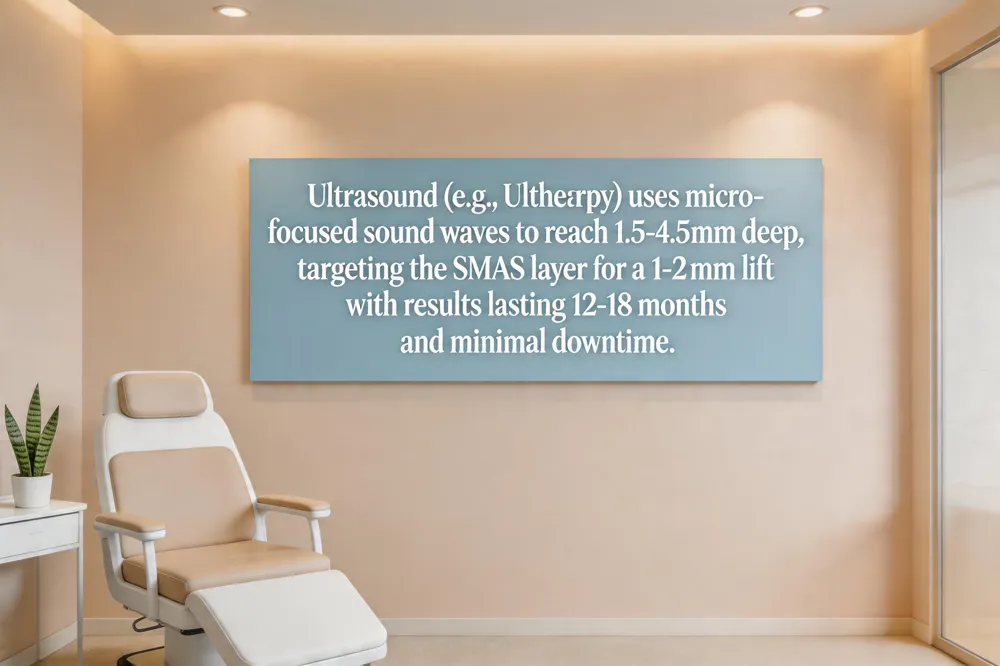 Ultrasound skin‑tightening (e.g., Ultherapy®) uses micro‑focused sound waves that penetrate 1.5‑4.5 mm, reaching the deep dermis and SMAS layer. Real‑time imaging guides energy delivery, creating thermal coagulation zones that trigger neocollagenesis and a modest lift of 1‑2 mm. Clinical data show visible improvement 2‑3 months post‑treatment, peaking around 6‑12 months, with results lasting 12‑18 months. Before‑and‑after photos typically reveal a gradual, natural‑looking firming of the brow, jawline, and neck rather than dramatic surgical change. Common side effects are mild redness, swelling, tingling, or a brief feeling of tightness, resolving within days. Ultrasound is FDA‑cleared for all skin tones, making it suitable for diverse patients. A single US facial and neck lift costs roughly $2,500‑$5,000 per session, averaging $2,300‑$2,800 for a standard plan. Because it offers deep tissue remodeling with minimal downtime, ultrasound is often considered the quickest minimally invasive non‑surgical facelift option.
Radiofrequency Skin Tightening Explained
 RF skin tightening delivers controlled heat via electromagnetic waves to the dermis, stimulating collagen and elastin. Four modalities—monopolar, bipolar, fractional, multipolar—customize depth.
Q: Is it safe to use RF devices at home?
A: Home units are weaker; misuse can cause burns or uneven results, so professional care is advised.
Q: What is the price range for a professional RF facelift?
A: Typically $1,500‑$3,500 per session, with most patients needing 2‑4 visits.
Q: Are there any risks associated with RF skin tightening?
A: Mild redness, swelling, and temporary hyper‑pigmentation are common; rare burns or scarring can occur with improper settings.
Q: Why do some plastic surgeons caution against RF microneedling?
A: Deep heat may damage nerves, vessels, or fat, leading to atrophy, scarring, or disfigurement.
Q: How does RF compare to ultrasound for sagging skin?
A: RF tightens superficial skin and improves texture; ultrasound reaches the SMAS for a deeper lift.
Q: Which non‑invasive option is most effective for jowls?
A: High‑intensity focused ultrasound (Ultherapy provides SMAS‑level lift for jowl improvement.
Effectiveness, Longevity, and Age Considerations
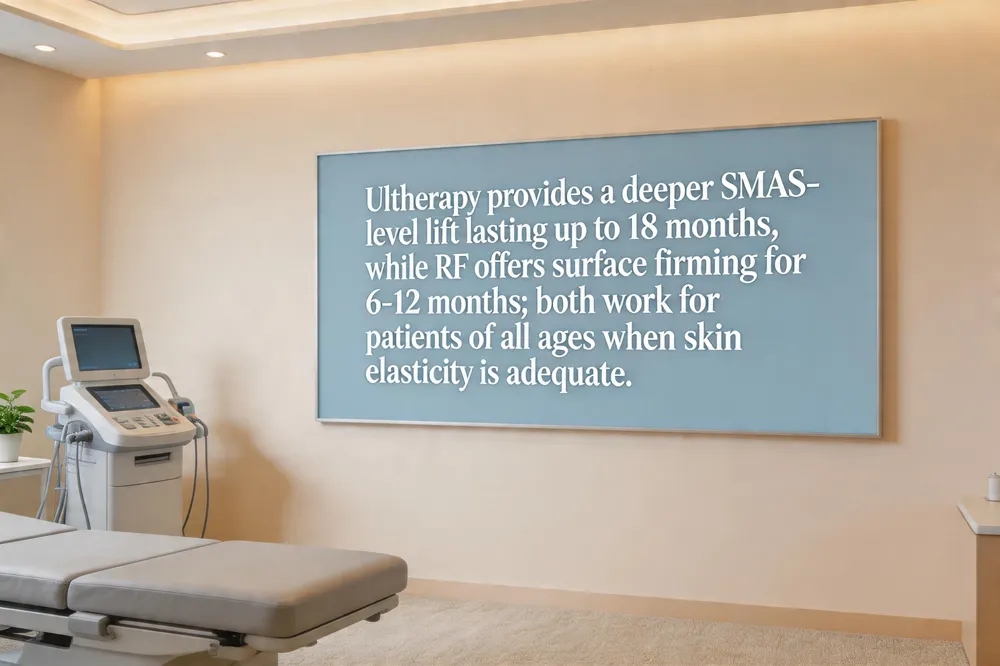 Ultrasound‑based Ultherapy delivers micro‑focused ultrasound to the deep SMAS (1.5‑4.5 mm) and creates precise thermal coagulation zones that trigger neocollagenesis, producing a vertical lift that mimics a surgical facelift. Clinical data show 1‑2 mm lift after a single session, with results lasting 12‑18 months. Radio‑frequency (RF) devices heat the dermis (1‑3 mm) and, in microneedle or multipolar formats, improve texture and firmness but generate less vertical lift; effects usually persist 6‑12 months and require 3‑6 sessions. Age is not a barrier: patients in their 60s respond well to Ultherapy, with studies reporting ≥80 % improvement when skin elasticity remains adequate. For older patients the optimal approach is ultrasound for SMAS‑level tightening, complemented by RF for surface firming and optional fillers for volume. maintenance every 12‑18 months sustains the lift, while a healthy lifestyle maximizes collagen durability.
Patient Experience, Consultation, and Popular Culture
 During a non‑surgical facelift consultation, a board‑certified clinician will assess facial laxity, volume loss, and skin texture, review your medical history, and discuss aesthetic goals. You’ll be presented with options such as ultrasound‑based Ultherapy or Sofwave, RF microneedling, or filler/neuromodulator combos, along with before‑and‑after photos, expected timelines, side‑effect profiles, and cost estimates.
Celebrity endorsements have boosted Ultherapy’s visibility—stars like Jennifer Aniston, Salma Hayek, and Courtney Cox openly share their results, creating a "celebrity‑approved" perception that fuels patient interest and demand.
In San Francisco, reputable providers include the Aesthetic Surgery Center (board‑certified plastic surgeons offering Ultherapy® Prime and RF tightening), Hayes Valley Medical Esthetics, and Union Square Facial Plastic Surgery, all accredited and equipped with FDA‑cleared technology.
The Kardashian family frequently uses Sofwave ultrasound and Exilis Ultra 360 RF treatments, with Kim and Khloé Kardashian praising Sofwave for its painless, downtime‑free skin‑firming results.
Future Trends and Combination Protocols
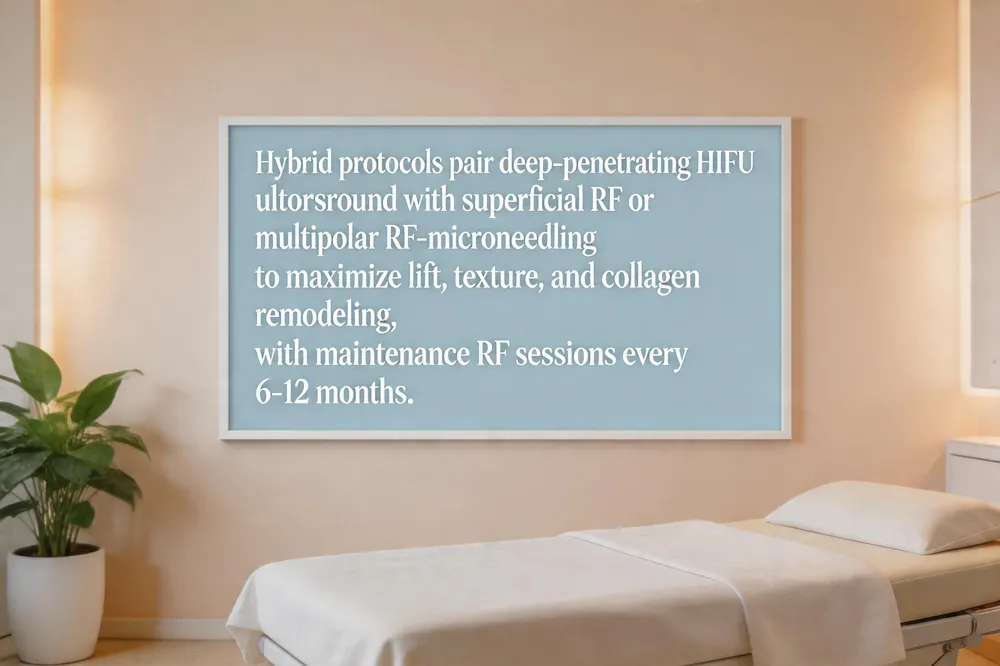 Synergistic use of RF and ultrasound is gaining traction as clinicians pair deep‑penetrating HIFU (targeting the SMAS) with superficial RF heating to achieve both lift and texture refinement. Emerging technologies such as multipolar RF‑microneedling, fractional ultrasound (Sofwave™, and hybrid devices (Exilis Ultra 360) allow customizable depth control and faster collagen remodeling. Maintenance strategies now emphasize a phased approach: an initial ultrasound lift (often a single session) followed by periodic RF “maintenance” treatments every 6‑12 months to sustain firmness and address new laxity.
How does radio‑frequency skin tightening compare to ultrasound for tightening sagging skin? RF delivers controlled heat to the mid‑dermis, yielding moderate tightening and texture improvement across large areas. Ultrasound reaches deeper (up to ~4 mm) and can lift sagging tissue, making it more effective for moderate jowl and brow laxity. RF excels in overall firmness; ultrasound provides a more noticeable lift.
Which non‑invasive facelift option is most effective for jowls? High‑intensity focused ultrasound (HIFU) – marketed as Ultherapy – offers the deepest SMAS targeting and the most durable jowl lift. RF microneedling improves firmness but is less dramatic for jowl reduction.
Why do some plastic surgeons caution against RF microneedling? The procedure can overheat the dermis and sub‑cutaneous fat, risking burns, scarring, fat loss, and nerve injury if energy settings or needle depth are mismanaged. This potential for iatrogenic volume loss leads many surgeons to prefer safer modalities or require extensive training before offering RF microneedling.
Final Thoughts on Ultrasound vs. Radiofrequency Facelifts
Choosing the right non‑surgical lift begins with a personalized treatment plan. A board‑certified aesthetic physician will assess skin thickness, laxity level, tone, budget budget and and rendered to‑ silence in modalities, ultrasound (e.g., Ultherapy or Sofwave) offers deeper SMAS targeting for moderate sagging, while radiofrequency (Thermage, Sylfirm X) provides versatile coverage and works for all skin tones. efficacy, safety, and cost must be weighed: ultrasound often yields longer‑lasting lift with fewer sessions but higher per‑visit price, whereas RF may need multiple visits and maintenance yet is generally more affordable and comfortable for larger body areas. Interested patients should schedule a consultation, discuss goals, review before‑and‑after photos, and confirm insurance or financing options before committing to a series of treatments.