Understanding Blepharoplasty and Its Relevance
Blepharoplasty, also called eyelid lift, is a surgical procedure that removes excess skin, muscle, and fat from the upper and/or lower eyelids. Patients seek it for functional reasons—such as ptosis or dermatochalasis that narrows peripheral vision, causes eye strain, or produces a heavy, tired look—as well as for aesthetic goals like smoothing under‑eye bags and restoring a youthful contour. Age‑related changes, including loss of skin elasticity, weakening of the levator muscle, and fat redistribution, make drooping or hooded lids common after 30s. A invasive approach tailors incision placement (creases or transconjunctival), anesthesia type, and treatments to each patient’s anatomy, maximizing comfort, reducing downtime, and delivering results. The result improves visual function and self‑confidence, making blepharoplasty a solution for many adults.
Functional Indicators and Qualification for Upper Eyelid Surgery
 Patients who notice obstructed peripheral vision—especially the upper‑outer visual field—often benefit from Upper blepharoplasty. When excess skin hangs over the lashes, daily activities like reading, driving, or navigating stairs become difficult. Heavy, fatigue‑inducing eyelids that feel hard to keep open also signal a functional problem; the constant effort can lead to brow strain, frequent headaches, and a tired appearance. A thorough medical clearance is essential: an eye exam, visual‑field testing, and assessment of ocular surface health confirm whether the drooping is medically necessary. Realistic expectations are equally important; patients should understand that surgery removes excess skin, muscle, and sometimes fat, resulting in a more open, youthful look and, when indicated, improved vision.
Who is not a good candidate for upper eyelid surgery? Individuals with uncontrolled systemic or ocular conditions—untreated thyroid disease, severe dry‑eye syndrome, glaucoma, retinal detachment, or significant cardiovascular problems—are generally deferred. Active smokers, those unable to quit peri‑operatively, and patients with unrealistic expectations should also wait until health and expectations are optimized.
How to qualify for eyelid surgery? Candidates are healthy adults with stable medical conditions, non‑smokers, and realistic goals. A documented visual‑field loss or ptosis confirmed by an eye specialist, combined with a board‑certified oculplastic surgeon’s evaluation, establishes eligibility.
Upper blepharoplasty removes excess skin, muscle, and occasional fat from the upper lids via a discreet crease incision under local anesthesia. The procedure can be medically indicated for visual obstruction and is often covered by insurance when a visual‑field test shows improvement. Recovery is swift, with swelling managed by ice and head elevation, and sutures dissolving within 10‑14 days, delivering a refreshed, functional result.
Aesthetic Concerns, Eyelash Health, and Before‑After Outcomes
 Hooded upper lids often give a perpetually tired look; upper blepharoplasty removes excess skin and lifts the lid, restoring a bright, alert appearance. Lower blepharoplasty and puffiness are addressed by lower blepharoplasty, which can excise skin, reposition or remove fat, and smooth the tear‑trough region for a refreshed lower‑face contour.
Do you lose your eyelashes with blepharoplasty? Temporary lash thinning is common because the incision and tissue removal may disturb the lash line. Most patients see regrowth within six to twelve months when the surgeon spares follicular zones. Permanent loss is rare and usually linked to inadvertent follicle injury. Micro‑graft transplantation or Latisse can assist if thinning persists.
What are the symptoms of blepharoplasty? Post‑op patients typically experience mild swelling, bruising, temporary blurred vision, dry or watery eyes, and light sensitivity. A feeling of tightness or numbness around the lids may accompany occasional double vision. These effects usually resolve within a few weeks, with full recovery taking several months.
Lower blepharoplasty involves a trans‑conjunctival or small external incision to remove excess skin, muscle, and fat, eliminating under‑eye bags. Recovery is swift, with bruising fading in 1‑2 weeks and most daily activities resumed after a week.
Blepharoplasty before and after photos demonstrate the transformation: excess skin and fat are removed, the eyelid margin is tightened, and the eyes appear more open and youthful. Final results typically mature by the 1‑ to 3‑month mark, often combined with brow lifts or fillers for harmonious facial rejuvenation.
Risks, Complications, and Patient Satisfaction
 Blepharoplasty is a safe, outpatient procedure, but patients should be aware of the full spectrum of possible outcomes.
Common postoperative discomfort – Swelling, bruising, mild pain, and temporary blurred vision are typical for the first 7‑14 days. Dry‑eye symptoms, a sensation of tightness, and occasional numbness around the incision sites may persist for several weeks as the tissue heals.
Rare but serious complications – Although uncommon, infection, bleeding, or an abnormal eyelid position (e.g., ectropion, over‑correction, or persistent ptosis) can occur. In very rare cases, scar tissue or nerve irritation may affect vision, and there is an extremely low risk of permanent loss of sight.
Regret and dissatisfaction rates – Clinical surveys report a regret or dissatisfaction rate of roughly 5 %–15 % for blepharoplasty. Lower rates are associated with thorough pre‑operative counseling and realistic expectations, while higher rates often stem from suboptimal surgical planning or unrealistic goals.
Visual examples of suboptimal results – Photographs of poorly performed surgery typically show asymmetric lids, over‑removed skin that limits eye closure, hollowed “skeletonized” eyes, visible scarring, or misplaced creases. These images illustrate the importance of choosing a board‑certified oculplastic or facial plastic surgeon with extensive blepharoplasty experience. Prompt recognition of warning signs and timely revision can often restore both function and appearance.
Answers to key questions
- What is the downside of eyelid surgery? Patients may experience anesthesia reactions, bleeding, infection, bruising, swelling, dry‑eye irritation, temporary numbness, and, rarely, serious issues such as ectropion, ptosis, scarring, or vision changes.
- What is the regret rate for blepharoplasty? Regret rates range from about 5 % to 15 %, with higher rates linked to unrealistic expectations or complications.
- Eyelid surgery gone wrong pictures Typical examples include asymmetry, over‑correction, visible scarring, and incomplete lid closure, underscoring the need for skilled surgical technique.
Financial Planning: Costs, Insurance, and Non‑Surgical Alternatives
 When considering blepharoplasty in the San Francisco Bay Area, understanding the financial landscape helps you make an informed decision.
Typical price ranges in the San Francisco Bay Area
- Blepharoplasty cost: $3,500 to $7,500 per eye; combined upper‑and‑lower procedures run $7,000 to $12,000, often with a modest bundled discount.
- Upper eyelid surgery cost: $3,000 to $6,500 per eye; price varies with surgeon expertise, case complexity, and facility fees.
- Hooded eyelid surgery cost: $3,500 to $7,000 per eye; most patients pay $3,000‑$5,000 for a standard lift. All quotes typically include consultation, pre‑operative testing, and post‑operative follow‑up, but verify no hidden costs.
Insurance considerations for functional cases Insurance may cover blepharoplasty when it corrects a medically documented visual field obstruction (e.g., ptosis or dermatochalasis). Documentation such as visual‑field testing, photographs, and a physician’s report is required for pre‑authorization. Purely cosmetic procedures are generally out‑of‑pocket.
Financing options and bundled discounts Many practices offer credit plans, zero‑interest financing, or payment‑over‑time programs. Bundling upper and lower lid surgeries, or combining blepharoplasty with complementary procedures (brow lift, laser resurfacing), often yields a lower overall cost.
Non‑surgical lift techniques Non‑surgical alternatives use radiofrequency, laser resurfacing, microneedling with RF/PRP, or injectable solutions (Botox, Dysport, Restylane®) to tighten skin and restore volume. Prescription drops like Upneeq and adhesive strips can temporarily elevate mild droop. These options require minimal downtime and are suitable for mild to moderate sagging, but they do not replace surgical removal of excess tissue for significant results.
Recovery Timeline, Post‑Op Care, and Long‑Term Results
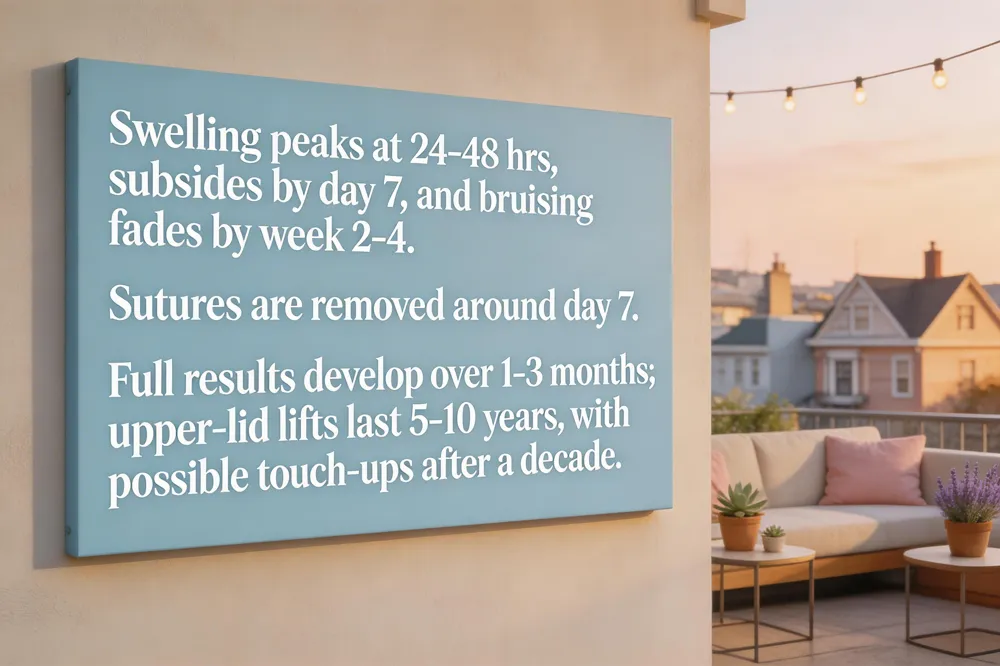 Blepharoplasty healing follows a predictable pattern that patients can track with daily photographs.
Day‑by‑day swelling and bruising patterns – In the first 24‑48 hours the lids are puffy, the incisions are red and bruises appear deep‑purple. By day 3‑5 the edema softens, bruising shifts to a muted purple, and the eyelid contour begins to look more natural. Around day 7 the surgeon removes most sutures; swelling is reduced 50‑70 % and bruises turn yellow. Weeks 2‑4 bring steady resolution of puffiness, even skin tone, and clearer eyes, though a faint “morning puff” may linger.
Photographic documentation of healing – Take standardized photos in the same lighting and angle at each visit (pre‑op, day 1, day 3, day 7, week 2, month 3). This visual record helps you and your surgeon assess progress and decide when the final result is evident.
Longevity of surgical outcomes – Upper‑lid lifts typically last 5‑10 years; lower‑lid procedures that remove fat can feel permanent for decades. Aging, sun exposure, genetics, and lifestyle can cause new laxity after 10‑15 years, so a touch‑up may be needed.
Tips for optimal recovery – Follow your surgeon’s ointment and icing regimen, keep the head elevated, avoid rubbing or heavy lifting for a week, wear dark sunglasses outdoors, and stay hydrated. Quitting smoking and protecting the skin with SPF 30+ will prolong the rejuvenated appearance.
Make an Informed Decision for Your Eyes
When you notice drooping lids that obscure eyelashes, a heavy feeling that forces you to lift your brows, persistent under‑eye bags, or a tired, hooded appearance, both functional and aesthetic cues point to blepharoplasty. A board‑certified oculoplastic or facial plastic surgeon can confirm whether ptosis, dermatochalasis, or excess fat is compromising your visual field and assess eye health, dry‑eye status, and systemic conditions. During a personalized consultation you’ll receive a thorough eye exam, visual‑field testing, and photographic documentation, followed by a tailored surgical plan that addresses your specific concerns and sets realistic expectations for recovery and lasting results.