Overview of Functional Rhinoplasty for Sleep Apnea
Functional rhinoplasty is a surgical approach that reshapes internal nasal structures—such as a deviated septum, collapsed nasal valves, or enlarged turbinates—to improve airflow while preserving or enhancing the nose’s external appearance. Nasal obstruction from these abnormalities raises airway resistance and is a recognized contributor to obstructive sleep apnea (OSA), often worsening snoring and nighttime breathing interruptions. By correcting the blockage, functional rhinoplasty can reduce the severity of OSA, lower required CPAP pressures, and improve sleep quality. Combining functional corrections with aesthetic refinements in a single procedure addresses both health and cosmetic goals, offering patients a unified solution that restores breathing efficiency and facial harmony.
Functional Rhinoplasty: Addressing Sleep Apnea at Its Source
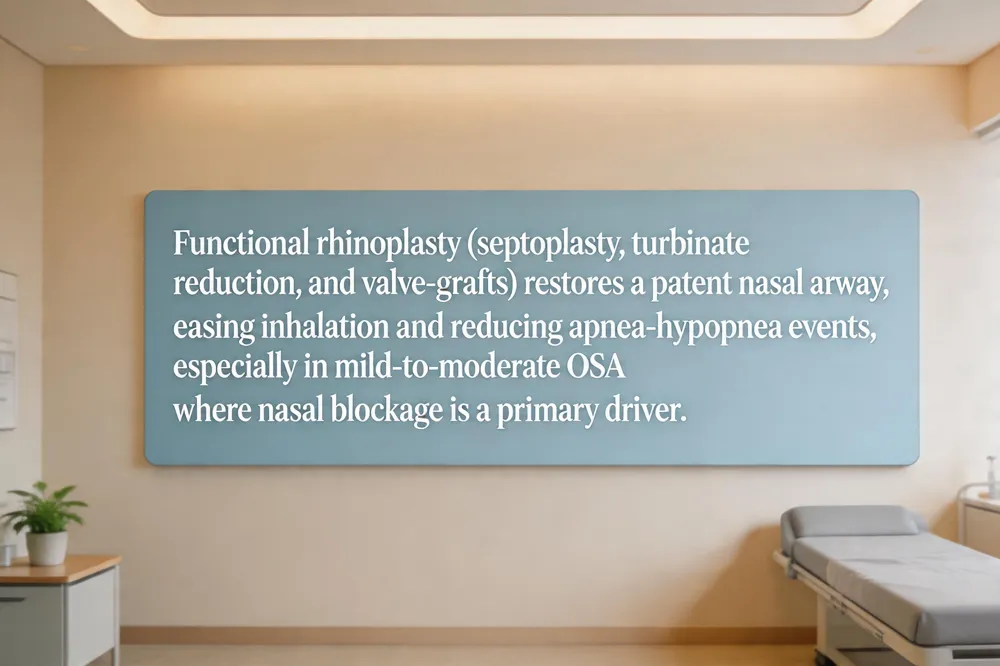 Obstructive sleep apnea (OSA) is the most common form of sleep apnea and is caused by intermittent blockage of the upper airway during sleep. While many factors contribute, Nasal obstruction from a deviated septum or enlarged turbinates can increase airway resistance and contribute to the severity of OSA. Functional rhinoplasty (often called septorhinoplasty) directly corrects these structural problems: Septoplasty, a type of functional rhinoplasty that straightens a deviated nasal septum, can improve nasal breathing and may lessen OSA symptoms in selected patients, Turbinoplasty, often performed alongside septoplasty, reduces the size of the inferior turbinates to further enhance airflow through the nasal passages. cartilage grafts (spreader or alar batten) widen the internal and external nasal valves. By restoring a patulous nasal airway, patients experience smoother inhalation, reduced snoring, and fewer apneic events, especially in mild‑to‑moderate OSA where nasal blockage is a primary driver.
Is rhinoplasty good for sleep apnea? Yes, when OSA is largely driven by nasal obstruction. Functional rhinoplasty is not a cure for OSA but can reduce the frequency of apneic events and lower the required pressure settings for CPAP therapy in some individuals, but many patients still require CPAP or other therapies.
Can you have rhinoplasty with sleep apnea? Surgery is possible, but it requires a thorough pre‑operative evaluation, coordination with a sleep specialist, and sometimes modified anesthesia or postoperative monitoring to ensure safety.
Choosing a Leading Surgeon and Clinic in San Francisco
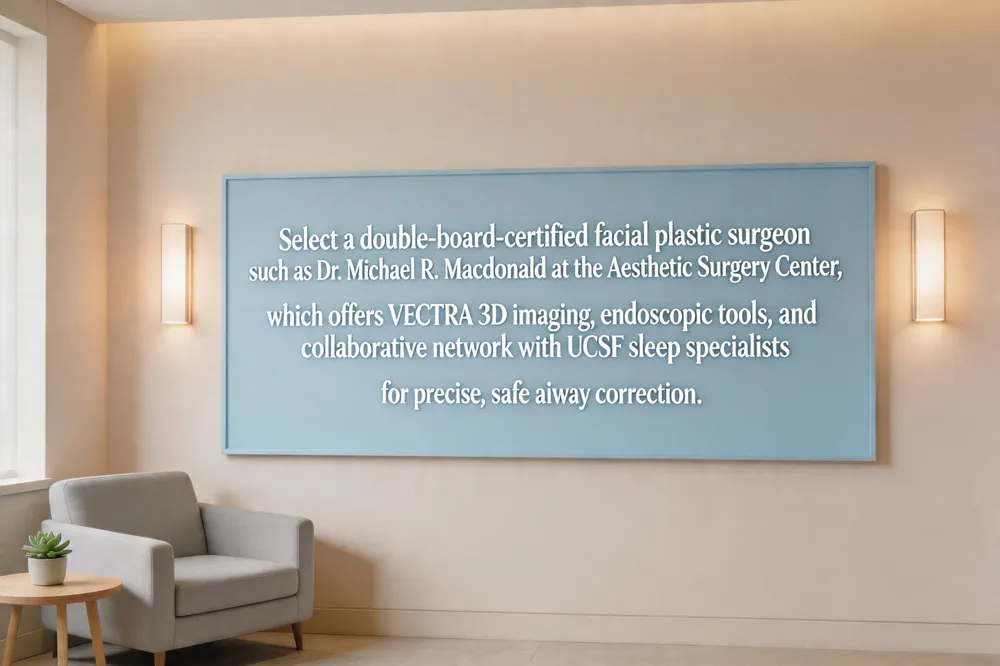 When seeking functional rhinoplasty for sleep‑apnea relief in the Bay Area, patients should prioritize board‑certified facial plastic surgeons who combine airway expertise with aesthetic finesse. Dr. Michael R. Macdonald, MD, a double‑board‑certified facial plastic surgeon and otolaryngologist, directs the Aesthetic Surgery Center of San Francisco and offers personalized, minimally invasive nasal surgery that addresses both breathing and aesthetic goals. The clinic’s state‑of‑the‑art facilities include VECTRA 3D imaging, acoustic rhinometry, and endoscopic instrumentation, allowing precise septoplasty, turbinate reduction, and graft placement while minimizing swelling and downtime. Local expertise is reinforced by a collaborative network with UCSF, Highland Hospital, and sleep‑medicine specialists, ensuring comprehensive pre‑operative sleep studies and postoperative monitoring. Patient‑centered care is evident through multilingual staff, virtual consultations, and tailored recovery plans that emphasize rapid return to daily activities and long‑term airway improvement.
Financial Considerations: Insurance, Pricing, and Combined Procedures
 When planning functional rhinoplasty in the San Francisco Bay Area, patients should first verify insurance coverage. Most health plans will pay for the functional portion of the surgery—septoplasty, turbinate reduction, or nasal valve repair—when a physician documents medically‑necessary nasal obstruction contributing to obstructive sleep apnea or chronic breathing problems. Cosmetic refinements, however, are considered elective and are typically billed out‑of‑pocket.
Pricing varies by practice. The San Francisco Plastic Surgery & Laser Center offers an all‑inclusive model that bundles the surgeon’s fee, operating‑room costs, anesthesia, equipment, garments, implants, and wraps. A $150 consultation fee can be applied toward the procedure, and same‑day cases require a $250‑$500 refundable deposit. The quoted price remains valid for 90 days; patients can explore financing such as CareCredit or AlphaEON.
Combining functional and cosmetic rhinoplasty in one session is common and cost‑effective. Using the same incisions reduces anesthesia exposure and recovery time. Insurance generally covers the functional work, while the aesthetic component is paid directly by the patient. A board‑certified facial plastic surgeon will provide a personalized plan, coordinate with your sleep specialist, and help navigate any pre‑authorization requirements.
Recovery, Long‑Term Outcomes, and Value of Functional Rhinoplasty
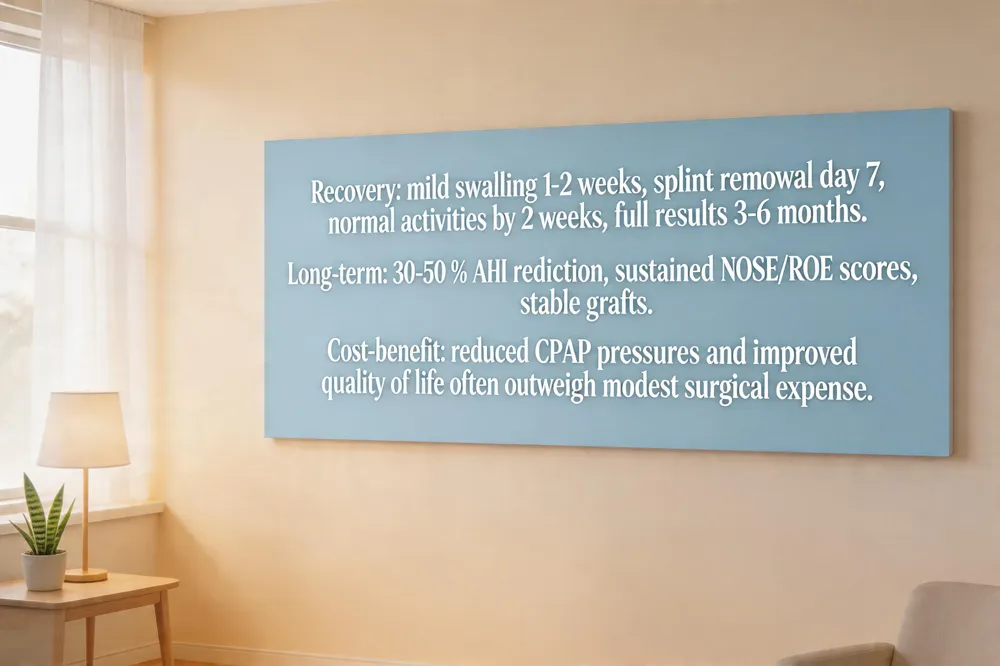 Recovery timeline and postoperative care – Most patients experience mild swelling and bruising for 1–2 weeks; a nasal splint is removed around day 7. Normal daily activities resume within two weeks, while full airway patency and final contour mature over 3–6 months (https://www.drkarenhorton.com/). Gentle saline irrigations and avoidance of heavy lifting aid healing.
Long‑term stability and AHI improvement – Studies show a 30‑50% reduction in the apnea‑hypopnea index for mild‑to‑moderate OSA, with benefits persisting for years. Structural grafts (spreader, alar batten) maintain valve opening, and nasal airflow typically remains improved despite age‑related mucosal changes. Patient‑reported scores (NOSE, ROE) stay elevated long‑term (clinical studies show significant improvements in NOSE and ROE scores).
Cost‑benefit analysis – While insurance may cover the functional component, the aesthetic portion is usually out‑of‑pocket. The reduction in CPAP pressure (CPAP adherence and lowers required therapeutic pressures), fewer night‑time interruptions, and enhanced quality of life often outweigh the modest surgical expense, especially for those with documented nasal obstruction.
Is a functional rhinoplasty worth it? – Yes, for patients whose nasal anatomy causes chronic congestion, snoring, or OSA symptoms. The procedure improves breathing (functional rhinoplasty improves nasal airflow), may lower AHI, and can subtly refine nasal appearance with a short recovery.
What happens 20 years after rhinoplasty? – The bone and cartilage framework remains stable; natural aging may cause slight tip droop or skin thinning, but functional airflow improvements usually persist (patients who undergo functional rhinoplasty typically experience easier, more consistent nasal breathing. Scar tissue matures and becomes inconspicuous, and most patients still recognize the reshaped nose decades later.
Personalized, Minimally Invasive Care at the Aesthetic Surgery Center
 The Aesthetic Surgery Center in San Francisco blends a patient‑centered approach with cutting‑edge technology—3‑D imaging, VECTRA® XT, and minimally invasive techniques—to tailor each functional rhinoplasty to the individual’s airway and aesthetic goals. Diversity enriches the regional plastic‑surgery landscape: the Bay Area boasts accomplished female surgeons such as Dr. Ginger Xu, Dr. Carolyn Chang, and Dr. Karen M. Horton, who deliver natural‑looking results while prioritizing safety and personalized care.
Who is considered the best rhinoplasty surgeon in the US? Dr. Jay Calvert tops the list, ranked #2 nationally by Newsweek’s 2024 “Best Plastic Surgeons,” with over 2,000 natural and revision cases and a reputation for innovative, durable techniques.
Plastic Surgery Bay Area The region offers board‑certified experts—Bay Area Plastic Surgery, Elite Transformations, Dr. Karen Horton’s clinic—who combine advanced tools (BodyTite, EM Sculpt, laser resurfacing) with comprehensive facial, breast, and body procedures for rapid recovery and natural outcomes.
Female plastic surgeon San Francisco Notable leaders include Dr. Ginger Xu (Ethos Plastic Surgery), Dr. Carolyn Chang, and Dr. Karen M. Horton, all delivering personalized, minimally invasive aesthetic and functional rhinoplasty.
Final Thoughts: Breathing Easy and Feeling Confident
Functional rhinoplasty offers a dual advantage for patients with obstructive sleep apnea (OSA): it relieves nasal obstruction while enhancing the nose’s appearance. By straightening a deviated septum, reducing enlarged turbinates, and reinforcing weakened nasal valves, the procedure lowers airway resistance, often decreasing the apnea‑hypopnea index by 30‑50 % and reducing CPAP pressure requirements. Patients report less snoring, improved sleep quality, and greater daytime energy after recovery. Because outcomes depend on precise anatomy, selecting a board‑certified facial plastic surgeon with ENT expertise—such as those practicing in the San Francisco Bay Area—is essential. A personalized evaluation, including sleep studies and nasal endoscopy, guides the surgical plan to address both functional and aesthetic goals. Schedule a consultation today to discover how a tailored functional rhinoplasty can help you breathe easier and look confident and satisfied.