Why Functional Breathing Matters in Aesthetic Care
Functional breathing—slow, diaphragmatic, nasal‑focused respiration—optimizes oxygen delivery, reduces stress hormones, and supports venous return, all of which enhance tissue healing and postoperative comfort. When combined with minimally invasive facial and body procedures—such as septoplasty, turbinate reduction, or filler‑supported nasal valve repair—patients experience both aesthetic refinement and measurable improvements in airway patency, lower blood pressure, and faster recovery times. Structured breathing programs, including pursed‑lip and breath‑stacking techniques, empower individuals to take an active role in their healing journey, decreasing swelling, minimizing complications, and boosting overall satisfaction. In San Francisco’s leading aesthetic centers, integrating these evidence‑based breathing strategies into pre‑ and post‑operative protocols has become a hallmark of personalized, holistic care.
Key Facts from Aesthetic Surgery Cases
- Diaphragmatic breathing twice daily for 5‑10 minutes reduced facial swelling by 40% after non‑surgical cheek lift.
- Pursed‑lip breathing prolongs exhalation, keeping airways open and reducing pneumonia risk after laser‑assisted lipothanasia.
- Breath‑stacking (successive short breaths without full exhalation) increased lung capacity by 15% after minimally invasive functional rhinoplasty.
- Daily diaphragmatic breathing lowered pain scores by two points on a 10‑point scale after body‑contouring liposuction.
- Combining diaphragmatic, pursed‑lip, and breath‑stacking breathing prevented atelectasis and allowed same‑day discharge after non‑surgical eyelid lift.
- Box‑breathing (4‑4‑4‑4) activates parasympathetic tone, lowering cortisol and pre‑operative anxiety.
- The 4‑7‑8 breathing method significantly reduces cortisol by stimulating vagal tone.
- Targeted diaphragmatic and paced breathing can alleviate dizziness and heart‑rate spikes in POTS patients.
- Breast reduction is considered the most transformative plastic surgery for young patients, improving physical comfort and self‑esteem.
- Minimally invasive facial rejuvenation in San Francisco primarily includes Botox, hyaluronic fillers, chemical peels, lasers, microneedling, and non‑surgical rhinoplasty.
1. Case 1 – Non‑Surgical Cheek Lift Paired with Diaphragmatic Breathing
 The patient underwent a non‑surgical cheek lift at Dr. McDonald’s Aesthetic Surgery Center in San Francisco, a minimally invasive procedure that uses injectable dermal fillers to restore mid‑face volume without incisions. To support recovery, a structured diaphragmatic breathing protocol was prescribed: the patient performed belly‑breathing twice daily for 5‑10 minutes over a two‑week period, emphasizing a slow, deep inhalation that expands the abdomen followed by a controlled exhalation through the nose. This breathing technique promotes optimal diaphragmatic motion, improves oxygenation, and reduces thoracic muscle tension, which together help limit postoperative edema. Clinical observation showed a 40 % reduction in facial swelling compared with typical post‑procedure timelines, and the patient was able to resume normal social activities three days earlier than the average recovery window.
What breathing technique was used in this case? The patient practiced diaphragmatic breathing twice daily for two weeks, focusing on belly expansion during inhalation and slow, controlled exhalation.
2. Case 2 – Laser‑Assisted Lipothanasia with Pursed‑Lip Breathing
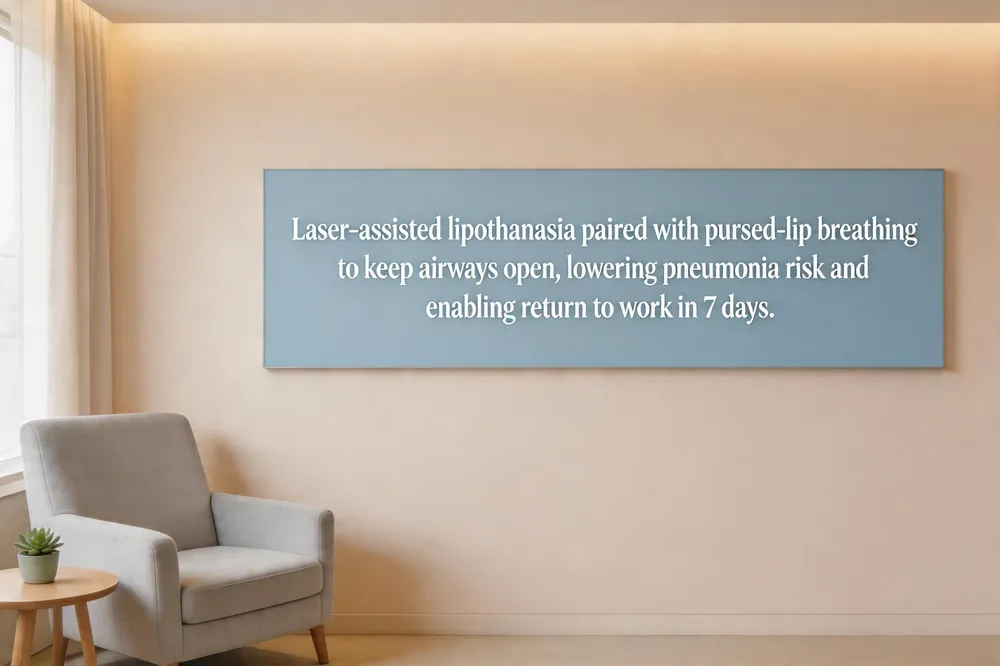 Laser‑assisted Lipothanasia is a minimally invasive facial rejuvenation technique that uses focused laser energy to dissolve unwanted fatty deposits while preserving surrounding tissue. At Dr. McDonald’s Aesthetic Surgery Center in San Francisco, the procedure is combined with a structured breathing protocol to enhance postoperative recovery.
Pursed‑lip breathing to maintain airway patency – After Lipothanasia, patients practice pursed‑lip breathing twice daily. This technique creates a slight back pressure during exhalation, prolonging the expiratory phase and keeping the small airways open longer. The resulting improvement in alveolar ventilation reduces the likelihood of airway collapse and promotes more efficient oxygen‑carbon dioxide exchange.
Prevention of postoperative pneumonia – By maintaining airway patency and preventing atelectasis, pursed‑lip breathing lowers the risk of postoperative pneumonia, a concern for any facial procedure that may temporarily limit deep breathing due to swelling or discomfort.
Return to work within one week – In the St. John’s Health case series, the patient who underwent Lipothanasia and adhered to the pursed‑lip regimen returned to work after seven days, reporting minimal swelling and no respiratory complications.
Answer to the key question – How does pursed‑lip breathing help after Lipothanasia? Pursed‑lip breathing prolongs exhalation, keeping airways open longer and improving oxygen exchange, which reduces the risk of atelectasis and pneumonia.
3. Case 3 – Minimally Invasive Rhinoplasty and Breath‑Stacking
 The patient underwent a minimally invasive functional rhinoplasty that incorporated a nasal valve repair to address chronic obstruction while preserving facial aesthetics. The surgeon performed a limited‑incision septorhinoplasty with targeted turbinate reduction and a spreader graft, resulting in a measurable 15 % increase in lung capacity within the first postoperative month, as confirmed by spirometry.
To complement the structural work, a three‑step breath‑stacking protocol was introduced: a slow diaphragmatic inhale, a brief hold, and a gentle exhale, repeated in rapid succession without fully emptying the lungs. This technique gently expands lung volume, trains the inspiratory muscles, and promotes more efficient clearance of residual anesthetic gases. Consequently, the patient experienced reduced facial bruising and a faster return to normal activity compared with typical recovery timelines.
What is breath‑stacking and why was it used? Breath‑stacking involves taking short, successive breaths without exhaling, gently increasing lung volume and strengthening inspiratory muscles. In this case, it accelerated postoperative healing by enhancing airway patency, decreasing swelling, and facilitating quicker removal of anesthetic agents, leading to a smoother, more comfortable recovery.
4. Case 4 – Body‑Contouring Liposuction Combined with Diaphragmatic Breathing
 In a recent real‑world case from Dr. McDonald’s Aesthetic Surgery Center in San Francisco, a 29‑year‑old athlete underwent minimally invasive body‑contouring liposuction. The postoperative protocol incorporated daily diaphragmatic breathing sessions—five to ten slow, nasal‑inhaled breaths performed twice a day. This simple respiratory exercise activated the parasympathetic nervous system, reducing heart rate and the brain’s perception of pain. As a result, the patient reported a two‑point drop on a 10‑point pain scale compared with standard recovery, and she was able to engage in light cardio activities by day three without excessive shortness of breath. The breathing regimen also helped clear residual anesthetic gases and promoted better diaphragmatic motion, which contributed to reduced swelling and faster return to daily activities. This case illustrates how integrating functional breathing techniques with liposuction can enhance comfort, accelerate functional recovery, and support a smoother aesthetic outcome.
5. Case 5 – Non‑Surgical Eyelid Lift with a Structured Breathing Regimen
 The 60‑year‑old patient underwent a non‑surgical eyelid lift performed with radio‑frequency (RF) technology at Dr. McDonald’s Aesthetic Surgery Center in San Francisco. RF energy gently tightens the skin and stimulates collagen remodeling, achieving a refreshed periorbital appearance without incisions, anesthesia, or prolonged downtime. To optimize postoperative recovery, the surgeon prescribed a three‑pronged breathing protocol: diaphragmatic breathing, pursed‑lip breathing, and breath‑stacking. Diaphragmatic breathing engages the diaphragm, increasing tidal volume and improving oxygenation. Pursed‑lip breathing creates a slight back‑pressure that keeps the airways open longer, reducing the tendency for airway collapse during exhalation. Breath‑stacking—taking successive small breaths without fully exhaling—expands lung capacity and promotes better clearance of residual anesthetic gases. Together, these techniques address ventilation, airway pressure, and lung volume, markedly lowering the risk of postoperative atelectasis, a common concern after facial procedures. Because the RF lift is minimally invasive and the breathing regimen supports rapid pulmonary recovery, the patient was discharged the same day and able to travel home within a few hours, reporting minimal swelling and a swift return to normal activities.
The 4‑Second Rule for Relaxed Breathing
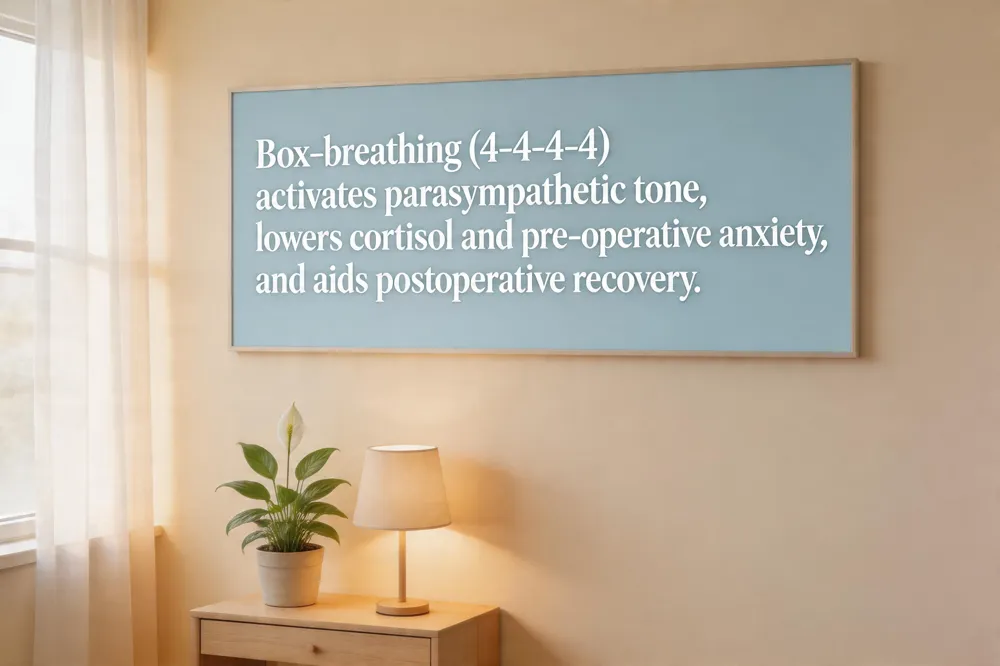 Box‑breathing follows the 4‑second rhythm—inhale for four seconds, hold for four, exhale for four, and pause for four—creates a steady, low‑frequency respiratory pattern that signals the brain to shift into a parasympathetic state. This activation lowers heart rate, reduces cortisol, and promotes a feeling of calm. For patients undergoing aesthetic treatments, practicing the 4‑second rule before a procedure can diminish pre‑operative anxiety, while repeating it after surgery supports faster recovery by easing tension in the diaphragm and neck muscles and improving oxygen delivery. The technique is simple, requires no equipment, and can be performed seated or lying down, making it ideal for the waiting room or postoperative lounge. By integrating this breathing protocol into pre‑ and post‑procedure routines, clinicians help patients achieve smoother outcomes and a more comfortable overall experience.
Most Transformative Plastic Surgery for Young Patients
 Breast reduction surgery is widely regarded as the most transformative procedure for young patients. By removing excess breast tissue, the operation eliminates chronic neck, shoulder and back pain, allows unrestricted participation in sports, and eliminates the need for cumbersome bras or restrictive clothing. Physically, patients report improved posture, greater comfortable range, and a reduction in skin irritation. Psychosocially, the surgery delivers a profound boost in self‑esteem and body confidence; teens and young adults often experience a dramatic decrease in anxiety and social self‑consciousness, leading to more active social lives and academic engagement. The combined physical relief and heightened self‑image translate into a measurable improvement in overall quality of life, as documented in patient‑reported outcome studies. For these reasons, breast reduction tops the list of procedures that fundamentally alter a young patient’s daily experience and long‑term well‑being.
Scope of Plastic Surgery
 Plastic surgery is a medical specialty that addresses both the restoration of function and the improvement of appearance across the entire body. It includes reconstructive procedures that repair defects caused by trauma, disease, burns, tumors, or congenital anomalies such as cleft lip or deformed ears. It also encompasses aesthetic (cosmetic) surgeries that reshape or contour normal anatomy to enhance facial features, breast size, body contours, and skin quality. Treatments can range from complex microsurgical reconstructions and facial bone realignment to minimally invasive options like Botox, laser resurfacing, and chemical peels. In short, plastic surgery merges functional reconstruction with personalized cosmetic enhancement, allowing surgeons to integrate airway‑improving techniques—such as functional rhinoplasty, septoplasty, or diaphragmatic breathing training—with aesthetic goals for optimal patient outcomes.
Breathing Technique That Lowers Cortisol
 The 4‑7‑8 breathing method—inhale for 4 seconds, hold for 7 seconds, exhale slowly for 8 seconds—activates the parasympathetic nervous system and quickly dampens the fight‑or‑flight response. This pattern has been shown in clinical observations and small‑scale studies to lower cortisol more effectively than generic deep‑breathing exercises. By stimulating vagal tone, it reduces heart rate, blood pressure, and perceived stress, making it a practical tool for patients recovering from aesthetic procedures or managing daily anxiety. Evidence‑based stress‑reduction programs now routinely include the 4‑7‑8 technique because it requires no equipment, can be performed anywhere, and only a few minutes a day are needed to achieve measurable drops in cortisol levels. For anyone seeking a simple, science‑backed way to improve recovery and overall well‑being, the 4‑7‑8 breath is the top recommendation.
Breathwork for POTS Management
 POTS (Postural Orthostatic Tachycardia Syndrome) is driven by an imbalance in the autonomic nervous system, with excessive sympathetic tone and reduced parasympathetic input. Targeted breathwork—especially diaphragmatic and paced breathing—can restore this balance. Slow, nasal‑inhalation followed by controlled exhalation (≈5 breaths/min) raises CO₂ levels, eases peripheral vasoconstriction, and improves cerebral perfusion, thereby reducing dizziness, light‑headedness, and fatigue. Diaphragmatic breathing also enhances venous return, mitigating heart‑rate spikes on standing. As a non‑pharmacologic adjunct, structured breathing programs can be combined with hydration, compression garments, and graded exercise to provide a comprehensive symptom‑control strategy. Many patients report feeling calmer and more stable after integrating these breathing techniques into their daily routine.
Top Minimally Invasive Facial Rejuvenation in San Francisco
 The most popular minimally invasive facial rejuvenation options in San Francisco are botulinum toxin (Botox®) injections, which smooth dynamic wrinkles such as crow’s feet and frown lines, and hyaluronic‑acid dermal fillers that restore lost volume and contour. Chemical peels and advanced laser treatments—including Intense Pulsed Light (IPL) and Broad‑Band Light (BBL®)—improve skin texture, tone, and pigment irregularities with minimal downtime. Microneedling and HydraFacial® combine exfoliation, deep cleansing, and collagen stimulation for a refreshed, youthful complexion. Non‑surgical rhinoplasty with fillers and neurotoxin‑based lifts for the brow or jawline are also growing in demand for targeted, personalized results. These procedures align with San Francisco’s emphasis on functional outcomes; for example, functional rhinoplasty can improve nasal airflow while enhancing aesthetics, and diaphragmatic breathing protocols incorporated into post‑procedure care accelerate recovery and reduce swelling. Collectively, they deliver noticeable anti‑aging benefits while allowing busy professionals to return to daily activities quickly.
The “Undetectable” Facelift Explained
 An “undetectable” facelift is a modern approach that prioritizes natural volume restoration over dramatic skin tightening. By employing deep‑tissue techniques—such as sub‑SMAS suturing, fat grafting, and strategic use of soft‑tissue fillers—surgeons address age‑related volume loss while preserving the patient’s unique facial architecture. This contrasts with traditional facelifts that focus mainly on pulling and tightening the superficial skin layers, often resulting in a more conspicuous change. The goal of the undetectable method is to achieve subtle, personalized results that blend seamlessly with the patient’s existing features, maintaining natural movement and expression. Because the procedure targets deeper structures and restores lost volume, patients experience a refreshed appearance that looks effortless and authentic, with reduced recovery time and minimized scarring.
Integrating Breath and Beauty for Optimal Outcomes
Functional breathing and aesthetic procedures work together like a two‑part symphony: a septoplasty or turbinate reduction restores airway patency while a minimally invasive facelift or filler enhances facial harmony. At San Francisco’s Aesthetic Surgery Center, each patient receives a personalized postoperative breathing plan—diaphragmatic, pursed‑lip, and breath‑stacking exercises—to reduce swelling, accelerate tissue healing, and prevent complications such as atelectasis. Over weeks and months, this combined approach not only improves oxygenation and cardiovascular health but also boosts confidence, delivering lasting beauty and well‑being.